
Fighting Workaholism
This B2 lesson digs into workaholism and the difference between loving your job and being addicted to it. Students watch a short video, learn vocabulary like “striver,” “excel,” and “objectify,” and debate whether working too much is really the badge of honor society makes it out to be. It hits home for students who already feel the pressure to perform at work.
Lesson overview
- Learn eight vocabulary words connected to work addiction, success, and personal value
- Watch a video about workaholism and discuss why people tie their identity to their job
- Analyze quotes about productivity, success, and self-worth from the video
- Interview a partner about their ideal job, covering balance, goals, and satisfaction
| Level | Vocabulary | Video Duration | Lesson Time |
| B2 / Upper-Intermediate | 8 words | 1:25 min | 60 min |
Vocabulary
- striver
- workaholism
- excel
- addiction
- objectify
- exhibit
- neglect
- merit
Contents
- Lead-in
- Speaking
- Vocabulary match
- Video
- Questions
- Speaking
- Agree or disagree
- Interview activity
- Extra video
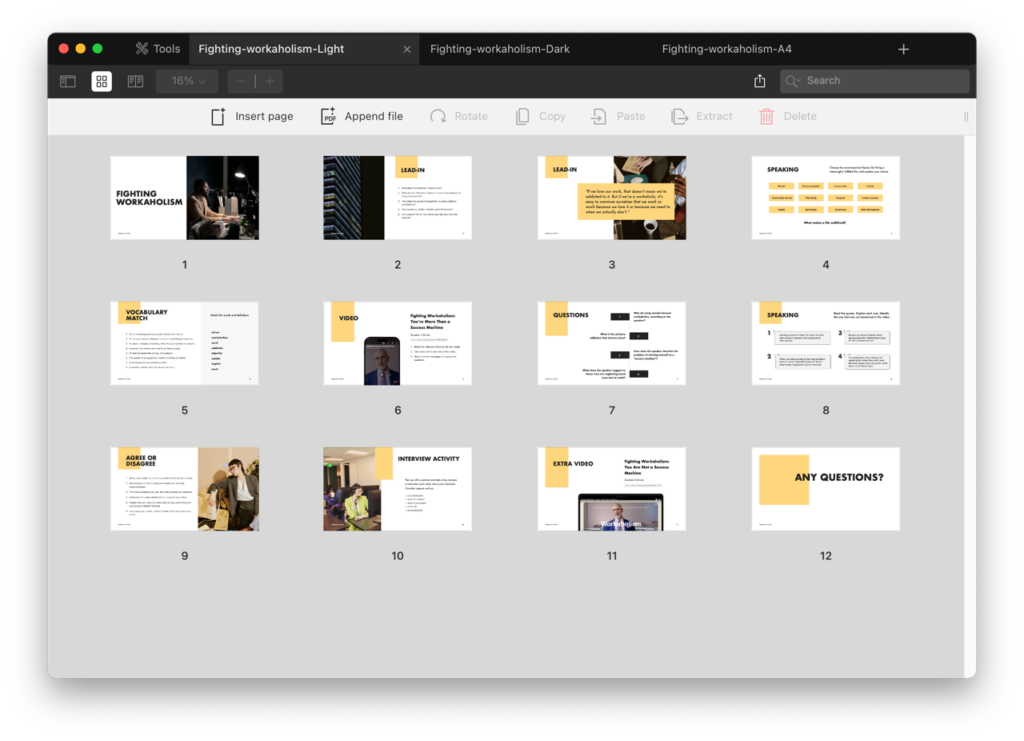
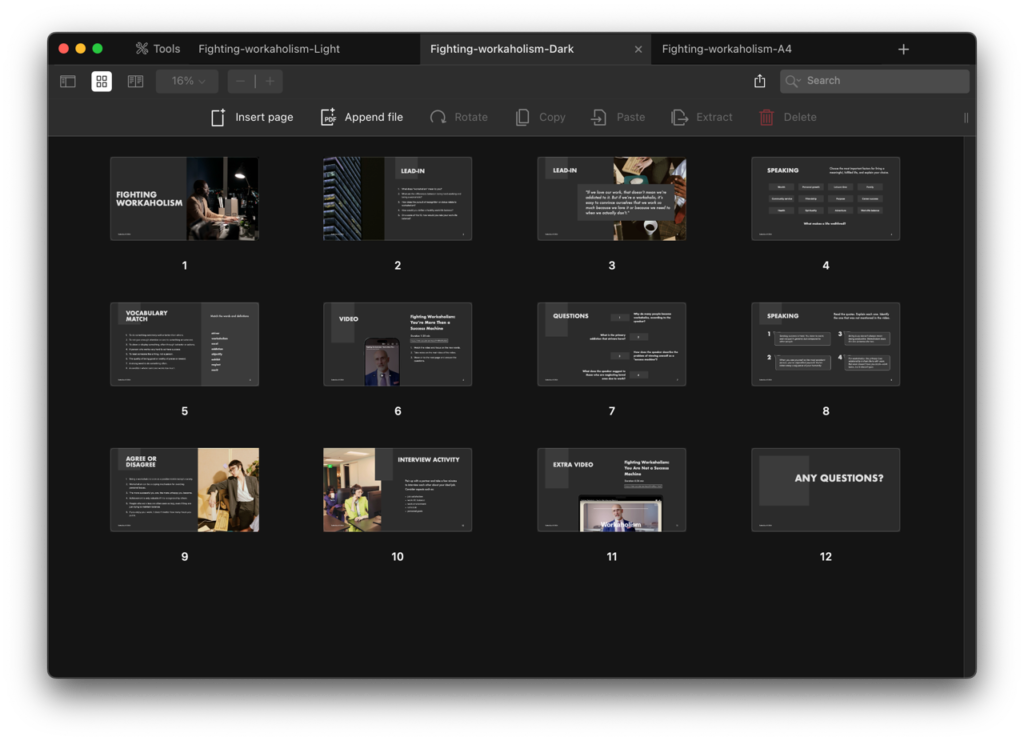
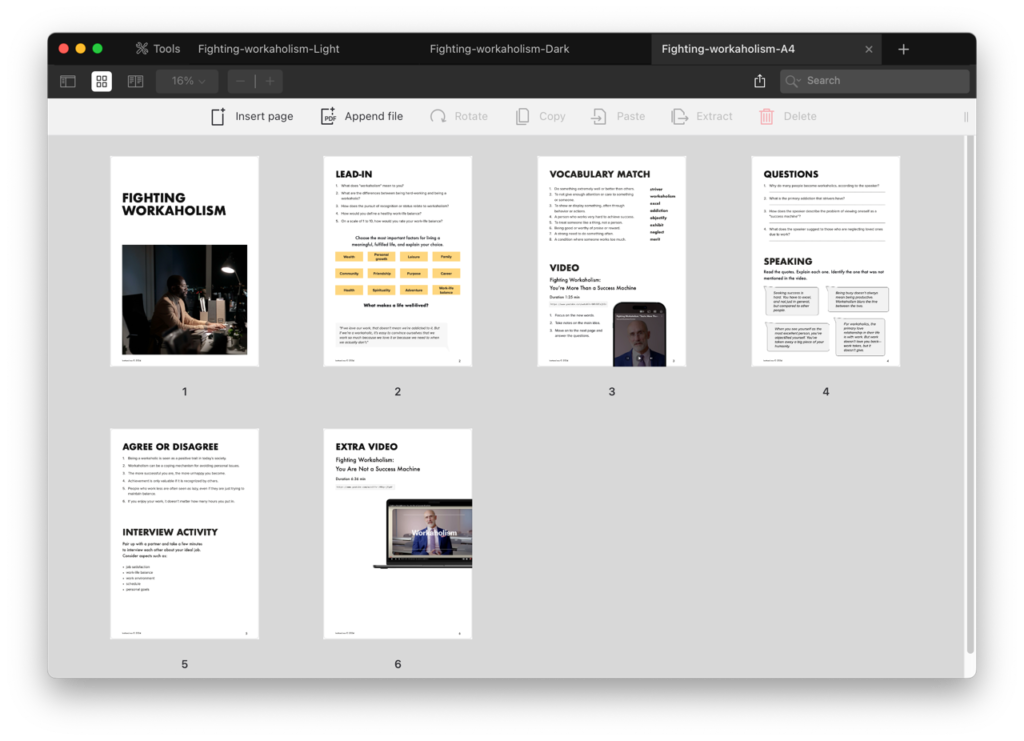
Start with the lead-in questions. The difference between being hardworking and being a workaholic is a great opening discussion point because most B2 students have an opinion but struggle to pin down the exact line. After a few minutes, show the quote about loving work versus being addicted to it. Read it together and ask students what they think. Then move to the “what makes a life well-lived” speaking activity. Students pick the most important factors from a list that includes things like wealth, family, adventure, and career success. This tends to reveal a lot about priorities and sets up the rest of the lesson nicely.
Cover the eight vocabulary words through the matching exercise. “Striver,” “workaholism,” and “objectify” are the trickiest ones for most B2 students. Use quick, clear examples: “A striver is someone who pushes hard to get ahead at work” or “When you objectify yourself, you treat yourself like a product, not a person.” Once the vocabulary feels solid, play the video. At a minute and a half, it’s short enough to watch twice. Students take notes on the main idea during the first viewing, then answer the four comprehension questions after the second.
The quotes activity on slide eight is where students do the real thinking. Four quotes appear on screen, and students explain what each one means. One quote wasn’t actually in the video, so they also have to figure out which one is the odd one out. This keeps them paying close attention to the content rather than just guessing. After discussing the quotes, move to the agree or disagree statements. “Being a workaholic is seen as a positive trait” and “If you enjoy your work, it doesn’t matter how many hours you put in” usually split the class right down the middle.
Wrap up with the interview activity. Students pair up and take turns asking about each other’s ideal job. They cover topics like work-life balance, schedule, work environment, and personal goals. Give them a few minutes to prepare questions first so the conversations flow better. If you have extra time, the longer six-minute version of the video on the final slide goes deeper into the same ideas and works well as a follow-up for the next class or as homework viewing.
