
Feed Your Microbes
This B2 lesson explores gut health and nutrition through vocabulary work, a short video, and plenty of discussion. Students learn words like “microbiome,” “probiotics,” and “inflammation” while separating fact from fiction about what actually helps your gut. It is a topic most students find surprisingly interesting once they start digging into it.
Lesson overview
- Learn ten key vocabulary words related to gut health and nutrition
- Watch and analyze a short video on how gut microbes shape your health
- Test your knowledge with a true or false activity on common gut health myths
- Discuss and present research on fermented foods and their benefits
| Level | Vocabulary | Video Length | Lesson Time |
| B2 / Upper-Intermediate | 10 words | 2:13 min | 60 min |
Vocabulary
- Gut microbiome
- Metabolism
- Immune function
- Disrupted microbiome
- Probiotics
- Diabetes
- Obesity
- Inflammation
- Microbe-friendly
- Germ-free
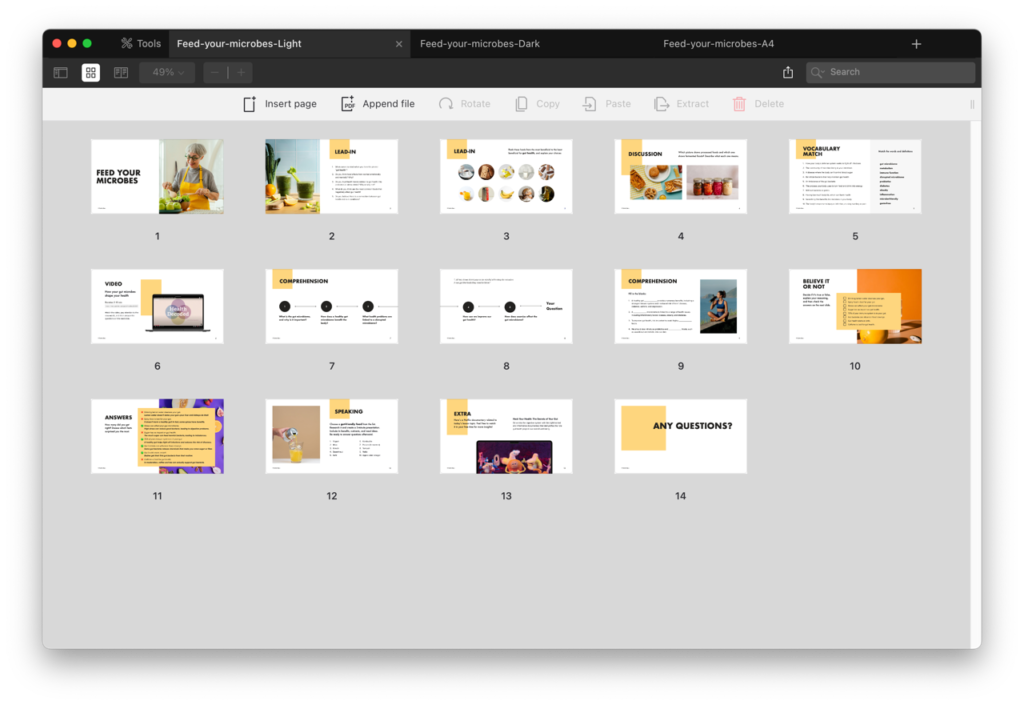
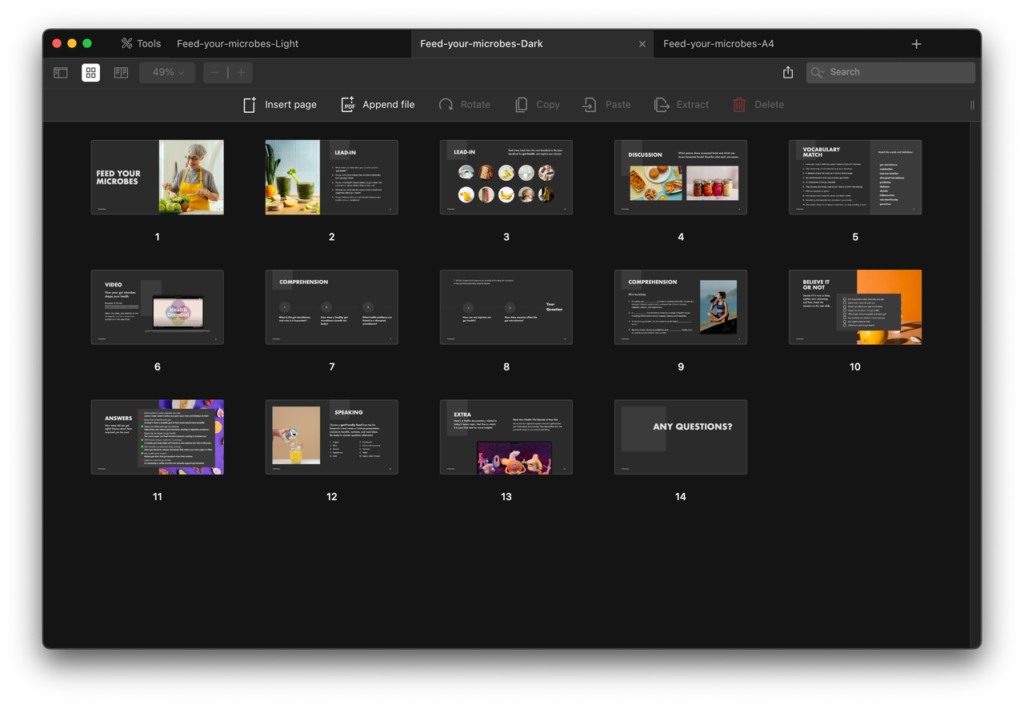
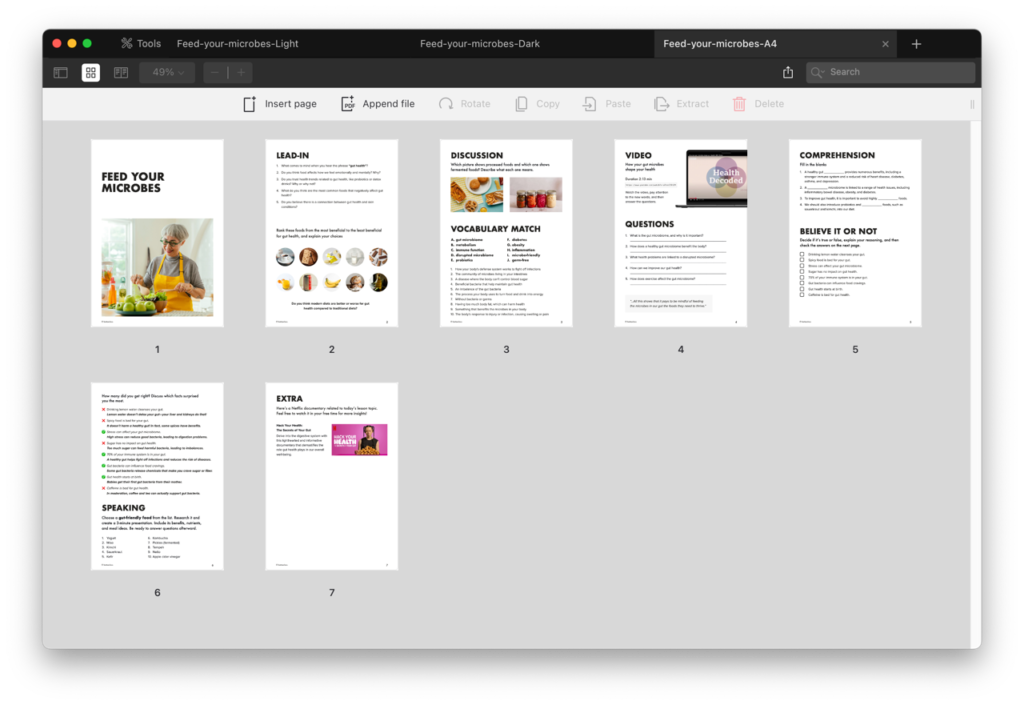
Contents
- Lead-in
- Discussion
- Vocabulary match
- Video
- Comprehension
- Believe it or not
- Speaking
- Extra
Start with the lead-in questions about gut health. Most B2 students will have heard terms like “probiotics” or “detox” but might struggle to explain what they actually mean. That is fine at this stage. Let them share what they know and what they have seen on social media or in ads. The food ranking activity that follows is a good way to get pairs talking and disagreeing. There are no strictly right answers here, so encourage students to justify their choices.
Move into the vocabulary matching next. Ten words is a lot for one block, so split it up if needed. Have students try to match without help first, then check together. Words like “metabolism” and “immune function” are useful far beyond this lesson, while “germ-free” and “microbe-friendly” are more specific to the topic. A quick drill works well here. Say a definition and have students call out the word, or vice versa. After that, the video on gut microbes ties the vocabulary together nicely. Play it once for general understanding, then again for the comprehension questions. The speaker is clear and the video is short, so B2 students should manage well with two listens.
The true or false section is where the lesson really picks up energy. Students love debating whether spicy food harms your gut or whether lemon water actually does anything. Have them commit to an answer before revealing the truth on the next slide. This always sparks good follow-up conversation, especially around sugar and stress. Use this momentum to lead into the final discussion and speaking task.
Wrap up with the fermented foods presentation task. If time is short in class, assign it as homework and have students present next session. Giving each student a different food from the list keeps the presentations varied and gives the class a reason to listen to each one. Mention the Netflix documentary as optional extra viewing for anyone who wants to go deeper into the topic.
