
Expressing Feelings Using Emojis

This A2 lesson teaches students feelings vocabulary using emojis as visual aids. Students learn 18 emotion adjectives divided into positive feelings like “excited” and “relaxed” and negative feelings like “frustrated” and “scared.” The lesson includes two short reading passages, intonation practice, and a fun team guessing game to review all the emotions.
Lesson overview
- Learn 18 feelings adjectives using emoji visuals for positive and negative emotions
- Practice reading emotion vocabulary through gap-fill stories about Emma and Max
- Master expressing feelings with appropriate intonation through guided pronunciation activities
- Play a competitive team guessing game to review and reinforce emotions vocabulary
| Level | Vocabulary | Lesson Time |
| A2 / Pre-Intermediate | 18 words | 60 min |
Vocabulary
- Shy
- In love
- Excited
- Goofy
- Cool
- Happy
- Fine
- Funny
- Relaxed
- Sad
- Angry
- Cold
- Tired
- Hot
- Sick
- Scared
- Bored
- Frustrated
Contents
- Lead-in
- Positive feelings
- Reading
- Negative feelings
- Reading
- Discussion
- Practice 1
- Practice 2
- Writing
- Game
- Summary
Begin with the five lead-in questions on page 2. These personal questions get A2 students talking about when they feel happy, angry, relaxed, scared, or bored. Cover the “bored” vs. “boring” note at the bottom because beginners mix these up every single time.
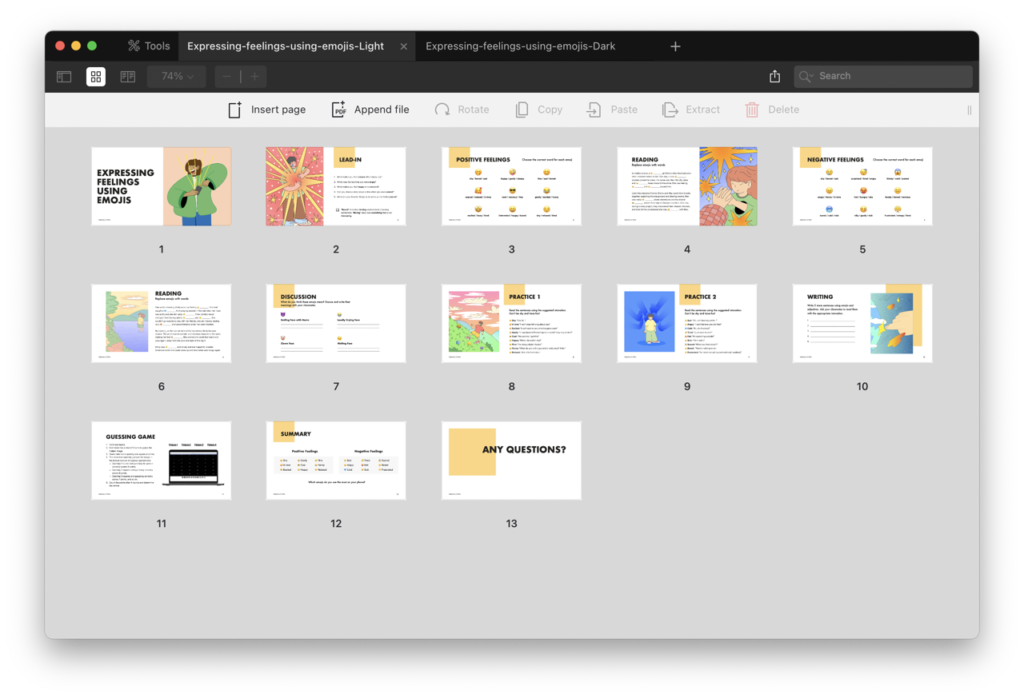
Pages 3 and 5 introduce the feelings vocabulary. Page 3 has nine positive feelings with emoji matches, and page 5 has nine negative feelings. Students pick the correct word for each emoji. Pages 4 and 6 are gap-fill readings where students replace emojis with the words they just learned. The page 4 story is about Emma falling in love with Max at school. The page 6 story is about Emily being sick and scared during winter.
Page 7 has students guess meanings of four newer emojis like the melting face and clown face. Pages 8-9 are intonation practice. Model each sentence with big exaggerated emotion first, then students repeat. The sentences use feelings in context like “I can’t wait to see what happens next!” for excited. Page 10 has students write five new sentences with emojis and feelings.
Finish with the guessing game on page 11. Split into two teams. Show a pixelated image and teams take turns opening one square at a time to guess the hidden picture. Fewer squares before guessing correctly means more points. Play four rounds. Teams get loud during this part.
