
Exploring Hobbies

This A2 elementary lesson introduces students to common hobbies and free-time activities through visual matching and dialogue practice. Students learn vocabulary for expressing likes and dislikes while discussing personal interests. The lesson develops conversational skills for talking about leisure activities and builds confidence in expressing preferences naturally in English.
Lesson overview
- Learn vocabulary for popular hobbies including hiking, cooking, gardening, and gaming
- Practice expressing likes, dislikes, and neutral feelings using varied phrases
- Explore collocations with verbs like play, go, join, do, and learn
- Develop speaking fluency through dialogues and personal hobby presentations
| Level | Vocabulary | Lesson Time |
| A2 / Pre-Intermediate | 25 words and phrases | 60 min |

Vocabulary
- hiking
- painting
- shopping
- going to the gym
- watching movies
- playing board games
- learning languages
- gardening
- cooking
- sewing
- I have no interest in…
- I’m into…
- I find … enjoyable
- I have a passion for…
- … is fine
- I’m crazy about…
- I’m indifferent to…
- I’m not a fan of…
- I can’t stand…
- I’m okay with…
- I’m a fan of…
- I don’t mind…
- … isn’t my thing
- … is not for me
- I have no strong feelings about…
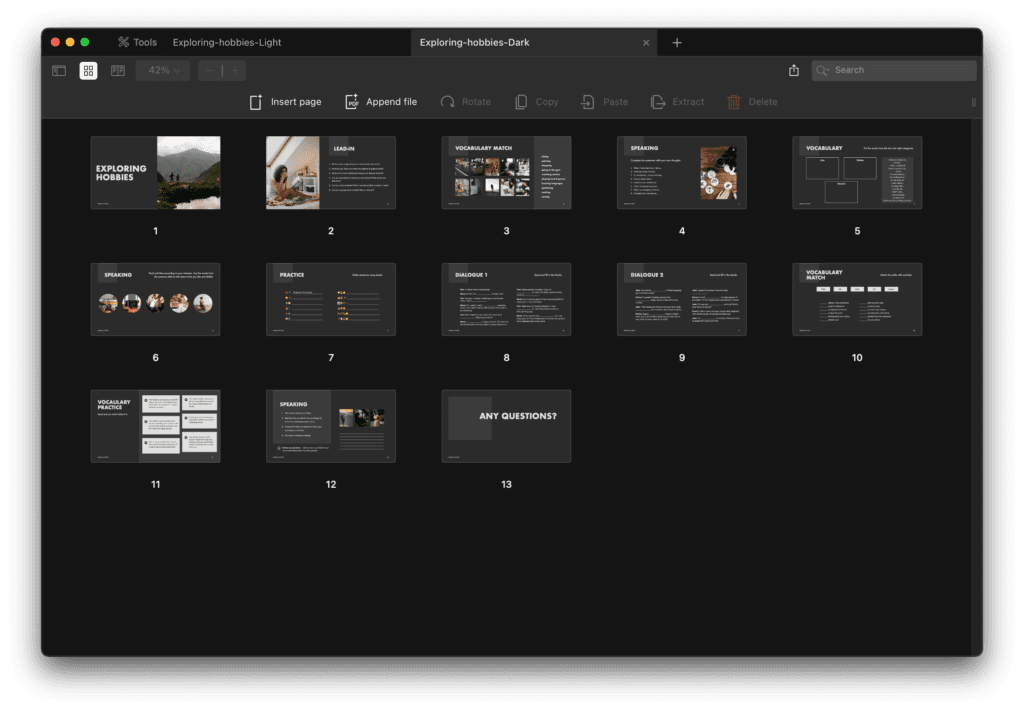
Contents
- Lead-in
- Vocabulary match
- Speaking
- Vocabulary
- Speaking
- Practice
- Dialogue 1
- Dialogue 2
- Vocabulary match
- Vocabulary practice
- Speaking
Start with the lead-in questions on page 2 about lazy Sundays, outdoor activities, and social preferences. These help students share routines and find common ground. The vocabulary matching on page 3 presents 10 common hobbies with images. Students match pictures to words like hiking, painting, shopping, and sewing, then explain each activity in their own words.
Page 4 has sentence starters for speaking practice. Students complete prompts about free time, cooking, weekend viewing, and creative outlets. Page 5 asks students to sort opinion phrases into like, dislike, and neutral columns. Cover the difference between strong expressions like “I’m crazy about” and softer ones like “I’m okay with.”
The speaking activity on page 6 has students rank five activities by interest level using opinion phrases. Show the images and have students explain their rankings in pairs or groups. Page 7 reinforces vocabulary through an emoji exercise where students make sentences like “Singing isn’t my thing” or “I’m into cooking.”
Pages 8-9 have two dialogues about hobbies. Students fill in blanks with phrases from earlier in the lesson. After completing them, pairs read the dialogues aloud and work on natural intonation. Page 10 teaches verb-activity collocations. Students match play, go, join, do, and learn with the right activities, picking up patterns like “play board games” and “go hiking.”
The vocabulary practice on page 11 describes six hobbies without naming them. Students read and identify activities like traveling, gardening, or watching movies. Finish with the speaking task on page 12 where students prepare a one-minute presentation about a personal hobby: why they enjoy it, how they started, and a memorable experience. Classmates ask follow-up questions.
