
Exploring British Culture
This B1 lesson introduces students to British culture through a quiz, vocabulary activities, and a short video about the history of tea time in England. Students learn about famous UK landmarks, foods, sports, and the differences between American and British English vocabulary. The lesson covers everything from Catherine of Braganza’s influence on tea culture to modern British English variations.
Lesson overview
- Learn about British culture through quizzes on landmarks, foods, and traditions
- Master 8 new vocabulary words related to British tea time history
- Watch and analyze a video about how tea became popular in England
- Practice identifying differences between American English and British English vocabulary
| Level | Vocabulary | Video Length | Lesson Time |
| B1 / Intermediate | 10 words | 1:55 min | 60 min |
Vocabulary
- obsession
- dowry
- treasures
- spices
- beverage
- popularize
- porcelain
- aristocracy
Contents
- Quiz
- Lead-in
- Discussion
- Vocabulary match
- Video
- True or False
- Speaking
- Odd one out
- English variations
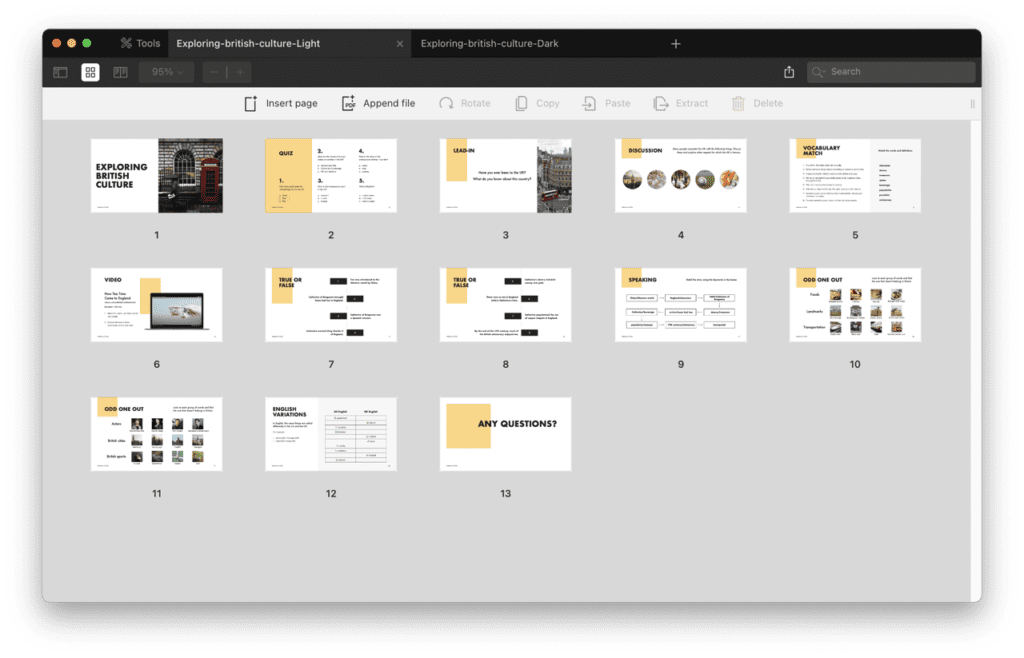
Start with the quiz on page 2. These five questions test basic knowledge about the UK. Most B1 students know Big Ben and football but mix up England and the United Kingdom. After the quiz, use the lead-in on page 3 to share UK travel stories.
Page 4 shows iconic British symbols like red phone booths and the royal family. Discuss what students associate with Britain. Move to vocabulary matching on page 5 with eight words like “beverage,” “obsession,” and “aristocracy.” Then play the video on page 6 about Catherine of Braganza bringing tea to England in 1662.
Play the video twice. First for general understanding, then for vocabulary in context. Pages 7-8 have true/false statements about the video. Watch out for statement 6 because students mark it true even though the video says Catherine popularized tea, not introduced it. Page 9 is a retelling activity where students use keyword boxes to reconstruct the tea story.
Pages 10-11 have “odd one out” exercises. Students identify which item doesn’t belong. Tiramisu is Italian. Hamburg is German. The bullet train is Japanese. This works better as a race between pairs. Finish with page 12 where students match American and British English words like “apartment/flat” and “elevator/lift.”
