
A Guide to Euphemisms

This lesson introduces B1 intermediate students to euphemisms, the polite phrases English speakers use to soften uncomfortable topics like death, unemployment, and physical appearance. Students discover why native speakers say “passed away” instead of “died” or “between jobs” rather than “unemployed” when discussing sensitive subjects.
Lesson overview
- Learn common euphemisms for death, employment, money, and appearance
- Practice replacing direct language with politer alternatives in conversations
- Explore dysphemisms as the opposite of euphemisms through rude examples
- Discuss cultural differences in how people express sensitive topics
| Level | Vocabulary | Lesson Time |
| B1 / Intermediate | 15 phrases | 60 min |

Vocabulary
- no longer with us
- passed away
- resting in peace
- between jobs
- laid off
- letting someone go
- economical
- developing country
- low-income
- visit the ladies’ room
- under the weather
- aging
- curvy
- unique
- petite
Contents
- Lead-in
- Euphemisms
- Reading 1
- Reading 2
- Reading 3
- Sorting
- Speaking 1
- Speaking 2
- Practice
- Dysphemisms
- Quiz
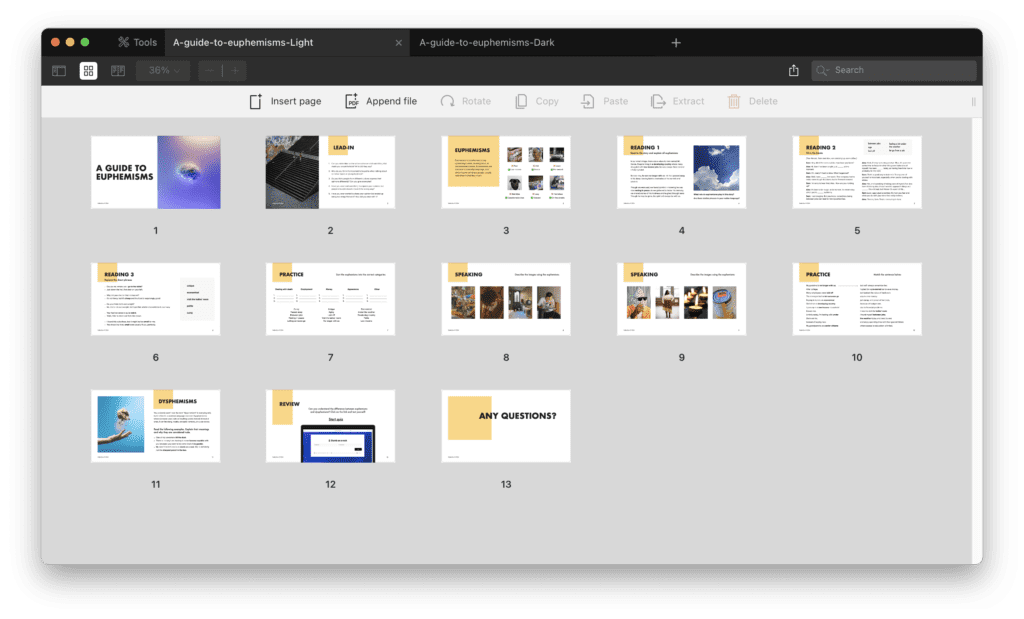
Start with the lead-in questions on page 2 about times students felt uncomfortable with direct language. Students often share stories about cultural misunderstandings, which sets up why the lesson matters.
Page 3 introduces euphemisms through six examples with images. Present the definition, then have students discuss why the euphemism sounds better than the direct word. This builds awareness that euphemisms aren’t about lying but about showing consideration.
Reading 1 on page 4 tells a short story about Mr. Garcia containing multiple euphemisms. Students read it once, then go back and identify every euphemism. Discuss how they function and whether students’ native languages have similar phrases for death.
Reading 2 on page 5 is a dialogue where one person lost their job. Students fill in blanks with provided euphemisms. Works well in pairs where students discuss which phrase fits before checking answers together.
Reading 3 on page 6 gives five short dialogues where students replace direct phrases with euphemistic alternatives. This reversal requires recognizing when direct language sounds harsh.
The sorting activity on page 7 has students categorize 15 euphemisms into five groups. Have them work in small groups and compare decisions before reviewing as a class.
Pages 8-9 show eight images that students describe using euphemisms they’ve learned. Photos cover developing countries, illness, bathrooms, work, aging, body size, death, and budget shopping. Students apply vocabulary rather than just recognizing it.
Page 10 is a matching exercise connecting sentence beginnings with endings, checking how euphemisms function in complete sentences.
Page 11 introduces dysphemisms as the opposite. Students read examples like “bit the dust” for died and “banana republic” for developing country. Discuss why these are inappropriate, contrasting them with the euphemisms studied earlier.
Close with the online quiz on page 12 where students distinguish euphemisms from dysphemisms.
