
Essential Phrasal Verbs for Business English

This B2 lesson teaches eight business phrasal verbs through a CEO transition story and workplace scenarios. Students practice expressions like step down, shake up, and measure up in professional contexts. The lesson uses listening activities, matching exercises, and discussion questions to help students use these phrasal verbs naturally at work.
Lesson overview
- Learn eight business phrasal verbs including step down, step up, and bring about
- Practice recognizing phrasal verbs in context through CEO story and audio recordings
- Develop professional speaking skills through workplace scenarios and discussion questions
- Master usage through sentence completion, matching exercises, and error correction activities
| Level | Vocabulary | Listening Time | Lesson Time |
| B2 / Upper-Intermediate | 8 phrasal verbs | 1 min | 60-90 min |
Vocabulary
- Step down
- Shake up
- Measure up
- Step aside
- Swoop in
- Come online
- Bring about
- Step up
Contents
- Lead-in
- Intro
- Preview
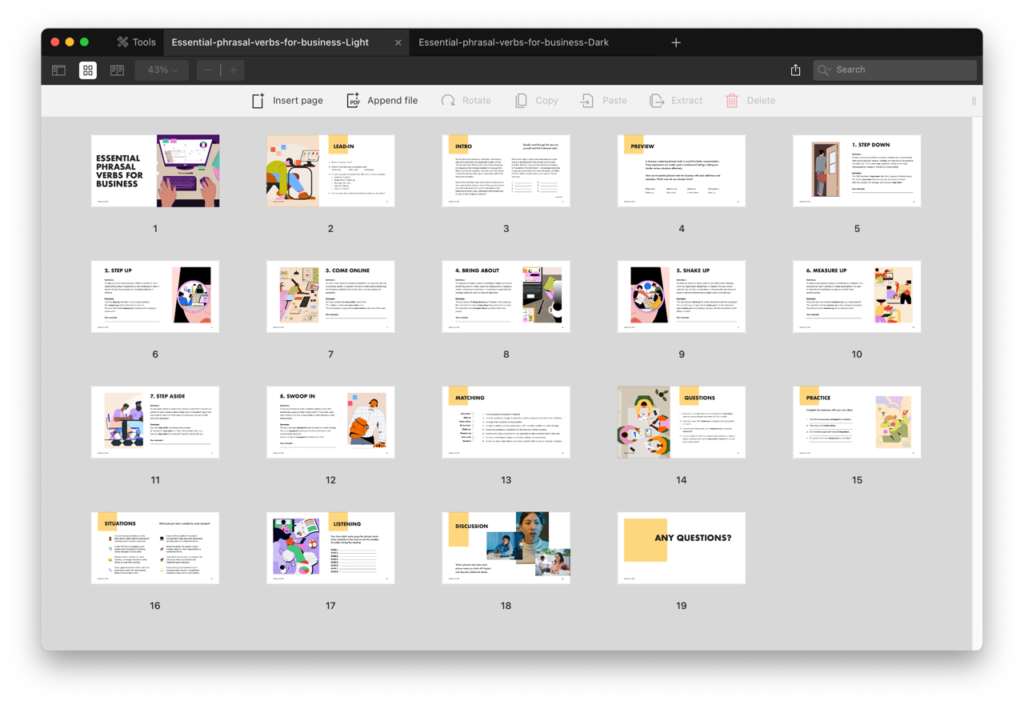
- Phrasal verbs (8 slides)
- Matching
- Questions
- Practice
- Situations
- Listening
- Pictures
Start with the lead-in questions about what phrasal verbs are and pairs like look up versus look for. B2 students know phrasal verbs exist but can’t use them smoothly in business conversations. The CEO story drops all eight phrasal verbs into one narrative about a leadership change. Have students read quickly and underline what they find. Seeing the expressions in context beats pre-teaching every time.
Go through each phrasal verb with the definition slides. Don’t just read them out. Ask which ones students already knew. The example sentences matter because they show these phrasal verbs in actual business situations like board meetings and strategy changes. After you cover all eight, the matching activity checks if the meanings stuck.
The discussion questions force students to use the phrasal verbs when talking about real workplace situations. Question four about famous leaders stepping aside gets the best responses. B2 students read business news and have strong opinions about whether leaders should have resigned or stayed. The sentence completion practice works better in pairs than solo. One student starts the sentence, the partner finishes it with the right phrasal verb.
The listening activity catches attention because students hear someone botching the phrasal verbs and need to fix them. The situation cards give visual prompts for identifying which phrasal verb matches each workplace scenario. The emoji cues help lower B2 students who freeze when reading dense text. End with pictures where students explain which phrasal verb fits and justify their choice.
