
Escaping the Grip of Routine
This B2 upper-intermediate lesson explores breaking free from daily routines through adventure and meaningful change. Students watch an inspiring video about a 7,000-mile solo bike journey and discuss how to maintain alertness and purpose in everyday life. The lesson combines vocabulary practice, critical thinking discussions, and practical advice activities to help learners express their views on work-life balance and personal growth.
Lesson overview
- Practice describing life choices using descriptive adjectives and authentic vocabulary
- Learn key terms related to routines, time perception, and personal transformation
- Develop critical thinking skills through scenario-based problem-solving activities
- Discuss the balance between stability and adventure in modern life
| Level | Vocabulary | Video Length | Lesson Time |
| B2 / Upper-Intermediate | 10 words | 4:13 min | 60-80 min |
Vocabulary
- decade
- fly by
- figure out
- pattern
- mortgage
- establish
- alertness
- fascinated
- exhausted
- astonished
Contents
- Lead-in
- Discussion
- Vocabulary preview
- Vocabulary
- Video
- Video recap
- Questions
- Practice 1
- Practice 2
- Adjectives
- Life situations
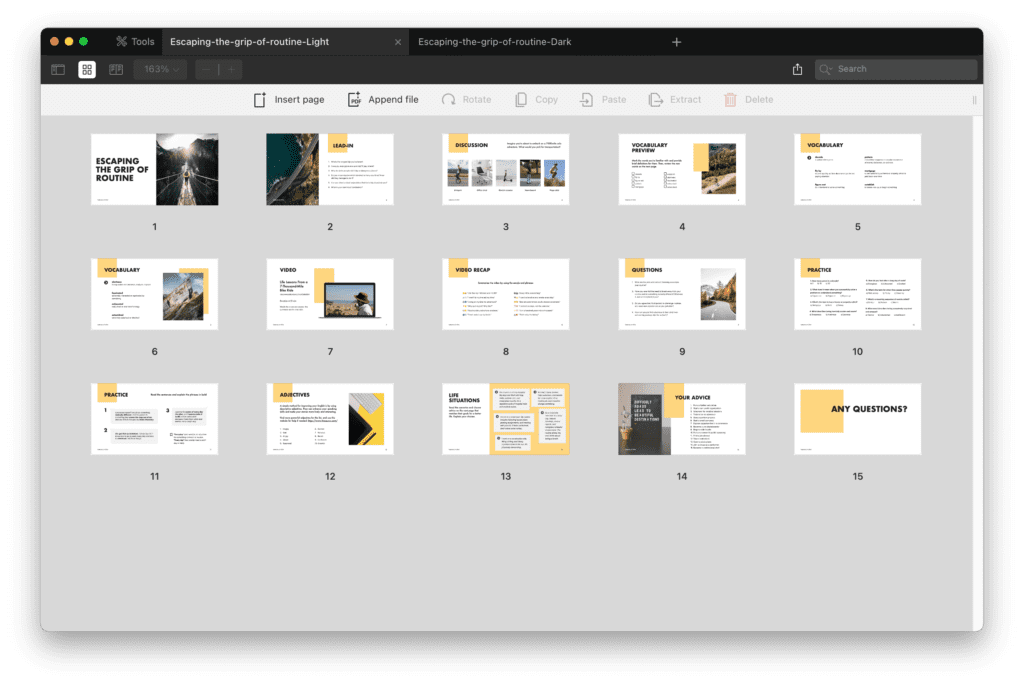
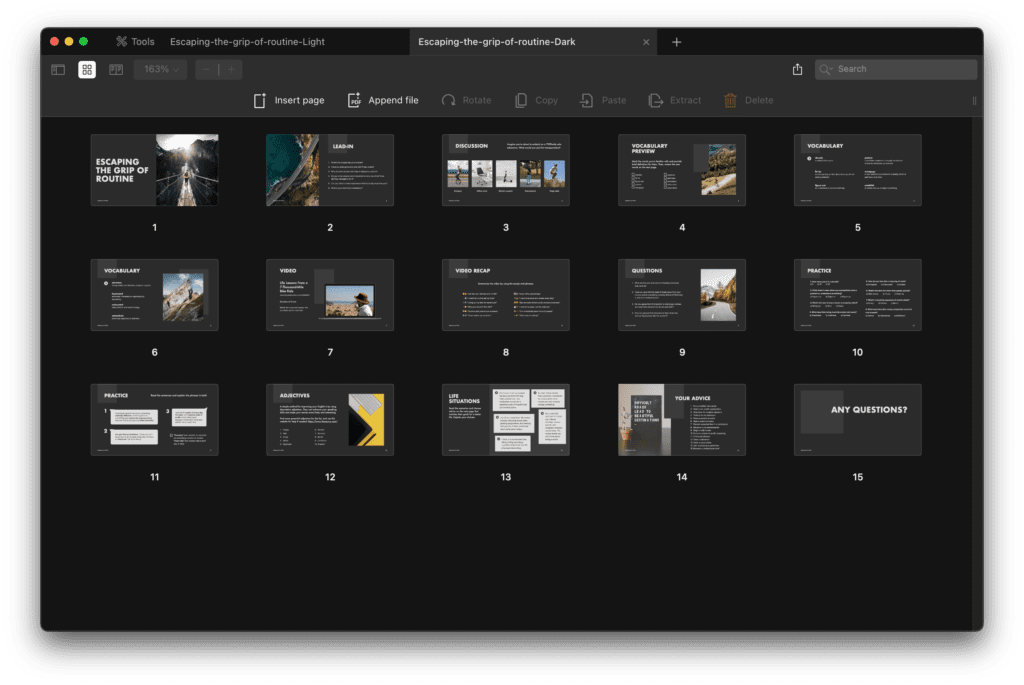
Start by asking students about their longest trip and travel experiences from page 2. Then move to the creative discussion on page 3 where students imagine traveling 7,000 miles on unusual transportation. Gets them thinking before the new vocabulary comes in.
Pre-teach the ten vocabulary items on pages 4-6 before the video. Focus on words like “fly by,” “pattern,” and “astonished” since they’ll need these to follow along. Play the 4-minute video from page 7 and have students complete the emoji recap on page 8. This helps them process the speaker’s message about choosing adventure over routine.
After the video, go through the discussion questions on page 9. Push students to use the new vocabulary in their answers. The practice exercises on page 10 test vocabulary through multiple-choice questions. Page 11 asks students to explain three key phrases from the video in their own words.
The adjectives activity on page 12 builds descriptive language. Students find stronger alternatives to basic emotion words using a thesaurus. This sets up the final activity on pages 13-14 where they read five work scenarios and offer advice for breaking routines. Good practice for giving suggestions with modal verbs and conditionals. Finish by asking students what small changes they might make in their own routines.
