
Eating Sushi Properly

This A2 lesson teaches students how to eat sushi the right way while building basic food vocabulary. They learn words like “nigiri,” “wasabi,” and “chopsticks” through reading, true or false questions, and a restaurant role-play. It is a fun, practical lesson that works well with students who enjoy food topics.
Lesson overview
- Learn ten vocabulary words for sushi ingredients and eating tools
- Read and summarize a step-by-step guide to eating sushi correctly
- Practice speaking through sentence completion and restaurant role-plays
- Test your knowledge with true or false and word unscramble activities
| Level | Vocabulary | Lesson Time |
| A2 / Pre-Intermediate | 17 words | 60 min |
Vocabulary
- Sushi
- Rice
- Raw fish
- Seaweed (nori)
- Soy sauce
- Wasabi
- Chopsticks
- Ginger
- Fish roe
- Caviar
- Roll
- Nigiri
- Ramen
- Takoyaki
- Sake
- Onigiri
- Matcha
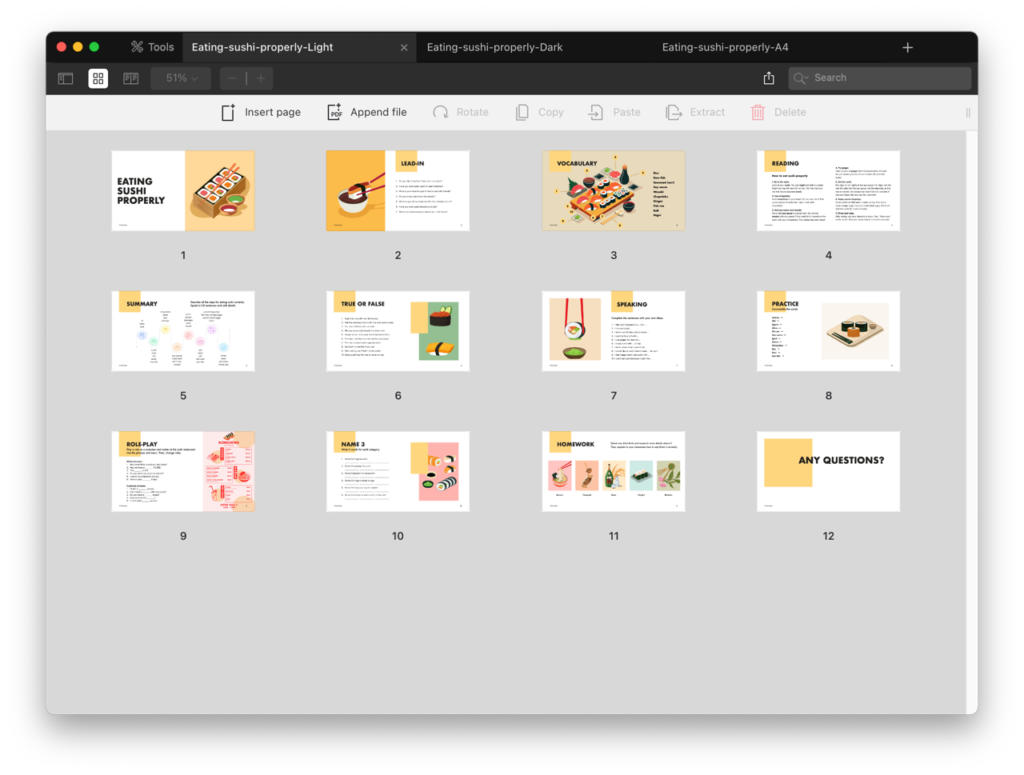
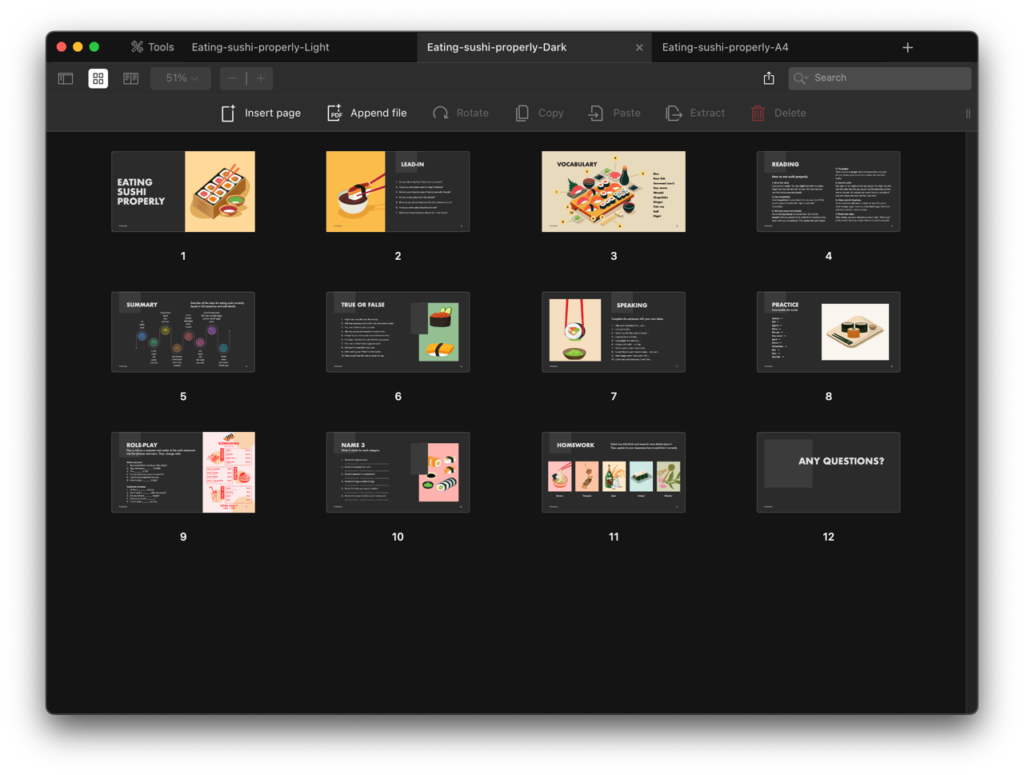
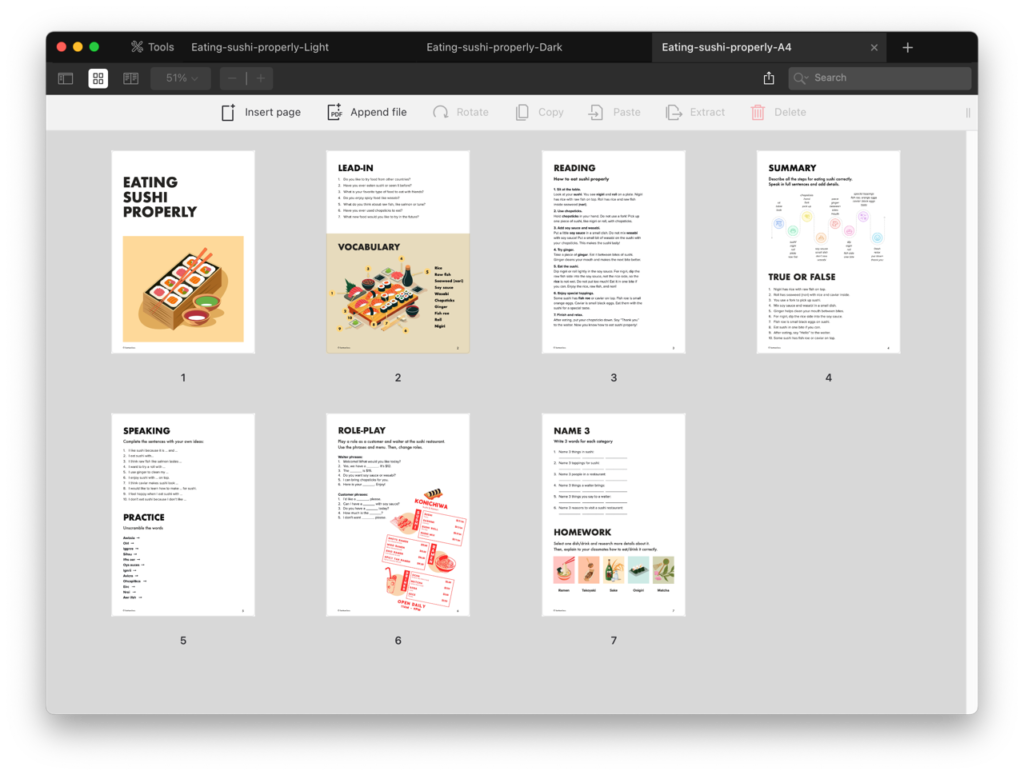
Contents
- Lead-in
- Vocabulary
- Reading
- Summary
- True or false
- Speaking
- Practice
- Role-play
- Name 3
- Homework
Open with the lead-in questions about trying new food, using chopsticks, and eating raw fish. These are simple enough for A2 students and help you see who has experience with sushi and who has not. Do not worry if some students have never tried it. That actually makes the lesson more interesting for them. After a few minutes of pair discussion, move to the vocabulary slide. Show each image and say the word aloud. Have students repeat after you. Spend a bit of extra time on “nigiri” and “nori” since these are likely new for most learners.
The reading is the core of the lesson. It walks through seven steps for eating sushi properly, from sitting down to saying thank you at the end. Read it together as a class or let students read quietly first. Then use the summary slide to check understanding. Students retell the steps using the word prompts on screen. This is a good speaking activity that does not feel too pressured because the key words are right there to help. After that, the true or false exercise reinforces the details. Go through each statement and ask students to correct the false ones in their own words.
The sentence completion activity on the next slide gets students talking about their own preferences. Encourage full answers, not just single words. “I like sushi because it is fresh and easy to eat” is better than just “good.” The word unscramble is a quick, playful break before the role-play. For the restaurant role-play, put students in pairs and assign customer and waiter roles. Give them two minutes, then have them switch. This is where students use the vocabulary in a real situation, and it usually gets a few laughs. End by introducing the homework task where students pick a Japanese dish and explain how to eat it next class.
