
Eating Out

This A2 lesson teaches students to talk about food and restaurants. They learn adjectives to describe taste and practice conversations about dining experiences. The activities cover ordering vocabulary, food from different countries, and sharing opinions about meals.
Lesson overview
- Practice using opposite adjectives like sweet and sour to describe food flavors
- Learn key restaurant vocabulary including reservation, chef, dessert, and take away
- Discuss personal food preferences and eating habits with classmates
- Explore popular dishes from the USA, Japan, China, and Mexico through short readings
This lesson was first published in 2023 and became very popular with teachers. We updated it in February 2026 to improve the content and match our current teaching style.
| Level | Vocabulary | Lesson Time |
| A2 / Pre-Intermediate | 22 words | 60 min |


Vocabulary
- take away
- reservation
- vegetarian
- chef
- dessert
- foodie
- sweet
- hot (spicy)
- fresh
- soft
- salty
- delicious
- cold
- cooked
- hard
- sour
- old
- mild
- raw
- terrible
- hot (temperature)
- bland
Contents
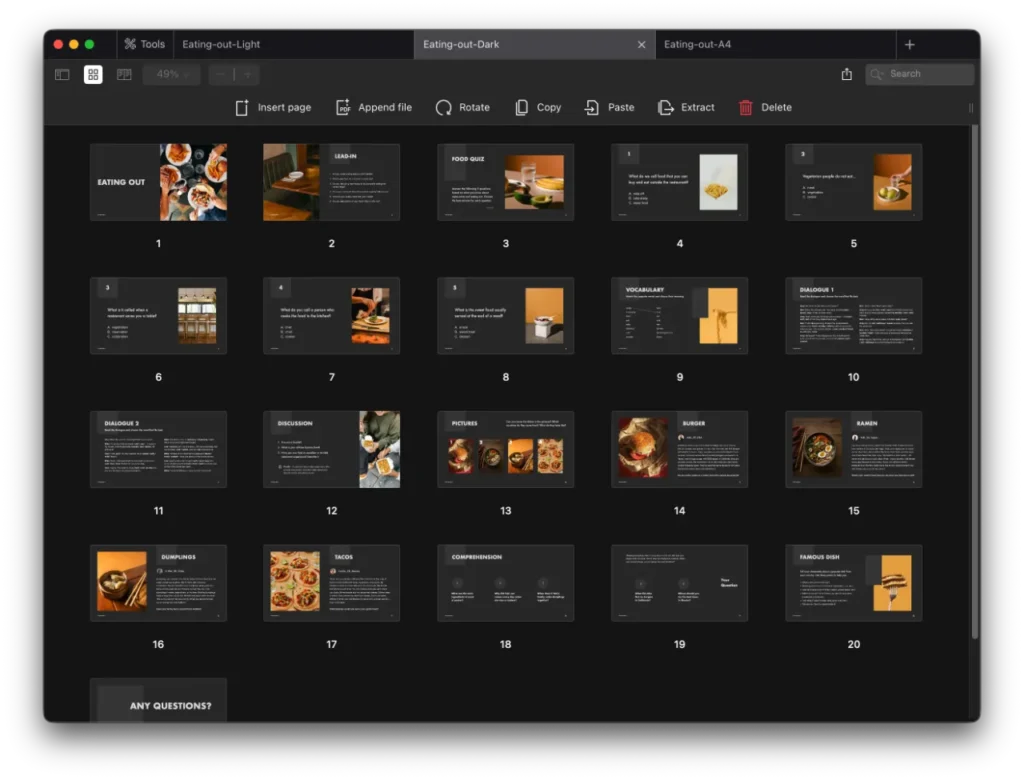
- Lead-in
- Food quiz
- Vocabulary
- Dialogue 1
- Dialogue 2
- Discussion
- Pictures
- Reading
Burger
Ramen
Dumplings
Tacos - Comprehension
- Famous dish
Start with the lead-in questions to get students talking about their eating habits. Ask them to discuss in pairs, then share one interesting answer with the class. This shows you what vocabulary they already know and gets them comfortable with the topic.
Move to the food quiz to introduce restaurant terms. Let students work alone first, then check answers together. The quiz covers take away, vegetarian, reservation, chef, and dessert. These words come up throughout the lesson, so take time here to make sure everyone understands them.
The vocabulary matching activity teaches taste adjectives. Students match opposites like sweet and sour, hot and cold, fresh and old. After they match the words, ask them to name foods for each adjective. For example, lemons are sour and cookies are sweet. This helps them remember the words better.
The two dialogues show the adjectives in context. In the first dialogue, everything at the restaurant is bad. In the second one, everything is good. Students fill in the blanks with the right words. After they finish, have them practice reading the dialogues with a partner. They can change voices to make it more fun.
The reading section features four people describing popular dishes from their countries. Students read about burgers, ramen, dumplings, and tacos. The comprehension questions check understanding, and the discussion prompts let them connect the readings to their own food experiences. Finish by having students present a famous dish from their country using the guided speaking points.
