
Daily Grind
This B1 lesson explores work stress and daily routines through a 3-minute animated short film called ESC. Students learn 8 vocabulary terms like “overworked,” “trapped,” “doomscrolling,” and “fall apart,” then watch a wordless animation about an unhappy office worker. The lesson includes discussions about work-life balance, stress management, and what makes people happy at work.
Lesson overview
- Learn 8 vocabulary terms related to work stress and daily routines
- Watch and analyze wordless animated short film about workplace burnout
- Discuss work-life balance through lead-in questions and video interpretation
- Practice writing comments using new vocabulary to express personal opinions
| Level | Vocabulary | Video Length | Lesson Time |
| B1 / Intermediate | 8 words | 3:00 min | 60 min |

Vocabulary
- feeling welcome
- overworked
- trapped
- routine
- main character
- escape
- doomscrolling
- fall apart
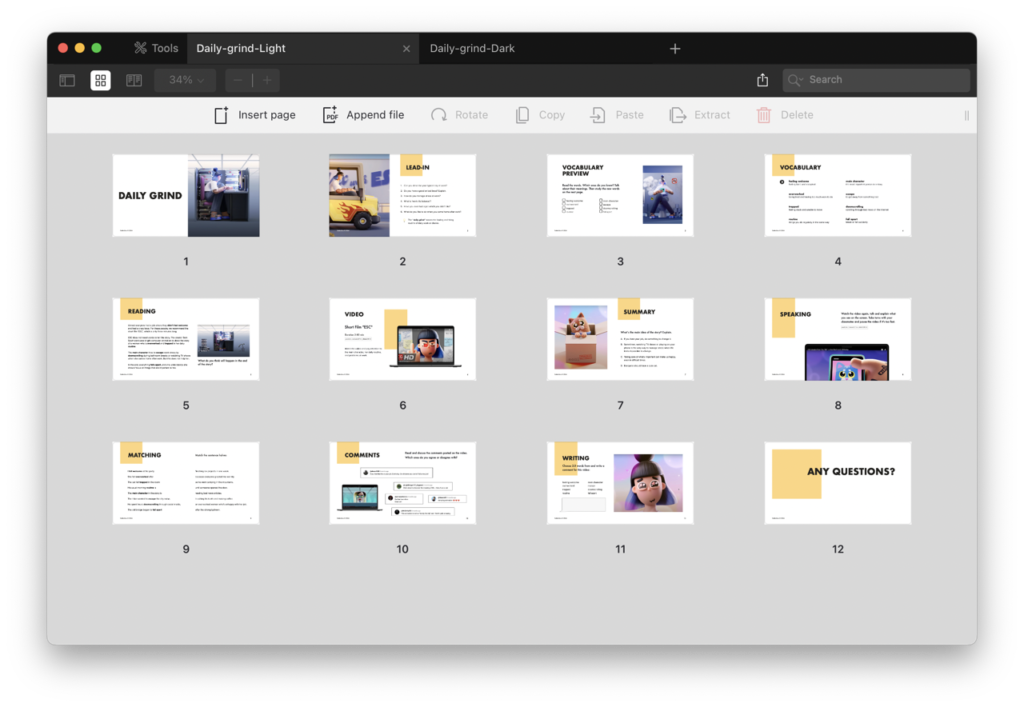
Contents
- Lead-in
- Vocabulary preview
- Vocabulary
- Reading
- Video
- Summary
- Speaking
- Matching
- Comments
- Writing
Begin with the six lead-in questions on page 1 about typical workdays, good or bad bosses, stress management, work-life balance, jobs students didn’t like, and after-work activities. The note explains that “daily grind” means boring and tiring daily routines. Pages 2-3 introduce eight vocabulary terms. Students identify which words they know, then learn the rest.
Page 4 has a short reading that introduces the ESC short film. The reading describes an overworked woman trapped in her routine who tries to escape through doomscrolling and watching TV. Students predict what will happen at the end. Page 5 has the 3-minute ESC video. It’s wordless but powerful. Students watch the main character’s daily routine and work problems unfold.
Page 6 asks students to identify the main idea from four options. Option C about taking care of what’s important is the intended message, but students usually pick option A about changing your job because that feels more realistic to them. Page 7 has students watch again and describe what they see, pausing when needed. The video moves fast so they definitely need those pauses.
Page 8 is a matching exercise connecting sentence halves. Page 9 shows real YouTube comments from the ESC video for students to discuss. Page 10 has students write their own comments using 2-3 vocabulary words. Their comments are often more personal than expected because the video hits close to home.
