
Creative Travel Hacks

This B1 lesson teaches practical travel safety tips using everyday items like carabiners, zip ties, and rubber bands. Students watch two short TikTok videos, learn the names of twenty common objects, and figure out how to combine them for safer travel. It’s hands-on and visual, which keeps students engaged even if they’re not big travelers.
Lesson overview
- Learn the names of twenty everyday items like fanny pack, buckle, dryer sheet, and shoulder strap
- Watch two short videos showing real travel safety hacks and summarize each tip
- Fix incorrect definitions and unscramble sentences using the target vocabulary
- Build a collaborative story using vocabulary words and travel-themed topics
| Level | Vocabulary | Lesson Еime |
| B1 / Intermediate | 20 words | 60-90 min |
Vocabulary
- Carabiner
- Zipper
- Door handle
- Backpack
- Plastic cup
- Coins
- Ribbon string
- Phone case
- Diapers package
- Plastic bag
- Toilet seat
- Zip tie
- Fanny pack
- Buckle
- Dryer sheet
- Suitcase
- Rubber band
- Stroller
- Shoulder strap
- Legs
Contents
- Lead-in
- Vocabulary
- Answer key
- Discussion 1
- Video 1
- Discussion 2
- Video 2
- Speaking
- Practice 1
- Practice 2
- Questions
- Storytelling
- Homework
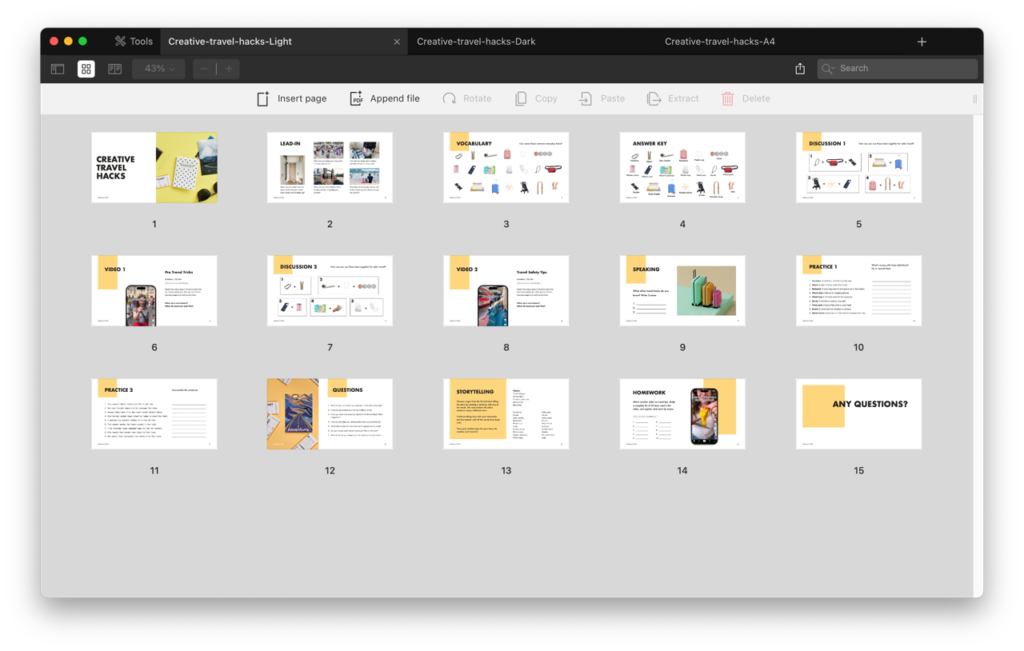
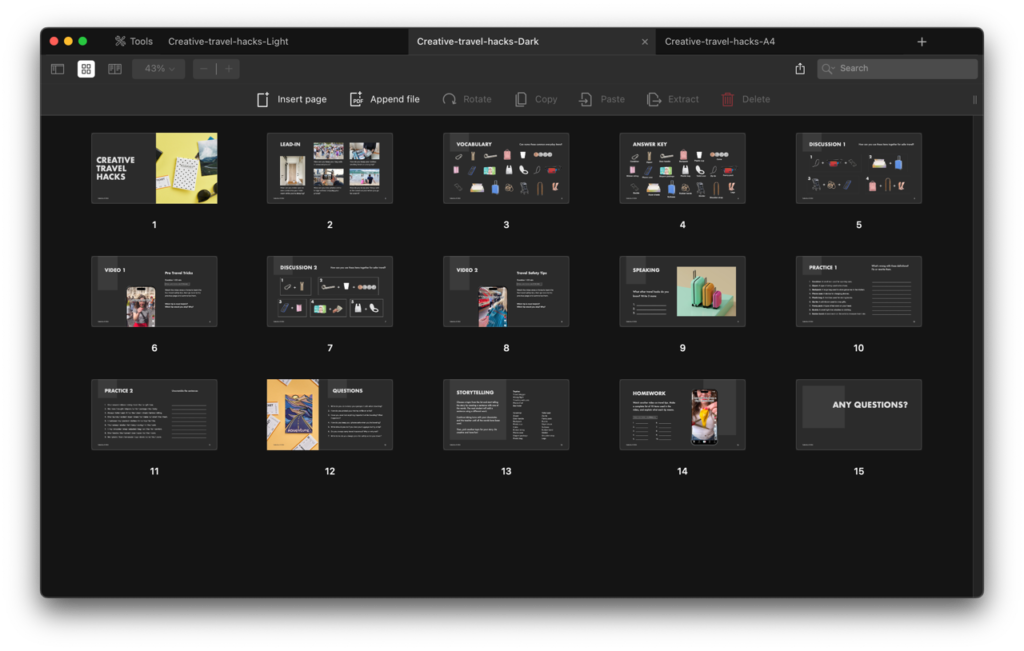
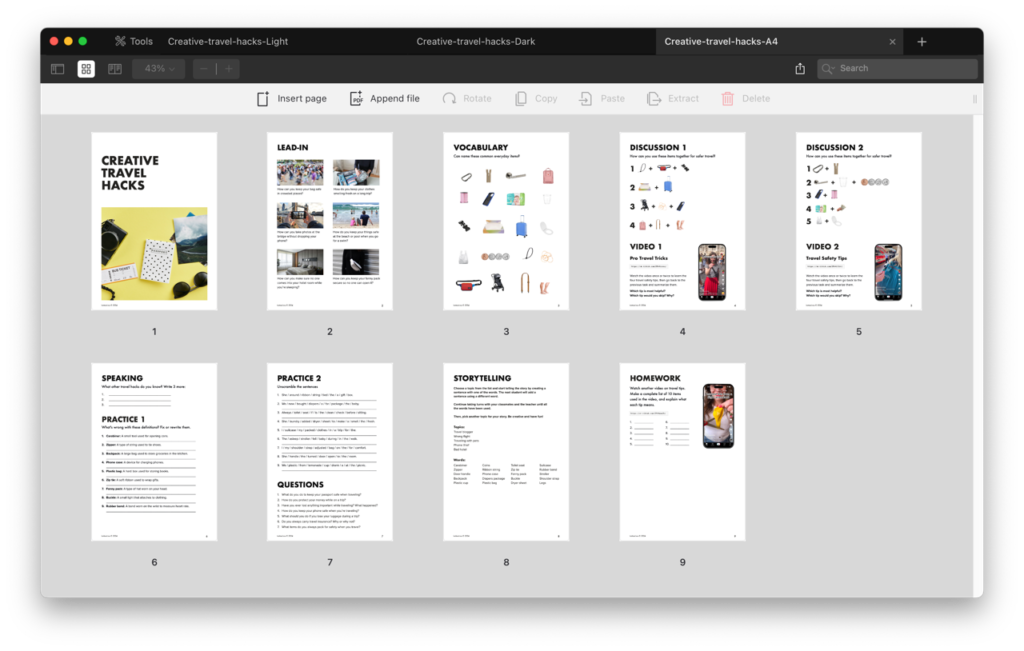
The lead-in slides work as a puzzle. Students see five travel problems, like keeping your hotel room secure or protecting your phone on a bridge, and suggest solutions. Don’t give answers yet. These same problems show up in the videos later, so students get to check their ideas against the real hacks. After the initial discussion, move to the vocabulary picture grid. Twenty everyday items are shown without labels. Students try to name as many as they can before you reveal the answer key. Some items like “carabiner,” “zip tie,” and “dryer sheet” will be new for most B1 learners. Others like “backpack,” “suitcase,” and “plastic bag” are easy wins. Go through pronunciation for the tricky ones and give a one-sentence explanation for anything students haven’t seen before.
The first discussion slide shows four combinations of items and asks students how they’d use them together for travel safety. For example, a carabiner plus a zipper plus a backpack. Let students guess, then play the first video. It’s about a minute long and shows four travel tricks. After watching, go back to the discussion slide and have students summarize each hack. Ask which tip they’d actually use and which they’d skip. Repeat the same process for the second video with five new item combinations and five new tips. This watch-then-summarize pattern keeps students active rather than just passively watching.
The two practice exercises test vocabulary in different ways. Practice 1 gives nine wrong definitions that students need to fix. “Carabiner: A small tool used for opening cans” needs to be corrected to something about clipping things together. This is fun because the wrong definitions are obviously silly, which keeps the mood light. Practice 2 is a sentence unscramble with nine jumbled sentences using words like “ribbon string,” “dryer sheet,” “stroller,” and “shoulder strap.” Both exercises reinforce spelling and meaning without feeling like a test.
Wrap up with the collaborative storytelling activity. Students pick a topic like “phone thief” or “wrong flight” and take turns adding sentences that include vocabulary words from the lesson. Each student uses a different word, and the story builds until all twenty have been used. This is the kind of activity where the stories get wonderfully weird, which is exactly the point. The discussion questions about passport safety, lost luggage, and travel insurance make a good cooldown before the homework video assignment. Students watch a third travel tips video at home, list ten items, and explain each hack.
