
Countries & Nationalities

This A2 lesson introduces students to countries and nationalities vocabulary in a fun, interactive way. Students learn how to form nationality adjectives from country names and practice describing where people are from. The lesson includes engaging activities like word scrambles, listening tasks, and personalized speaking prompts that help beginners build confidence talking about global cultures.
Lesson overview
- Practice forming nationality adjectives using common patterns like -an, -ese, and -ish
- Learn vocabulary related to countries, languages, and cultural landmarks
- Develop speaking skills through personal sentence completion activities
- Explore cultural features of different countries through listening comprehension tasks
| Level | Vocabulary | Lesson Time |
| A2 / Pre-Intermediate | 8 words | 60 min |
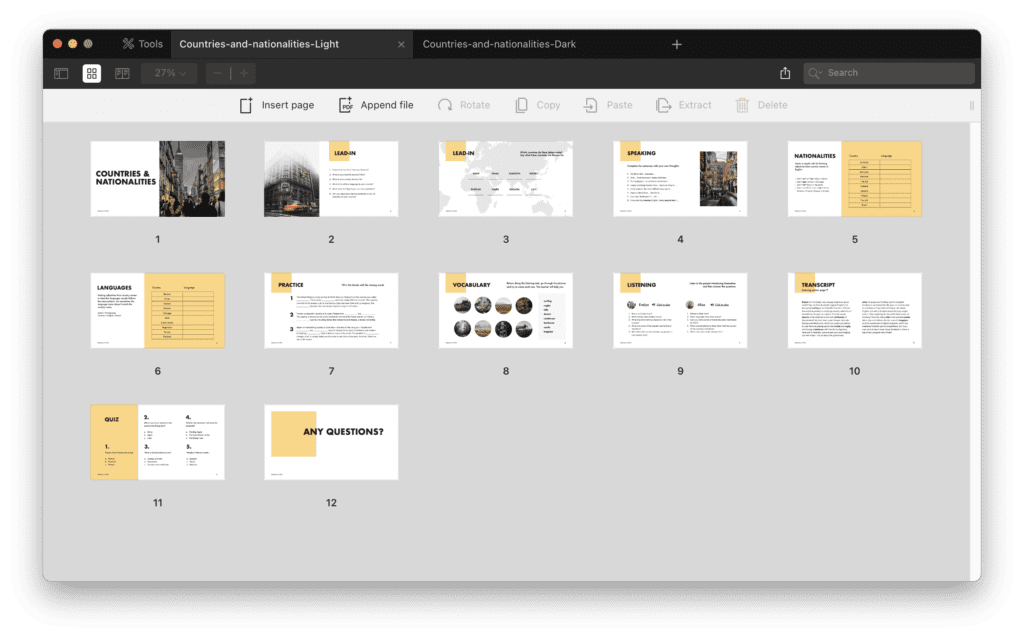
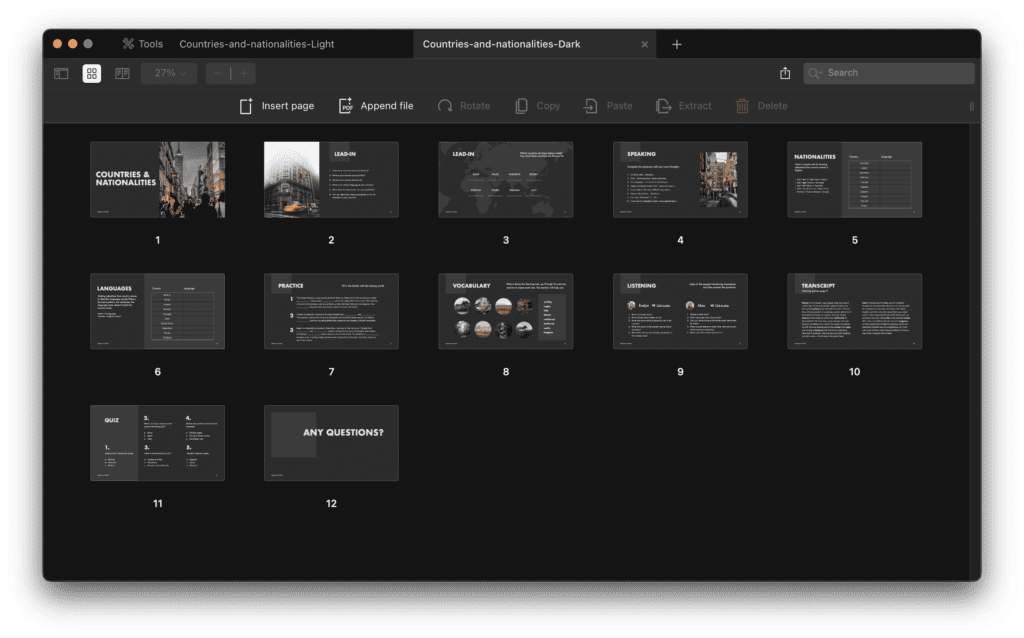
Vocabulary
- surfing
- rugby
- hills
- desert
- rainforest
- barbecue
- castle
- bagpipe
Contents
- Lead-in
- Speaking
- Nationalities
- Languages
- Practice
- Vocabulary
- Listening
- Transcript
- Quiz
Start with the warm-up questions on page 2 to get students thinking about travel and their home country. Keep it conversational and encourage students to share real experiences.
Move into the word scramble activity on page 3. Students unscramble country names like Spain, China, and Germany. After they solve each one, ask what these places are famous for. This gets everyone talking and builds vocabulary along the way.
Then introduce the nationality formation rules on page 5. Walk through the patterns together. Students need to see that most follow -an or -ian, some use -ese, and a few are irregular like French or Greek. Have them complete the country-nationality matching exercise and check answers as a class.
The language section on page 6 matters because students often mix up nationality and language. Point out examples like Brazil where people speak Portuguese, not Brazilian. The fill-in-the-blank texts on page 7 give controlled practice before moving to freer activities.
Before the listening task on page 9, pre-teach vocabulary from page 8 like bagpipe, rugby, and rainforest. Play each audio segment twice. Students answer comprehension questions about Evelyn from Australia and Alisa from Scotland.
Wrap up with the speaking activity on page 4 where students complete sentences about their own preferences and experiences. This gives everyone a chance to use the new language in a personal way. The quiz on page 11 works well as a quick review or homework task.
