
Colors & Shades

This A2 lesson teaches students how to describe colors and shades with precise vocabulary beyond basic color names. Students learn 18 specific shade names like salmon, teal, and lavender, then practice using them through visual activities and games. The lesson makes color vocabulary accessible through comparisons to familiar objects like fruits, flowers, and everyday items.
Lesson overview
- Learn names for 11 basic colors and 18 specific color shades
- Practice describing colors using modifiers like dark, light, and -ish
- Develop speaking skills through guessing games and storytelling with color vocabulary
- Explore how shade names help communicate more precisely than basic colors
| Level | Vocabulary | Lesson Time |
| A2 / Pre-Intermediate | 29 words | 60 min |
Vocabulary
- Red
- Orange
- Yellow
- Green
- Blue
- Purple
- Pink
- Brown
- Black
- White
- Gray
- Salmon
- Crimson
- Maroon
- Navy
- Teal
- Azure
- Lime
- Olive
- Jade
- Canary
- Mustard
- Gold
- Lavender
- Violet
- Eggplant
- Beige
- Chestnut
- Chocolate
Contents
- Lead-in
- Basic colors
- Shades 1
- Shades 2
- Useful words
- Practice
- Answers
- Storytelling
- Vocabulary practice
- Guessing game
- Review
- Wrap-up
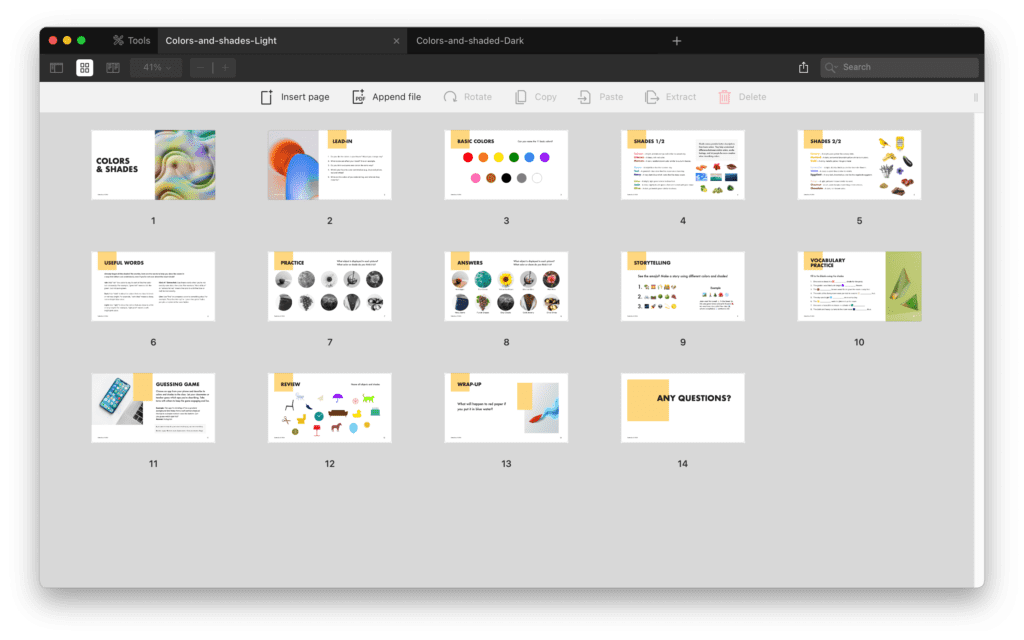
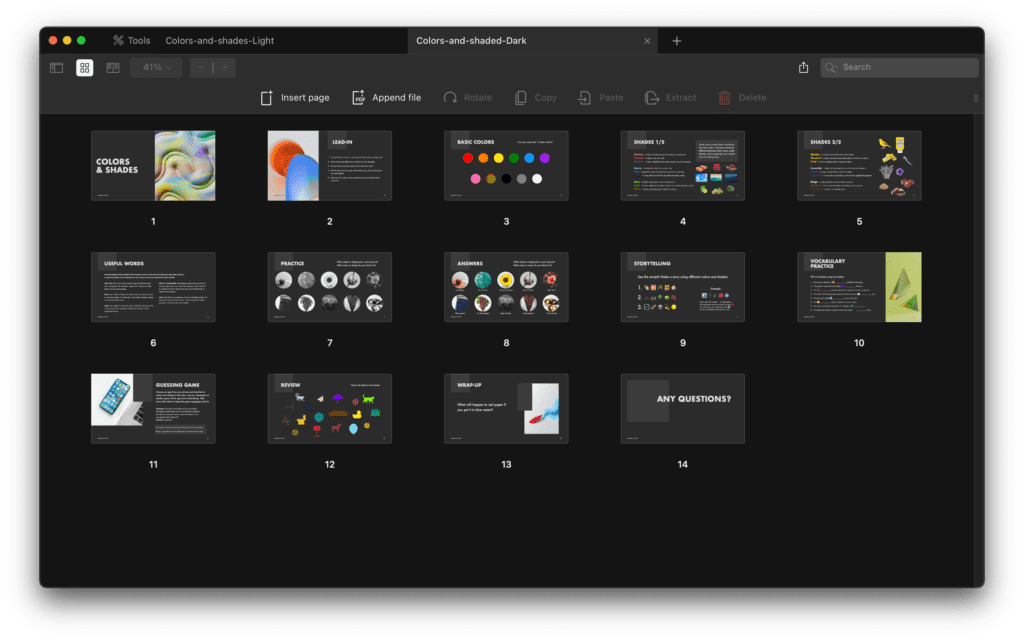
Start with the lead-in questions about colors in daily life. Most students have opinions about favorite colors or how colors affect mood. The basic colors review on page 3 checks that everyone knows the foundation before adding new vocabulary.
Pages 4-5 introduce 18 shade names organized by color family. Don’t try to memorize everything at once. Focus on visual comparisons like salmon being similar to sunset sky or navy looking like deep ocean. These mental images stick better than abstract definitions. Read through the shades together and have students repeat the names for pronunciation practice.
Page 6 gives students useful descriptive tools when they forget exact shade names. Words like dark, light, and -ish let students communicate effectively even without perfect vocabulary recall. Practice these modifiers with examples before moving to activities.
The practice activity on pages 7-8 uses grayscale images so students focus on identifying objects and describing what colors they would be. This removes the pressure of seeing actual colors and lets students apply the vocabulary they just learned. The storytelling activity on page 9 uses emoji prompts to create short narratives that incorporate color descriptions.
The guessing game on page 11 works best with familiar objects like phone apps, logos, or brands. Students describe colors without naming the object and classmates guess. The review on page 12 and wrap-up riddle on page 13 close things out in a lighthearted way.
