
Chinese New Year

This B1 lesson looks at Chinese New Year through three angles: someone heading home for the holiday, a family getting together to celebrate, and an expat watching it all from the sidelines. Students work with intermediate vocabulary about cultural traditions, family dynamics, and travel, and talk about how holidays can be wonderful and exhausting at the same time.
Lesson overview
- Practice vocabulary related to holidays, family gatherings, and cultural traditions
- Develop reading comprehension through three first-person perspectives
- Learn to express opinions about family expectations and holiday customs
- Discuss cultural differences and personal experiences with celebrations
| Level | Vocabulary | Lesson Time |
| B1 / Intermediate | 20 words | 60 min |
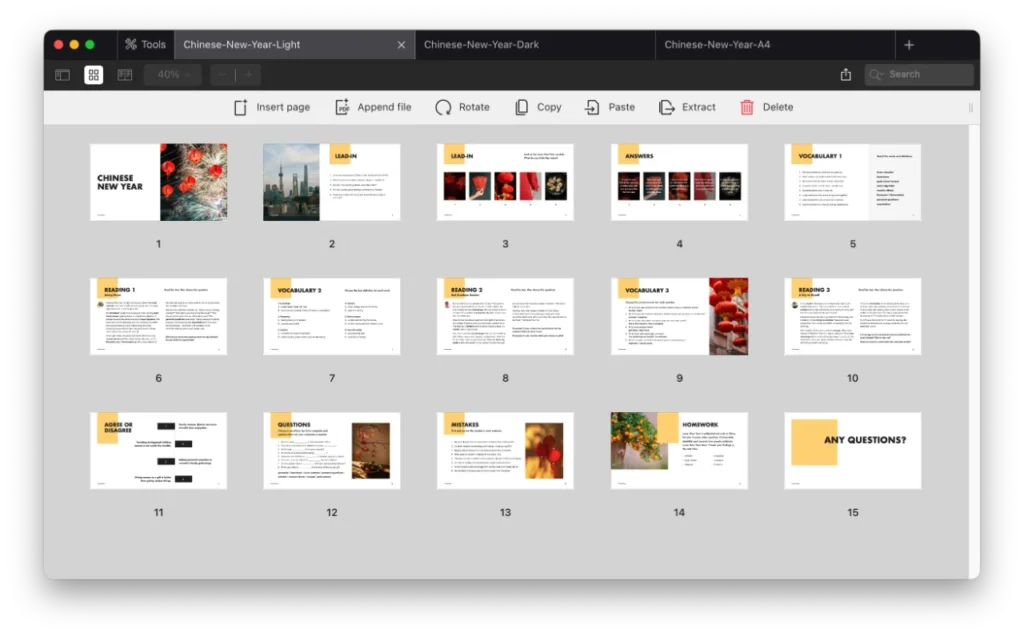
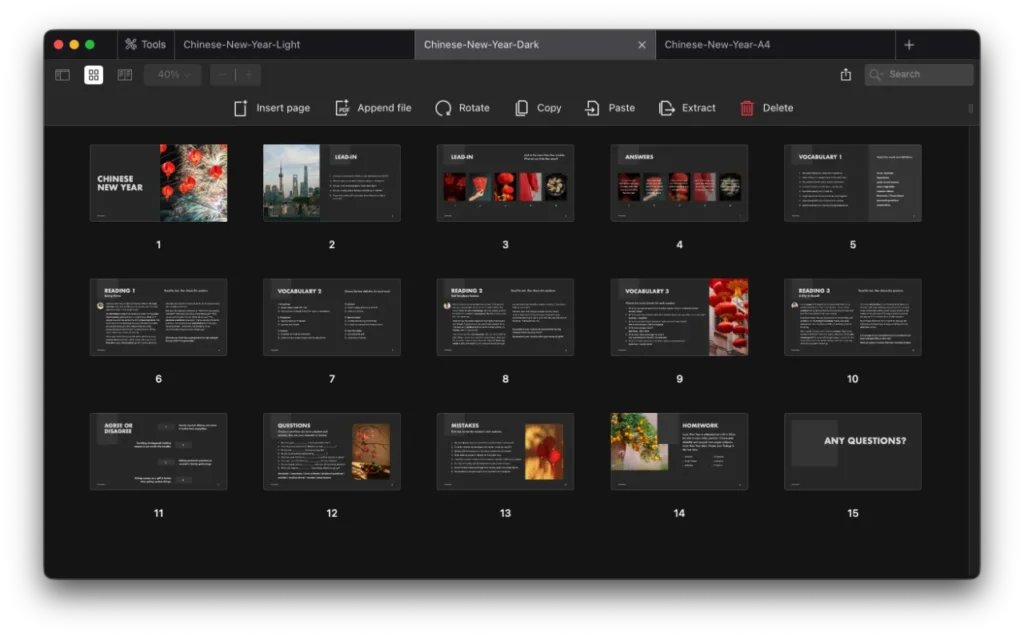
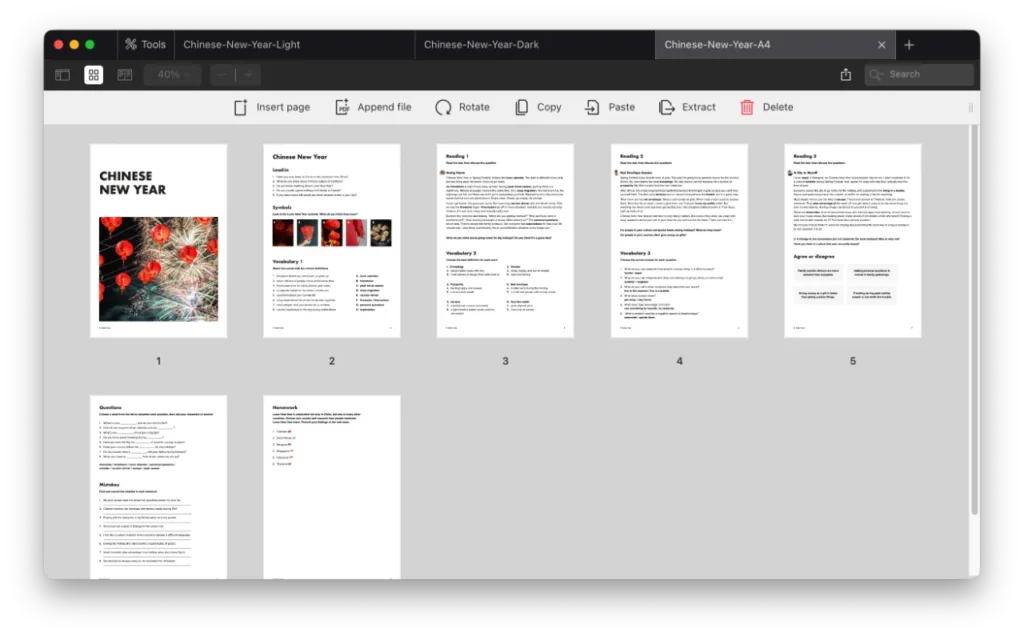
Vocabulary
- lunar calendar
- hometown
- peak travel season
- mass migration
- reunion dinner
- fireworks / firecrackers
- personal questions
- expectation
- dumplings
- prosperity
- lantern
- chaotic
- red envelope
- hurt the wallet
- expat
- outsider
- live in a bubble
- escape
- take advantage
- downside
Contents
- Lead-in
- Vocabulary 1
- Reading 1
- Vocabulary 2
- Reading 2
- Vocabulary 3
- Reading 3
- Agree or disagree
- Questions
- Mistakes
- Homework
Start with the lead-in questions to see what students already know about China and holiday traditions. If they know very little, that’s fine. The questions about spending holidays with family will help them connect the topic to their own lives.
Move to the symbol matching activity. Let students guess what the images represent before you tell them. This makes them curious and gives them context for the vocabulary coming later. You can ask follow-up questions like “Does your country have similar traditions?” to keep things conversational.
The first vocabulary set has key terms they’ll need for the readings. Have students match words to definitions, then write example sentences using their own experiences. This works better than just memorizing definitions.
For the three reading texts, assign each one separately with its discussion questions. The texts get more complex as you go and show different viewpoints on the same holiday. After each reading, give students time to discuss in pairs before opening it up to the whole class. The personal questions in the texts make students laugh because they’re relatable across cultures.
The second and third vocabulary sections work the same way as the first. Use multiple-choice formats to check understanding, then have students practice using the new words in context. The “Agree or Disagree” activity works well as a debate. Split the class and have them argue both sides.
Finish with the gap-fill questions where students personalize the vocabulary. This gives them a chance to use everything they’ve learned naturally. The mistake correction activity catches common errors you’ll probably hear during the lesson. The homework research project takes learning beyond class and works well for the next lesson’s warm-up.
