Childhood vs Adulthood
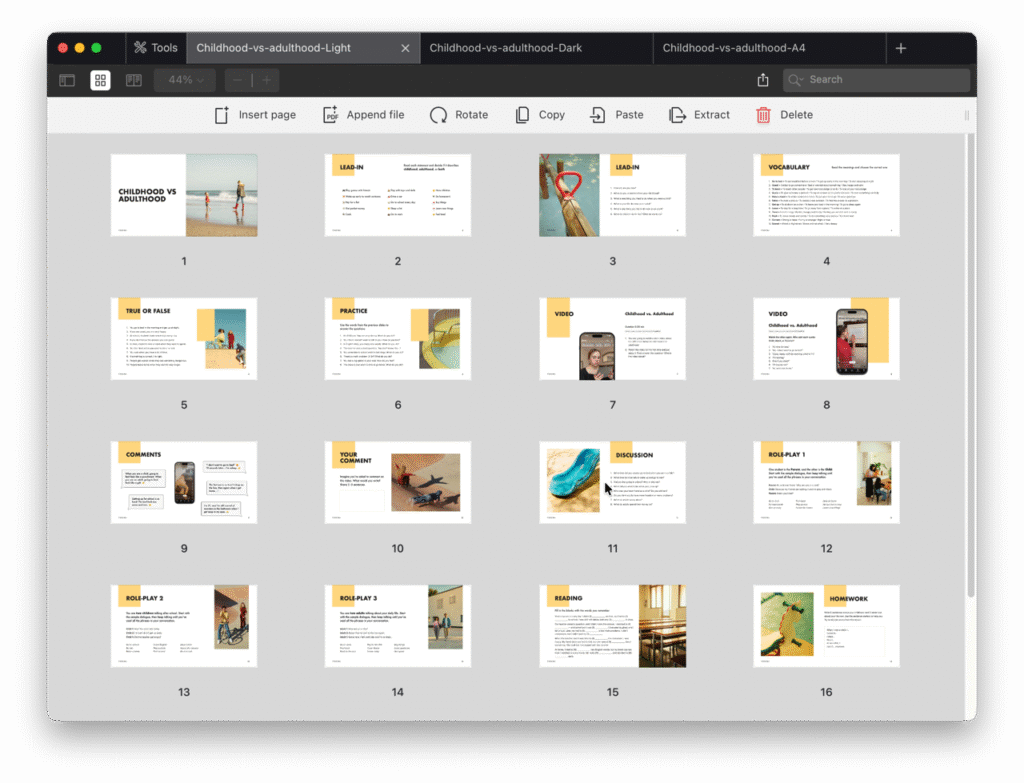
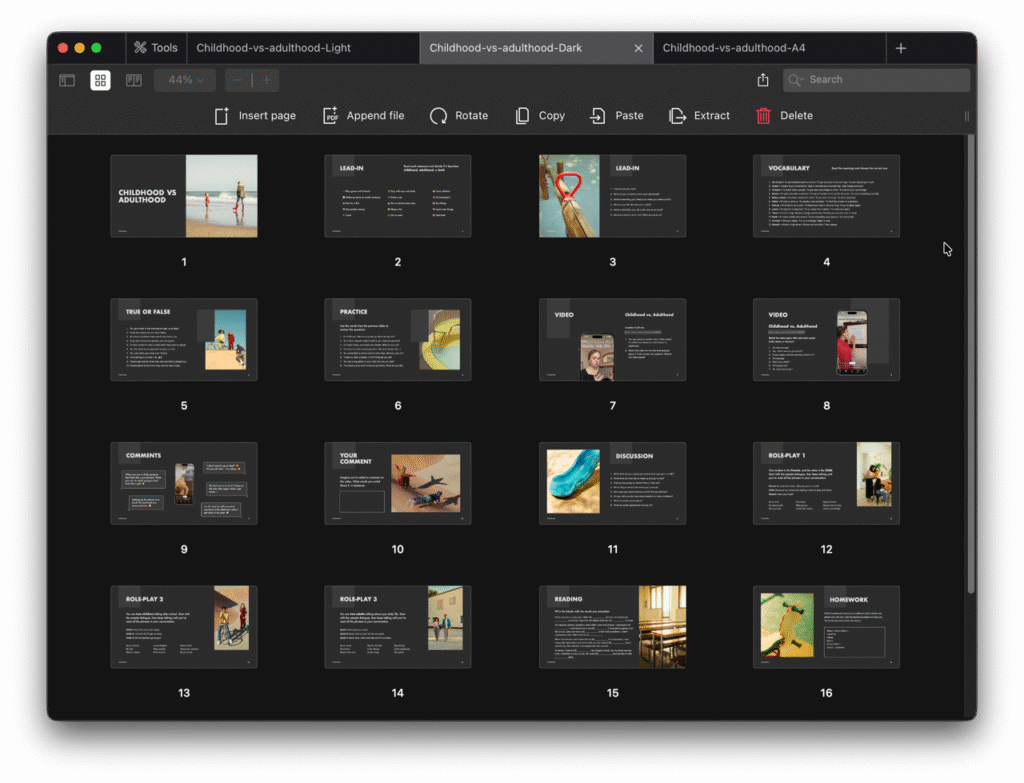
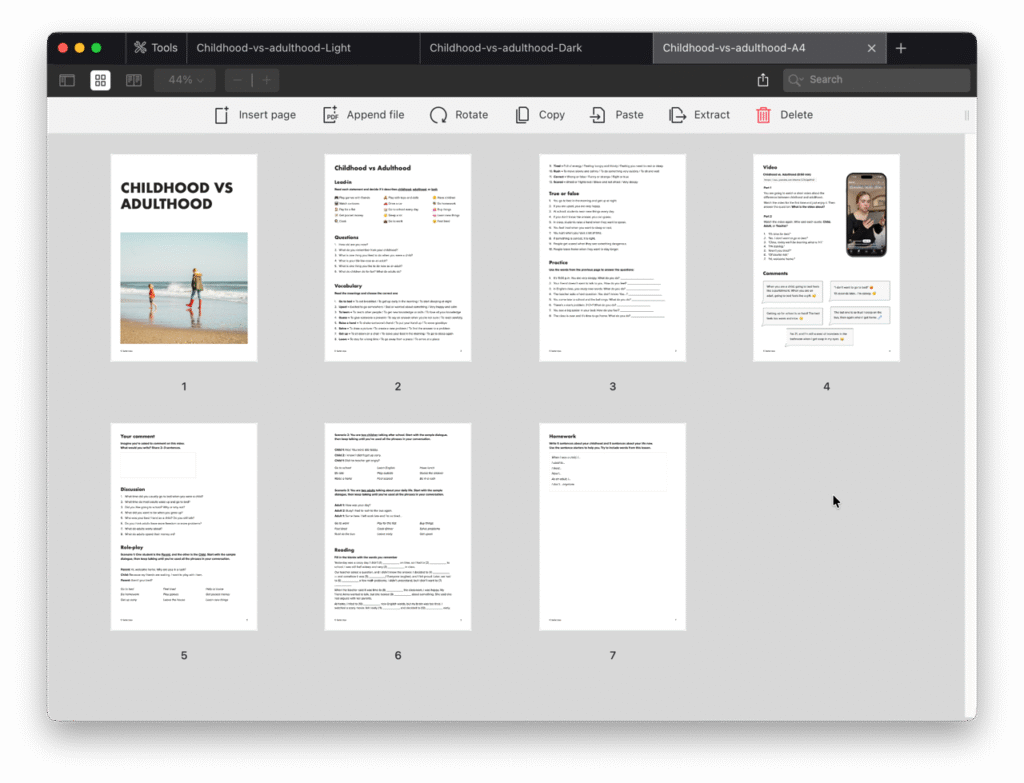
This A2 lesson compares childhood and adulthood through relatable activities and routines. Students learn vocabulary like “go to bed,” “rush,” “upset,” and “solve,” then watch a funny video contrasting how children and adults feel about sleep. The activities include true/false statements, role-plays comparing different life stages, and reflective discussions about growing up.
Lesson overview
- Practice vocabulary related to daily routines, feelings, and life responsibilities
- Watch a short video showing the ironic differences between childhood bedtime resistance and adult exhaustion
- Develop speaking skills through three role-plays acting as children, parents, and working adults
- Compare childhood memories with current adult life using sentence starters and discussion prompts
| Level | Vocabulary | Video Length | Lesson Time |
| A2 / Pre-Intermediate | 12 words | 0:50 min | 60 min |
Vocabulary
- Go to bed
- Upset
- Learn
- Guess
- Raise a hand
- Solve
- Get up
- Leave
- Tired
- Rush
- Correct
- Scared
Contents
- Lead-in
- Vocabulary
- True or false
- Practice
- Video
- Comments
- Your comment
- Discussion
- Role-plays
- Reading
- Homework
Start with the sorting activity on slide 2. Students decide whether statements like “play with toys” or “pay for a flat” describe childhood, adulthood, or both. This activates prior knowledge before introducing new vocabulary. The lead-in questions help students share personal memories and current routines using simple past and present tenses.
The vocabulary section teaches twelve essential phrases through multiple-choice definitions. Words like “rush,” “solve,” and “raise a hand” appear constantly in daily conversation, so they’re worth practicing thoroughly. After definitions, students complete true/false statements and answer personal questions using the new words. This recycling helps A2 learners remember the vocabulary.
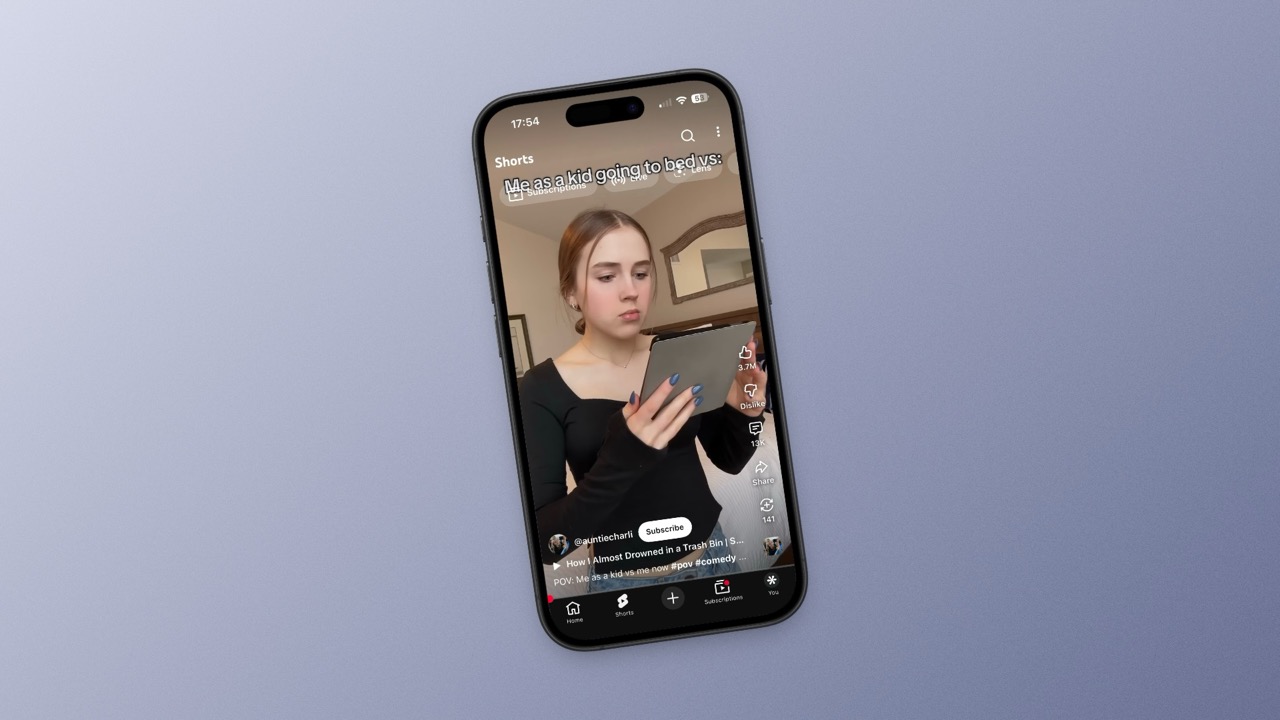
The video runs only 50 seconds but captures a funny truth. Children fight bedtime while adults desperately want sleep. Play it twice. First viewing is just for enjoyment. Second viewing asks students to identify who said each quote. This listening task is manageable for A2 level because the video uses simple, clear language.
The comments section on slide 9 shows authentic reactions to the video. Students read relatable statements about falling asleep on the bus or being scared of bathroom monsters. Then they write their own 2-3 sentence comment, which gives them controlled writing practice. The discussion questions connect the video to their own experiences with school, bedtimes, and childhood dreams.
The three role-plays add energy and speaking practice. Each scenario targets a different perspective: parent-child conversation, two children talking after school, and two adults discussing their busy day. Students must use all the provided phrases naturally in their dialogue. This forces them to practice the vocabulary actively instead of just recognizing it passively.