
Cheesy Christmas Movies
This C1 lesson analyzes predictable Christmas romance movies through a parody video highlighting every cliché. Students learn vocabulary like “quirky,” “misjudge,” and “hustle and bustle,” then debate whether formulaic plots comfort or insult audiences. The activities include identifying movie tropes, summarizing scenes using prompts, rephrasing exercises, structured debates about gender stereotypes, and collaborative cliché storytelling.
Lesson overview
- Build vocabulary related to personality traits, lifestyle choices, and character revelations
- Watch a satirical video that condenses every Hallmark Christmas movie into one predictable storyline
- Develop debate skills by arguing opposing views on predictable romance, career sacrifices, and urban stereotypes
- Practice collaborative storytelling by creating absurd Christmas rom-com plots using target vocabulary
| Level | Vocabulary | Video Length | Lesson Time |
| C1 / Advanced | 8 words | 3:28 min | 60 min |
Vocabulary
- quirky
- rough and tough
- insecure
- hustle and bustle
- misjudge
- reveal
- fresh start
- look like a mess
Contents
- Lead-in
- Vocabulary
- Definitions
- Video
- Summary
- Comments
- Practice
- Debate
- Storytelling
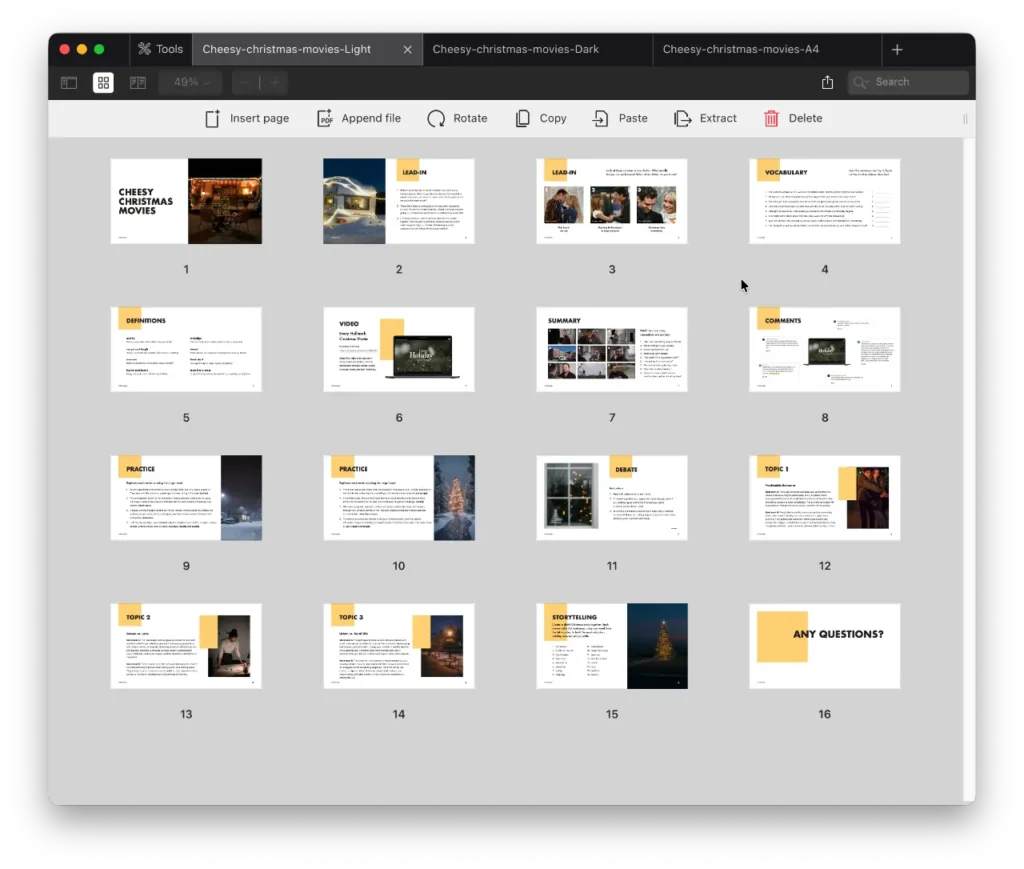
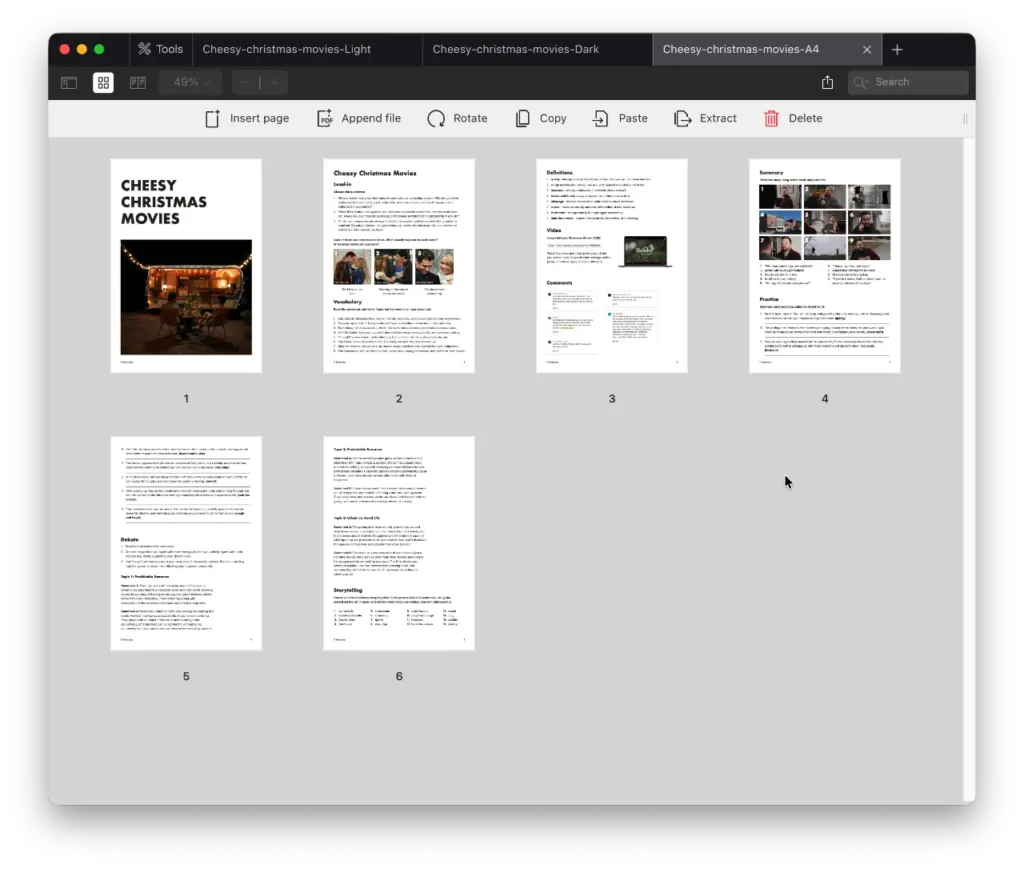
Start with the lead-in questions about why audiences enjoy predictable plots and whether happy endings improve or cheapen stories. C1 students can handle abstract analysis about narrative comfort versus artistic challenge. The cliché images on slide 3 show airport chase scenes, rain kisses, and Christmas miracle endings. Students describe what typically happens in each scenario, activating prior knowledge about romantic comedy conventions.
The vocabulary section introduces eight useful phrases through context sentences. Make sure students understand “quirky” describes charmingly unusual traits, not negatively weird behavior. “Hustle and bustle” captures the busy city energy that Christmas movie protagonists always flee. “Misjudge” appears when the successful woman initially dismisses the small-town guy as simple before discovering his hidden depths. After reading sentences, students guess which phrase each one describes.
The video runs 3:28 minutes and parodies every Hallmark Christmas movie simultaneously. A successful journalist leaves the city for a small town, meets a shockingly attractive farm boy, finds her “fresh new story,” experiences an almost-kiss interrupted by noise, has a misunderstanding breakup, then gets back together with a cheesy declaration. Students note every cliché they spot including settings, outfits, props, character types, and plot beats.
The summary activity on slide 7 uses nine screenshots with prompts. Students retell the story using these visual anchors and dialogue snippets like “You again? Are you everywhere?” and “If you’re a mess, that’s a mess I want to clean up the rest of my days.” This tests whether they caught the narrative structure and can articulate why it’s formulaic.
The comments section shows real viewer reactions ranging from amused recognition to criticism of gender stereotypes. Students read these, then the rephrasing exercises require using target vocabulary to rewrite eight sentences. For example, they transform “filled with strange vintage dolls, only wears purple on Tuesdays” into a sentence using “quirky.”
The debate section provides three structured topics with opposing statements. Topic 1 explores whether predictability comforts or insults viewers. Topic 2 examines the “career woman gives up everything for love” trope and whether it validates alternative happiness or reinforces sexist narratives. Topic 3 debates urban versus rural stereotyping. C1 students can handle these nuanced positions that don’t have clear right answers.
The instructions on slide 11 explain debate format: choose a position, prepare arguments for three minutes, present your case, then respond to rebuttals for two minutes. This structure works well for advanced learners who can build logical arguments without personal attacks.
The final storytelling activity creates collaborative chaos. Students take turns adding 2-3 sentences to build the most ridiculous Christmas rom-com possible, using vocabulary words in order. This recycles all the lesson language naturally while ending with creative fun.
