
Can AI Do My Laundry?

This B1 lesson asks whether AI makes life easier or just replaces the fun parts. Students learn eight vocabulary terms like “capable of,” “mechanical,” and “fold,” watch a short video comparing AI to robots, and debate what tasks technology should actually handle. The activities include a slide-based warm-up, video comprehension, and a creative speaking task where students describe a fully automated day.
Lesson overview
- Learn eight vocabulary words related to AI, robots, and daily tasks
- Watch a video explaining what AI can and cannot do in everyday life
- Read and discuss a dialogue about the limits of current AI technology
- Create and present a timeline describing a fully automated day using technology
| Level | Vocabulary | Video Length | Lesson Time |
| B1 / Intermediate | 8 words | 1:26 min | 60 min |
Vocabulary
- AI
- laundry
- recommend
- mechanical
- fold
- capable of
- karate
- solve
Contents
- Lead-in (10 pictures)
- Lead-in questions
- Vocabulary match
- Video
- Dialogue
- Comments
- Practice 1
- Practice 2
- Timeline
- Homework
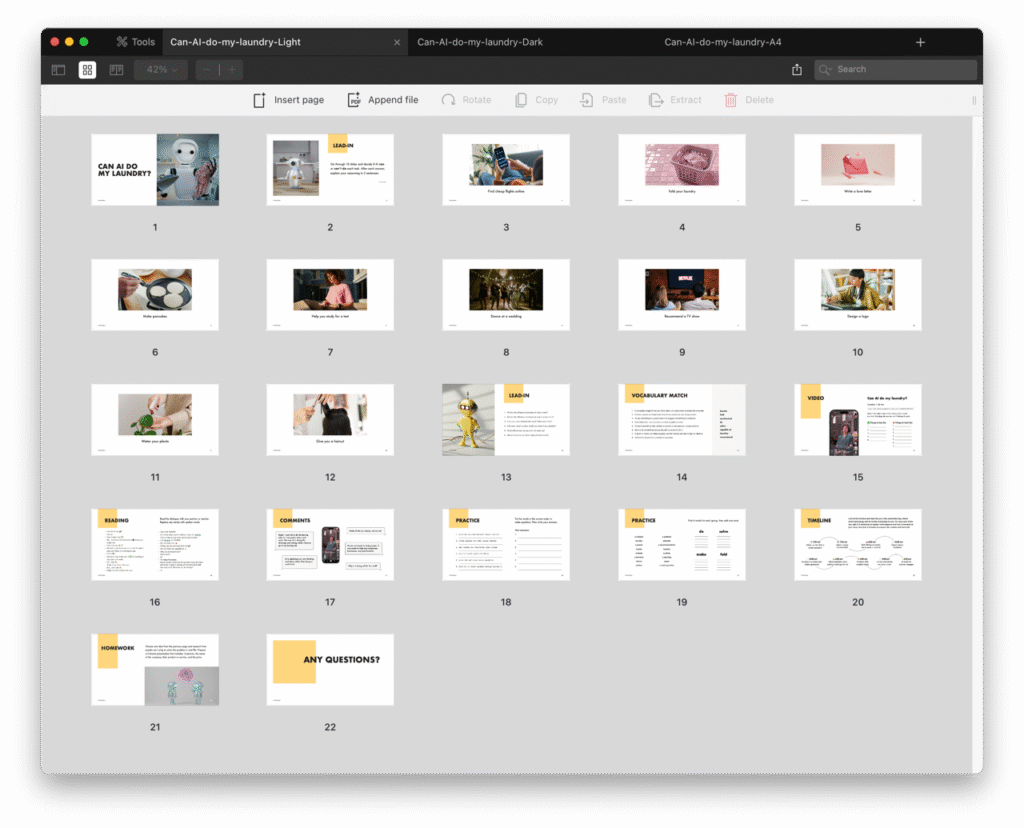
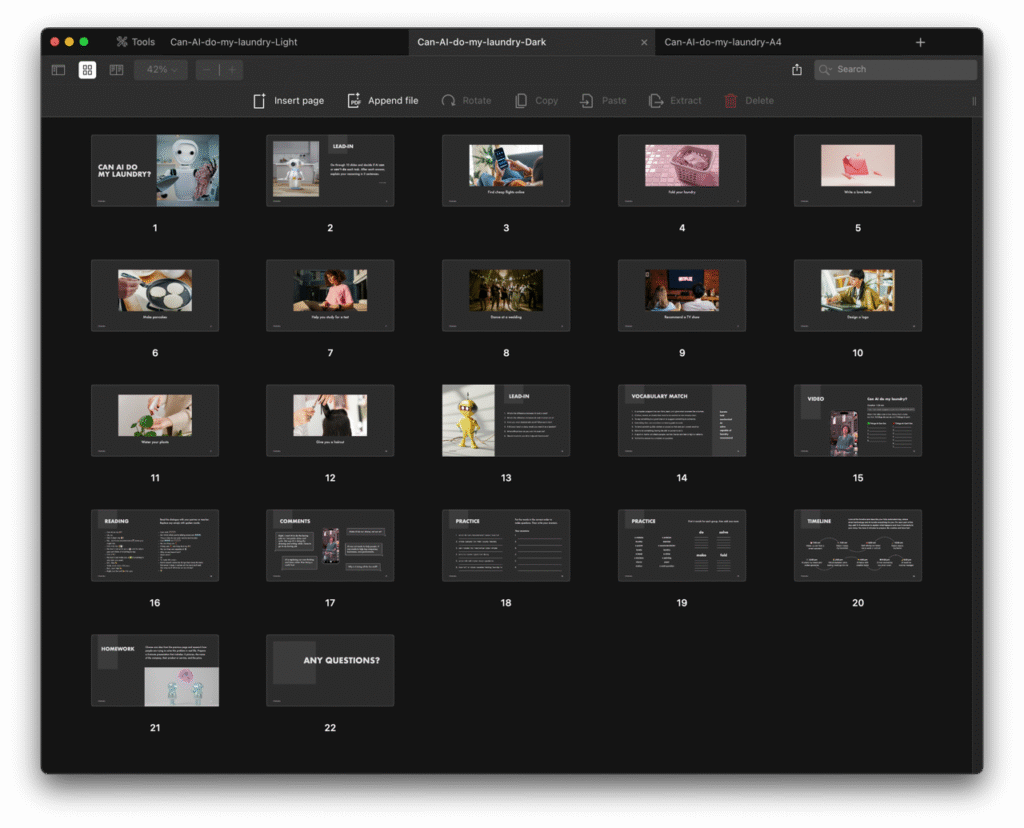
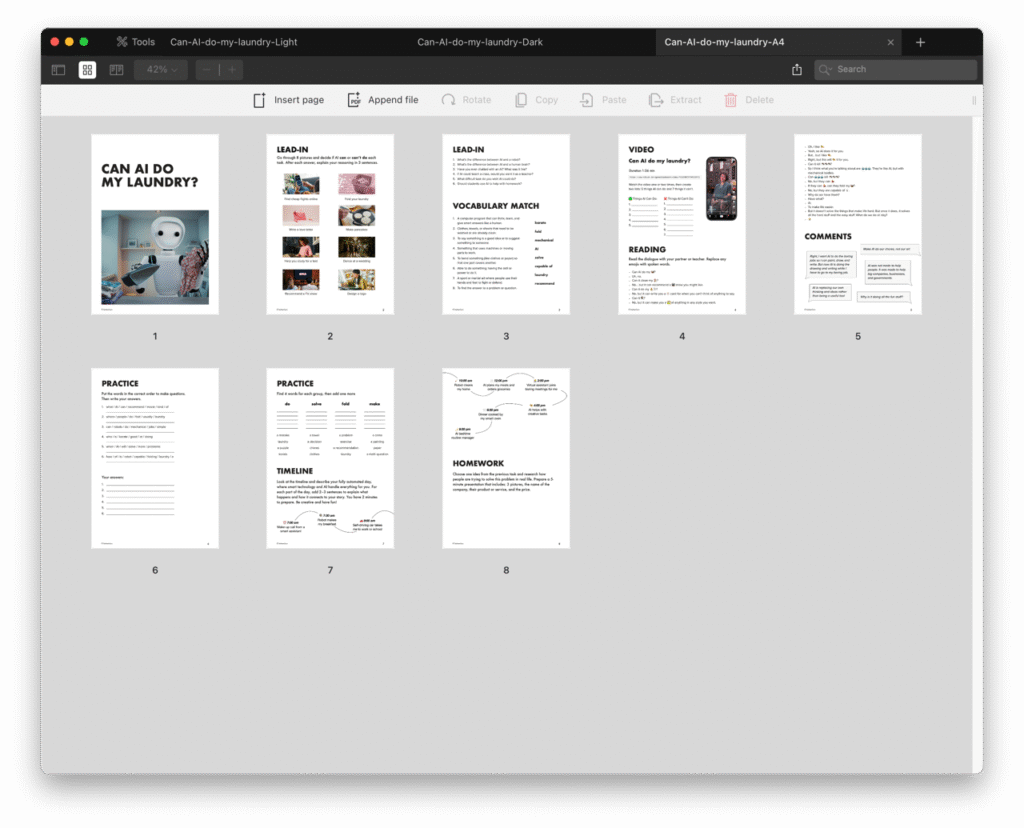
Start with the ten-slide warm-up. Show each slide and students decide if AI can or cannot do that task. They explain their reasoning in three sentences. This gets them thinking critically about what AI actually does versus what people assume it does. You’ll hear different opinions about tasks like writing love letters or designing logos, which sets up the main theme.
The lead-in questions push deeper. Students discuss the difference between AI and robots, whether they’ve chatted with AI, and if they’d want an AI teacher. The last question about using AI for homework usually sparks debate, so let that conversation run if students are engaged.
The vocabulary matching covers eight key terms. Make sure students understand “capable of” and “mechanical” since those show up repeatedly in the video. The video is short but packed with examples. Students watch once or twice and create two lists covering five things AI can do and seven things it cannot. Check answers together and discuss any surprises. Most students expect AI to handle physical tasks, so the video’s point about robots versus AI clarifies that confusion.
The reading dialogue uses emojis that students replace with spoken words. This makes the activity interactive and checks whether they understood the video’s main ideas. After reading, show the three comments about AI doing art instead of chores. Students react to these perspectives and share which comment matches their own feelings.
The practice section has sentence unscrambling and word grouping. Students put words in order to make questions, then answer them personally. The collocation activity groups words that go with do, make, solve, and fold, which helps students use the vocabulary naturally.
End with the timeline speaking task. Students describe a fully automated day where AI and robots handle everything from wake-up calls to bedtime routines. Give them two minutes to prepare, then have them present to a partner or the class. The homework extends this by asking students to research one real product or service that automates a daily task.
