
Is 10,000 Steps a Day Enough?
This C1 lesson asks whether 10,000 steps a day is really enough and looks at the science behind walking and health. Students watch a video, read about a man who walked around the world in 11 years, and learn vocabulary like “circumnavigate,” “brisk pace,” and “yield benefits.” It’s a good fit for advanced classes that enjoy health topics and real stories.
Lesson overview
- Learn eight vocabulary items related to walking, fitness, and urban design
- Watch a video about the health benefits of walking and pedestrian-friendly cities
- Read about Jean Beliveau’s 11-year walk across 64 countries and discuss his journey
- Practice synonyms for “walk” like stride, trudge, trek, and shuffle in context
| Level | Vocabulary | Video Length | Lesson Time |
| C1 / Advanced | 8 words | 5:25 min | 60-70 min |
Vocabulary
- circumnavigate
- stroll
- brisk pace
- blood vessels
- stroke
- benchmark
- yield benefits
- greenway
Contents
- Lead-in
- Vocabulary
- Definitions
- Reading
- Video
- Comprehension questions
- Reading
- Comments
- Vocabulary practice
- Quote
- Synonyms
- Speaking
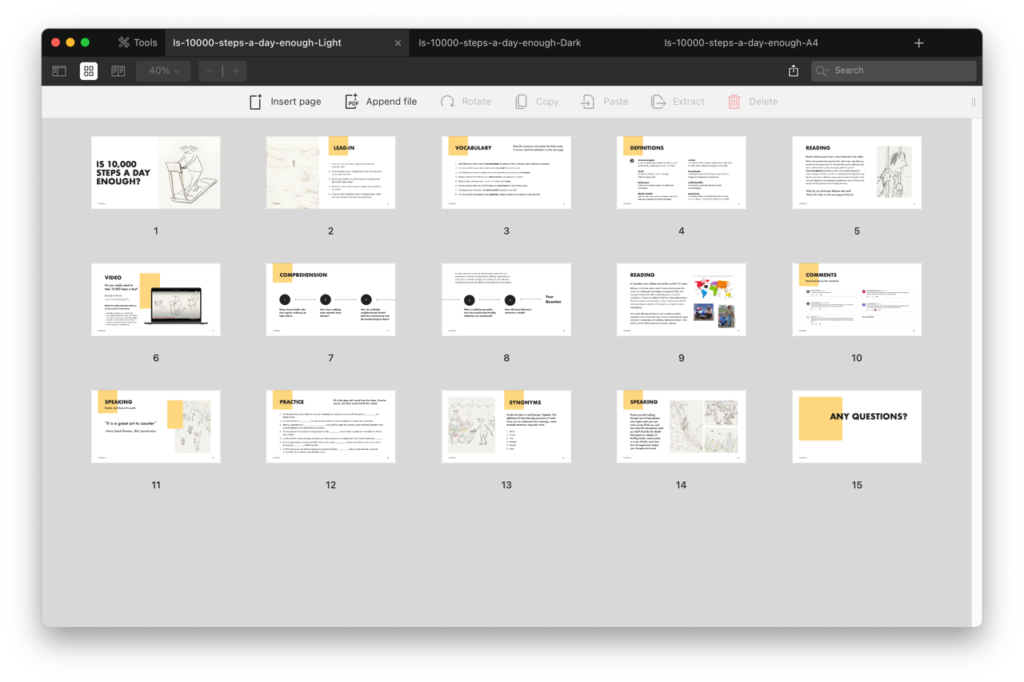
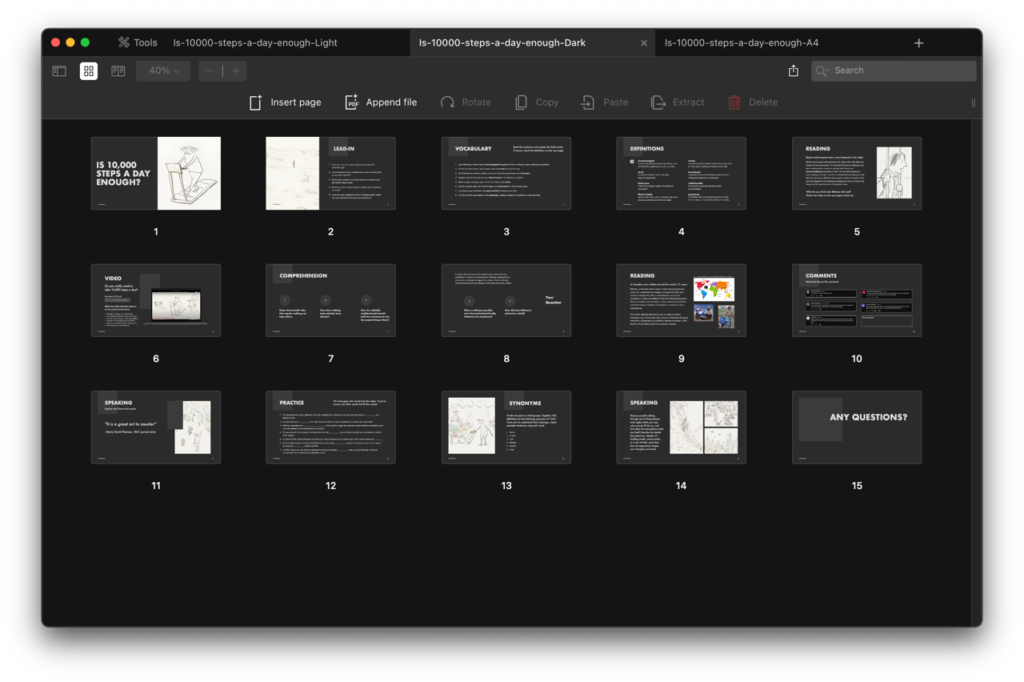
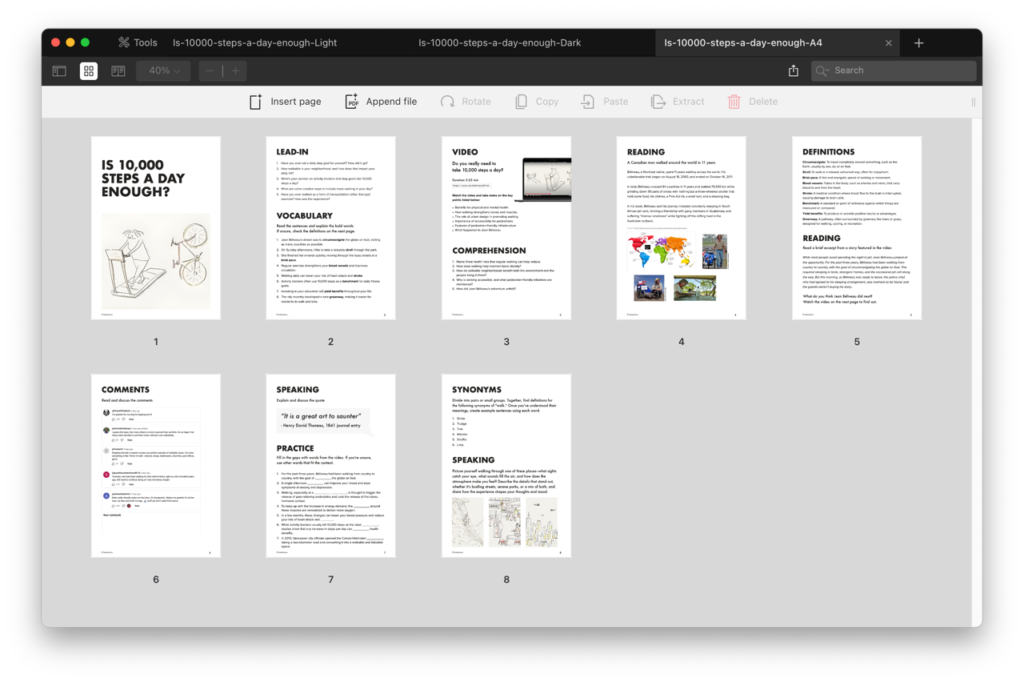
Open with the lead-in questions on slide 2. Questions about step goals and activity trackers get C1 students talking right away because most of them have opinions on fitness tracking. Question 2, about how walkable their neighborhood is, connects nicely to the urban design section of the video later on. Spend about five minutes here before moving to vocabulary.
Slide 3 presents eight vocabulary words in full sentences. Let students try to explain the bold words from context first, then check the definitions on slide 4. “Circumnavigate” and “yield benefits” are the trickiest ones, but both appear again in the video and reading, so students get multiple exposures. The short reading excerpt on slide 5 introduces Jean Beliveau, a man who walked around the world and sometimes slept in jail cells along the way. Have students predict what happened next before playing the video on slide 6.
The video runs about five and a half minutes and covers the physical and mental health benefits of walking, how urban design affects pedestrian activity, and what happened to Beliveau. Give students the note-taking prompts on slide 6 before pressing play so they know what to listen for. After watching, work through the comprehension questions on slides 7 and 8. Then read the longer article excerpt on slide 9 about Beliveau’s full journey. The comments section on slide 10 and the Thoreau quote on slide 11 give students a chance to react and share their own thoughts before the practice activities.
The gap-fill on slide 12 reviews vocabulary from the video. Slide 13 is a synonym activity where students define six words that all mean some version of “walk,” like “trudge,” “shuffle,” and “limp,” then write example sentences. This is a strong exercise for C1 learners building range. Wrap up with the descriptive speaking task on slide 14, where students imagine walking through different places and describe what they see, hear, and feel. It’s an open-ended activity that lets stronger students show off their language while giving everyone something concrete to talk about.
