
Building Meaningful Friendships

This C1 advanced lesson tackles the challenge of building deep friendships versus maintaining superficial social connections. Students explore the concept of rating relationships on a scale from ones to tens, examining whether playing it safe socially prevents genuine intimacy. Through an article about authentic self-expression and risk-taking in relationships, learners develop sophisticated vocabulary while discussing their own friendship patterns and the courage required to form truly meaningful connections.
Lesson overview
- Explore the trade-offs between social safety and authentic relationship depth
- Learn advanced vocabulary for describing intimacy, vulnerability, and social dynamics
- Analyze personal friendship patterns using the ones-to-tens rating framework
- Practice extended speaking through structured presentations on friendship topics
| Level | Vocabulary | Reading Time | Lesson Time |
| C1 / Advanced | 14 words | 9 min / 1865 words | 60 min |

Vocabulary
- Sensible
- Play it safe
- Delve into
- Oddity
- Light-hearted
- Superficial
- Goof off
- Resonate with
- Intimate
- Settle for
- Oscillate
- On the same wavelength
- Downplay
- Manifestation
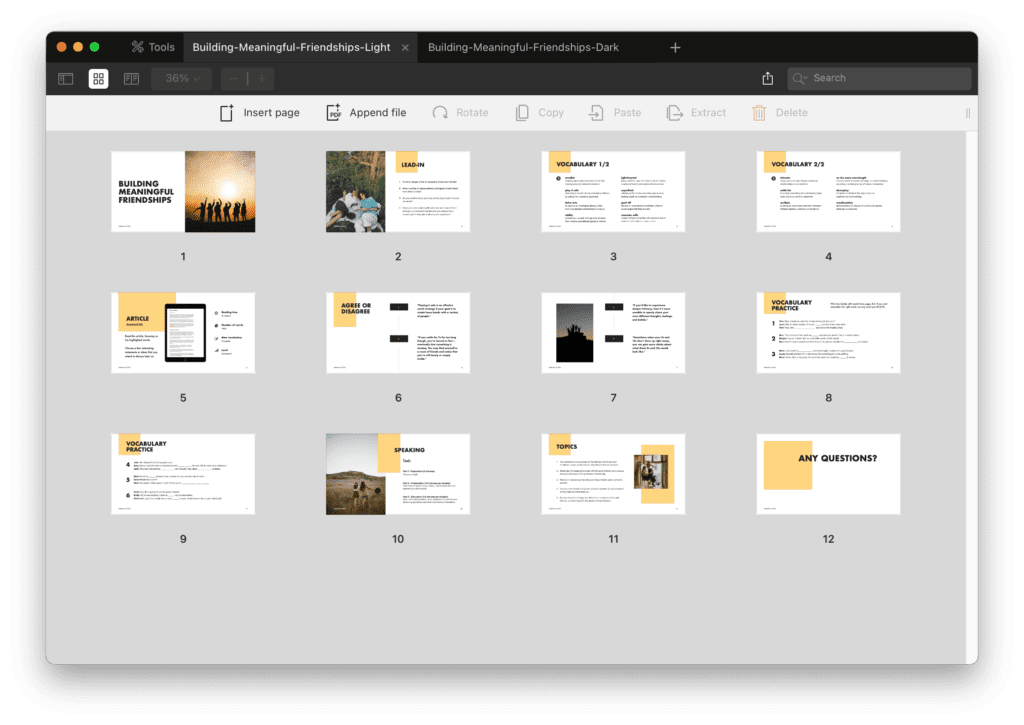
Contents
- Lead-in
- Vocabulary 1
- Vocabulary 2
- Article reading
- Agree or disagree
- Vocabulary practice
- Speaking
Start with the warm-up questions on page 2. Give students three minutes to think about the final question on controversial beliefs in conversations since this ties directly into what they’re about to read. Then pair them up for discussion before sharing key points with everyone.
Pages 3-4 have fourteen advanced vocab items. Spend about eight minutes here, having students read definitions aloud and make example sentences. Focus especially on nuanced expressions like resonate with, on the same wavelength, and manifestation since these show up throughout the article.
The article on page 5 is 1,865 words and takes roughly nine minutes to read. Have students read silently while highlighting anything unfamiliar or ideas that grab them. After reading, they should pick two or three statements they want to discuss. Letting them choose for themselves keeps engagement real.
The agree-or-disagree activity on pages 6-7 has four key quotes from the article. Assign one quote per pair. Give them four minutes to talk through their position, then open it up to the whole class. Push them to back up their opinions with personal examples instead of staying abstract.
Pages 8-9 offer vocab practice through dialogue completion. Students work solo first, then check with partners. Takes about six minutes. If students can’t remember the exact words, accepting reasonable alternatives keeps things moving naturally.
The speaking task on page 10 needs careful timing. Students get two minutes to pick topics and plan. Then each student presents for three to four minutes while others listen actively and prep questions. The follow-up discussion after each presentation builds critical listening skills and creates a supportive vibe around extended speaking.
