
Brain Glitches

This B2 lesson explores everyday memory mistakes through an article about eight common brain glitches. Students learn vocabulary like “autopilot,” “filter out,” and “train of thought” while discussing phenomena like déjà vu and the doorway effect. The activities include self-assessment scales, error correction, and research presentations about additional brain tricks.
Lesson overview
- Learn 10 terms related to memory, focus, and mental processing
- Read about eight brain glitches from tip-of-the-tongue to app amnesia
- Rate how often these glitches happen and share personal examples
- Research additional phenomena like phantom vibration or earworm effect
| Level | Vocabulary | Reading Time | Lesson Time |
| B2 / Upper-Intermediate | 10 words | 624 words / 4 min | 60 min |
Vocabulary
- phenomenon
- glitch
- illusion
- subconscious
- autopilot
- filter out
- time loop
- click
- multitasking
- train of thought
Contents
- Lead-in
- Vocabulary preview
- Definitions
- Article
- Questions
- Speaking
- Quote
- Practice
- Research
- Wrap-up
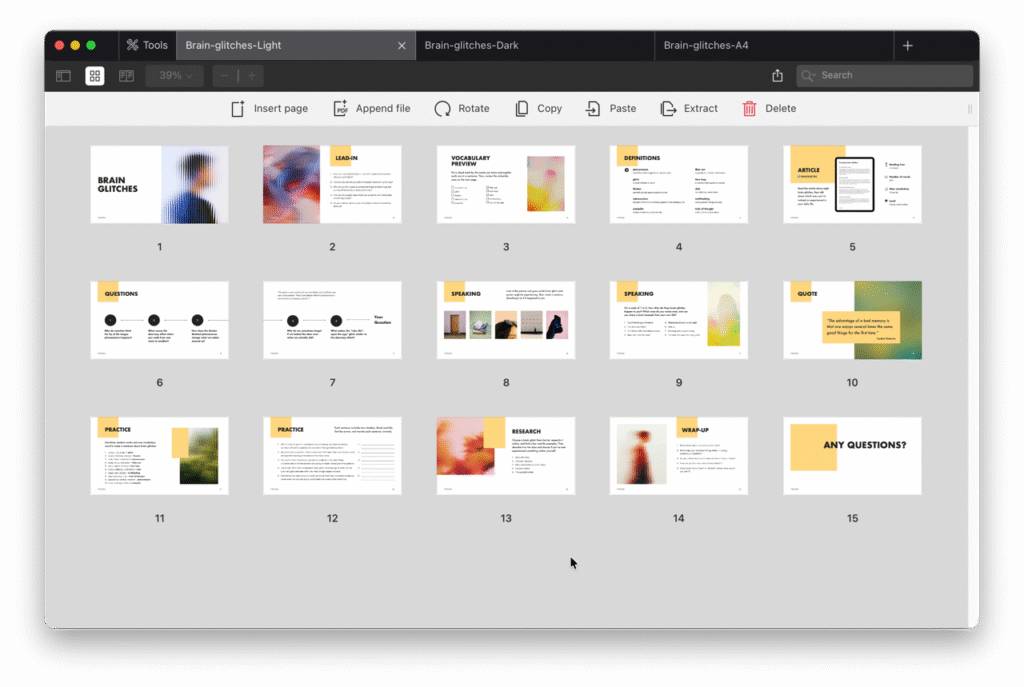
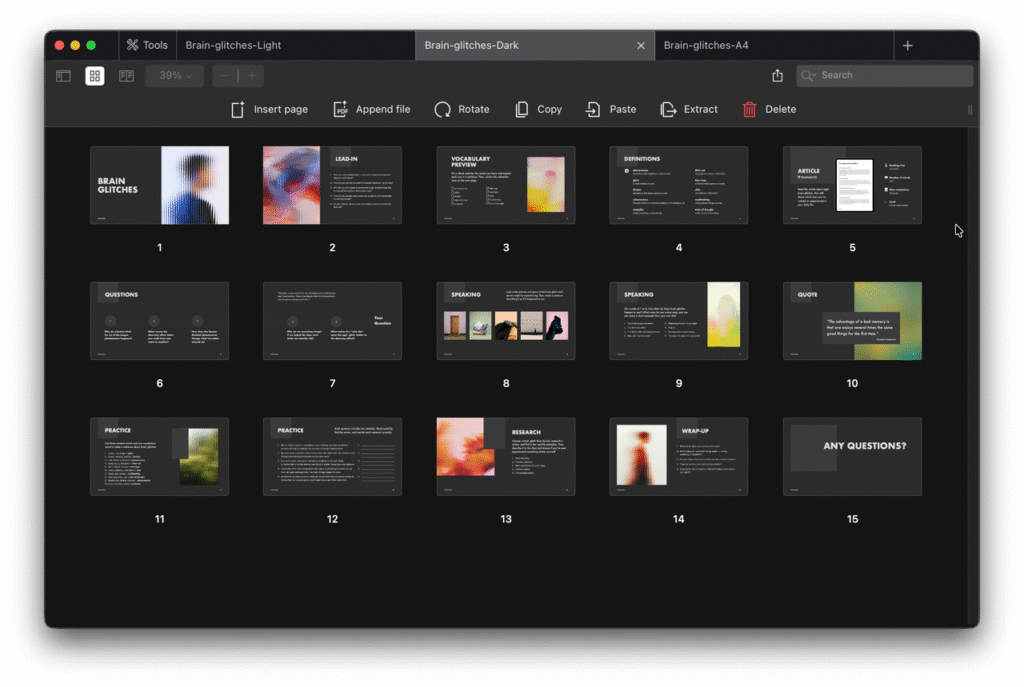
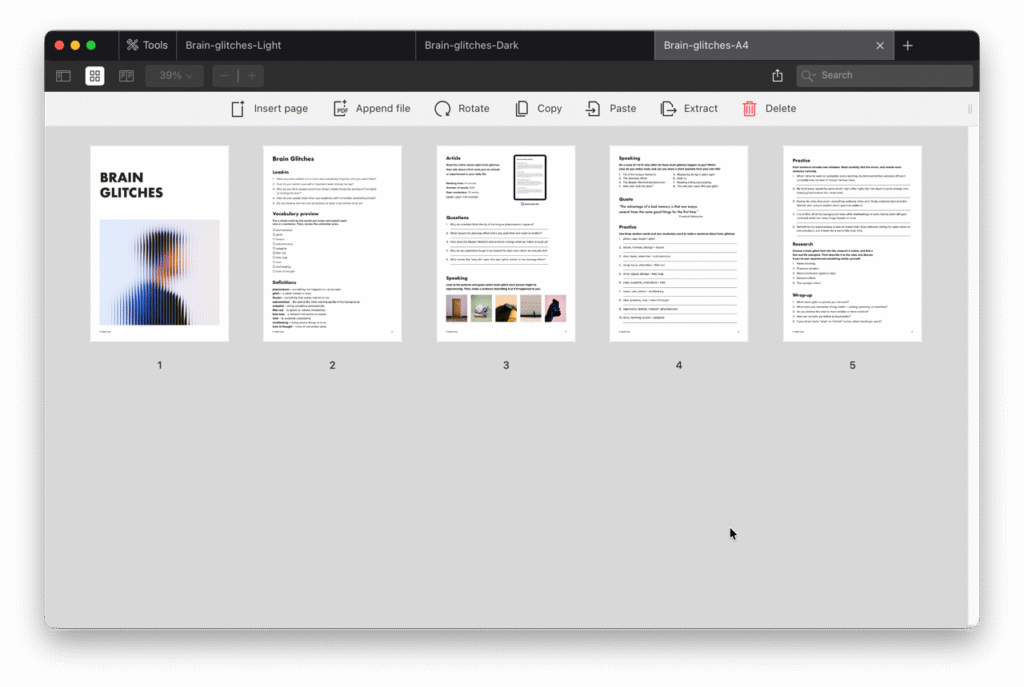
Start by asking if students have ever walked into a room and forgotten why. How do they remind themselves of tasks? Why do people forget simple things like locking doors? This gets them thinking about memory failures they experience. Pre-teach vocabulary through the checklist. Students mark words they know, then review definitions for “phenomenon,” “glitch,” “illusion,” “subconscious,” “autopilot,” “filter out,” “time loop,” “click,” “multitasking,” and “train of thought.”
Give students 4 minutes to read the article about eight brain glitches. It covers tip-of-the-tongue moments, the doorway effect, Baader Meinhof phenomenon, autopilot memory gaps, misplacing things in plain sight, déjà vu, reading without processing, and the app-opening glitch. After reading, students answer comprehension questions. Why does tip-of-the-tongue happen? What causes the doorway effect? How does Baader Meinhof change what we notice?
The picture activity shows images of people experiencing different glitches. Students guess which glitch each person might be having and make a sentence as if it happened to them. Then move to the self-assessment scale. Students rate how often each of the eight glitches happens to them from 1 to 5 and share a personal example. This works well in pairs where they compare experiences and realize these glitches are universal.
Show the Nietzsche quote about bad memory letting you enjoy good things multiple times. Students discuss what this means and if they agree. The first practice exercise gives three random words plus one vocabulary word. Students create sentences about brain glitches. For example, “phone, app, forget + glitch” might become “I opened my phone app and forgot what I wanted to do because of a brain glitch.”
The error correction practice has five sentences with two mistakes each. Students find and rewrite them correctly. For instance, “When I drive to work on autopilote every morning, my mind sometimes wonders off” should be “autopilot” and “wanders off.” Check answers together and explain why each correction is needed.
For the research activity, students choose one of five additional brain glitches: name blocking, phantom vibration, word substitution, earworm effect, or spotlight effect. They research it online, find real-life examples, and describe it to the class. This extends learning beyond the article and lets students teach each other. Wrap up by asking which glitch surprised them most, what helps them remember better, and if brains are more reliable or creative.
