
Dietary Supplements

This B2 lesson looks at dietary supplements and the common myths around them. Students read an article about why “natural” doesn’t always mean safe, learn vocabulary like “fallacy,” “capitalize on,” and “daily intake,” and proofread sentences with deliberate errors. It’s a relevant topic for health-conscious classes and pairs well with lessons on nutrition, fitness, or marketing.
Lesson overview
- Learn 12 vocabulary items related to health claims, marketing, and nutrition science
- Read an article about three common supplement myths and summarize the key arguments
- Proofread sentences containing grammar and spelling errors tied to lesson vocabulary
- Discuss how companies market supplements and whether regulation should be stricter
| Level | Vocabulary | Reading Time | Lesson Time |
| B2 / Upper-Intermediate | 12 words | 883 words / 5 min | 60 min |
Vocabulary
- assumption
- fallacy
- remedy
- awash
- forgo
- piggyback
- deficiency
- prominently
- capitalize on
- bias
- daily intake
- be on the lookout for
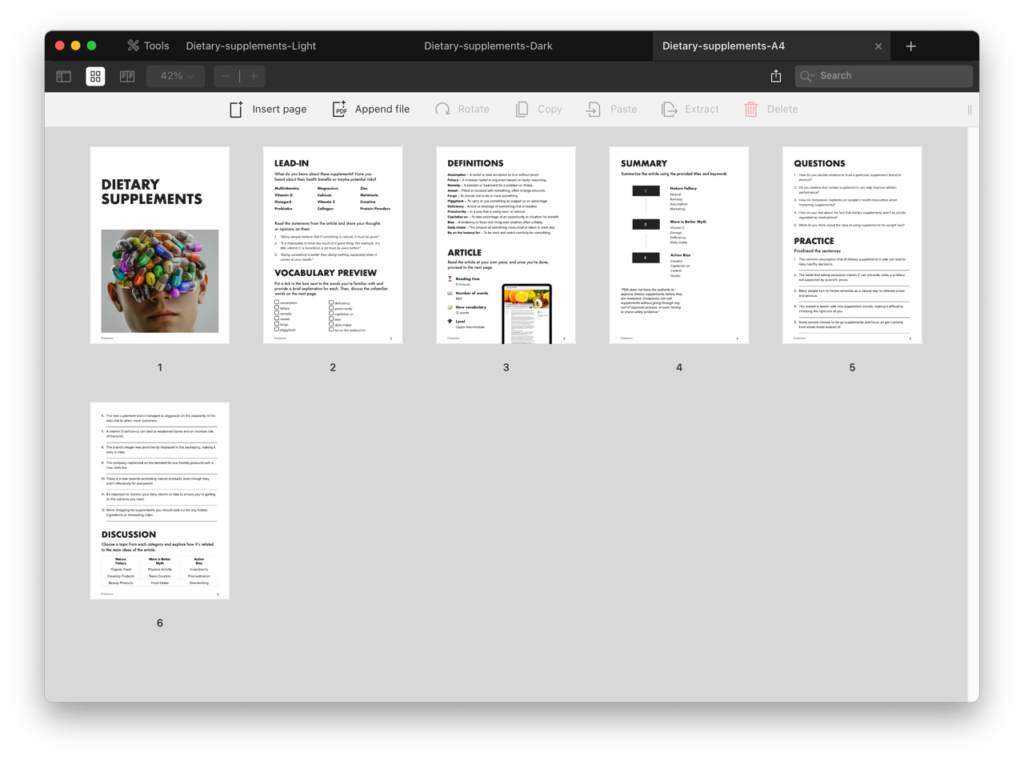
Contents
- Lead-in
- Statements
- Vocabulary preview
- Definitions
- Article
- Summary
- Questions
- Vocabulary practice
- Discussion
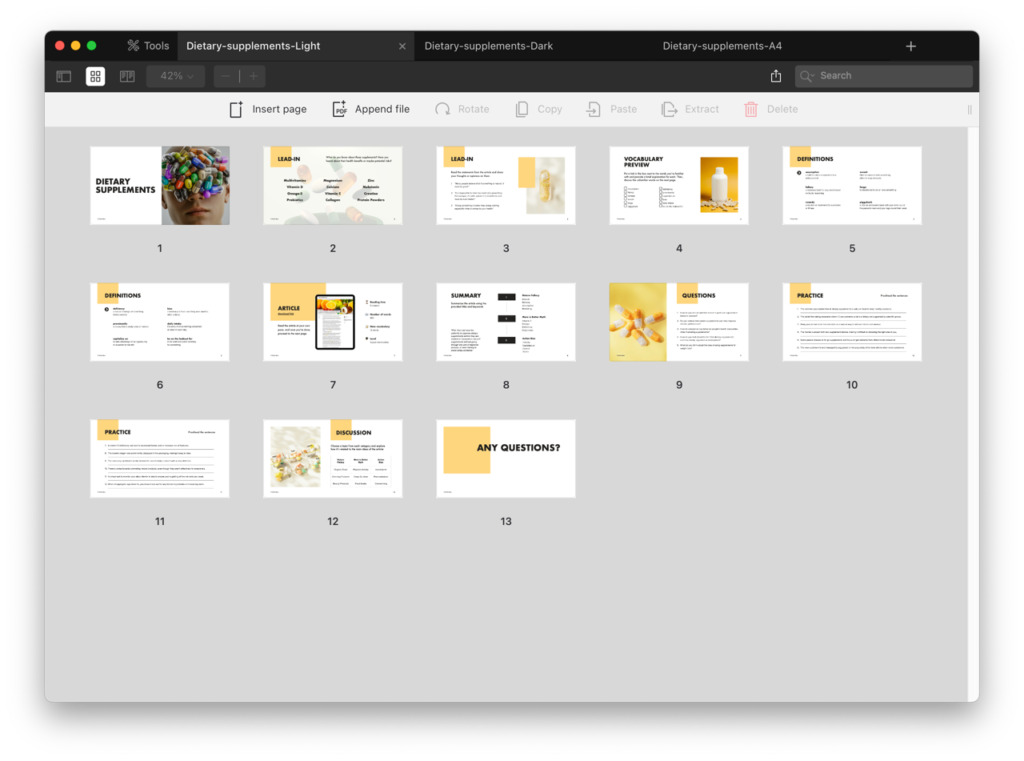
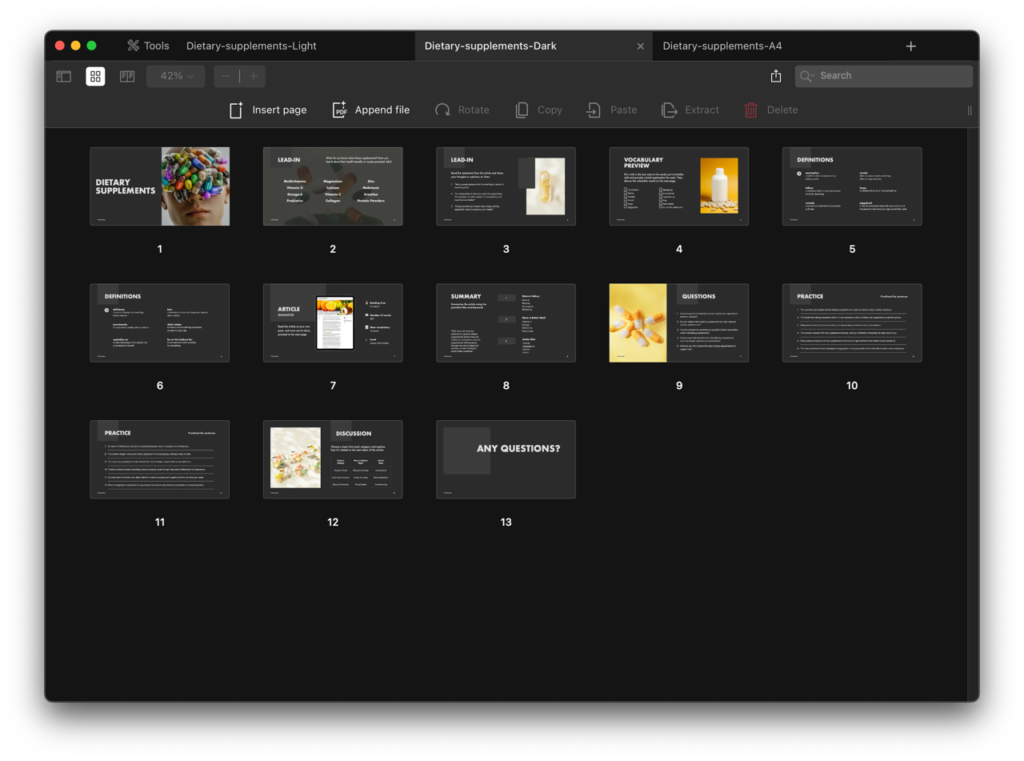
Start with the lead-in on slide 2. Students look at a list of 12 popular supplements and share what they know about each one. This works well in pairs because students usually know about different ones. Then slide 3 presents three statements from the article, things like “if something is natural, it must be good” and “doing something is better than doing nothing.” Have students react to these before reading. It primes them for the arguments they’ll encounter later.
Go through the vocabulary preview on slide 4 and the definitions on slides 5 and 6. There are 12 words, so let students check the ones they already know first. “Fallacy,” “capitalize on,” and “bias” are the most important for the article. “Piggyback” often surprises students because they only know the literal meaning of a child riding on someone’s back, not the figurative use. Once vocabulary is covered, have students read the article on slide 7 at their own pace. It’s about 880 words, so give them five minutes.
The summary activity on slide 8 breaks the article into three sections: the nature fallacy, the more-is-better myth, and action bias. Each section has keywords that students use to retell the main points. This is more demanding than answering questions because students have to reconstruct the argument, not just find answers in the text. Follow up with the FDA quote and discussion questions on slide 9. Question 4, about supplements not being regulated like medications, usually gets a strong reaction.
Slides 10 and 11 have a proofreading exercise with 12 sentences. Each sentence contains grammar or spelling errors that students need to find and correct. This is a useful skill-builder for B2 learners and keeps them engaged because the errors are mixed in with the lesson vocabulary. Finish with the discussion grid on slide 12. Students pick a topic from each column and explain how it connects to one of the three myths from the article. For example, they might link organic food to the nature fallacy or overworking to action bias. This ties everything together and gives students room to bring in their own ideas.
