
At the Pharmacy
Lesson overview
- Learn ten pharmacy words like painkillers, dosage, prescription, and side effects
- Read three short dialogues and answer comprehension questions about each one
- Practice choosing the right pharmacy vocabulary in gap-fill and true or false exercises
- Role-play two pharmacy scenarios asking for medicine and following directions
| Level | Vocabulary | Lesson Time |
| B1 / Intermediate | 10 words | 60-80 min |
Vocabulary
- Painkillers
- Vitamins
- Prescription
- Over-the-counter
- Band-aid
- Dosage
- Tablet
- Side effects
- Directions
- Receipt
Contents
- Lead-in
- Brainstorm
- Vocabulary introduction
- Vocabulary match
- Dialogue 1
- Dialogue 2
- Dialogue 3
- Speaking
- Vocabulary practice
- True or false
- Role-play 1
- Role-play 2
- Questions
- Homework
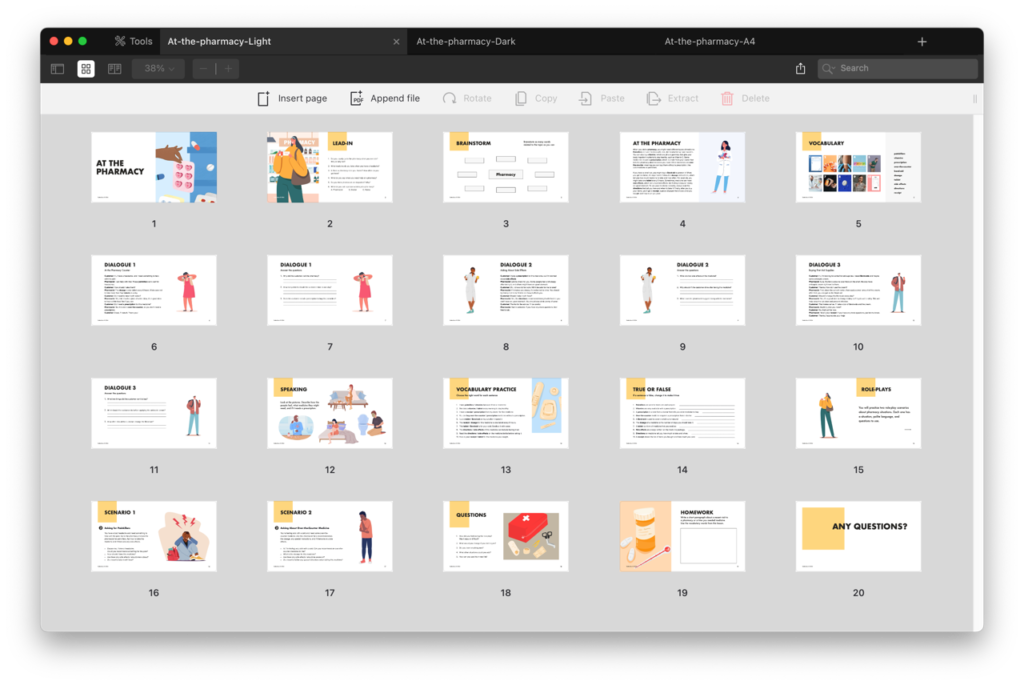
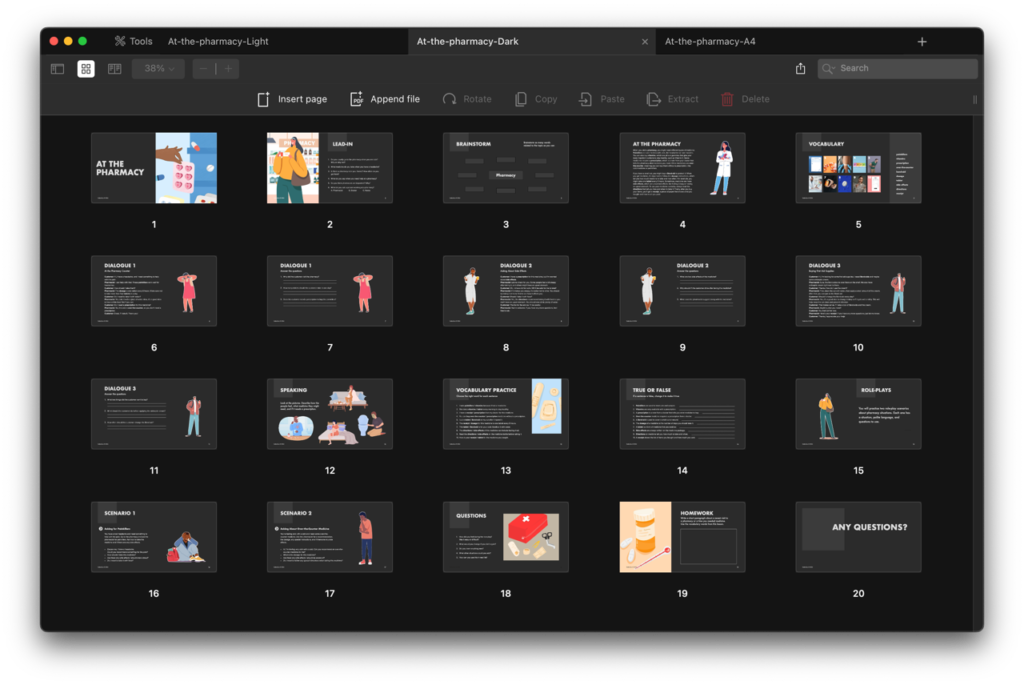
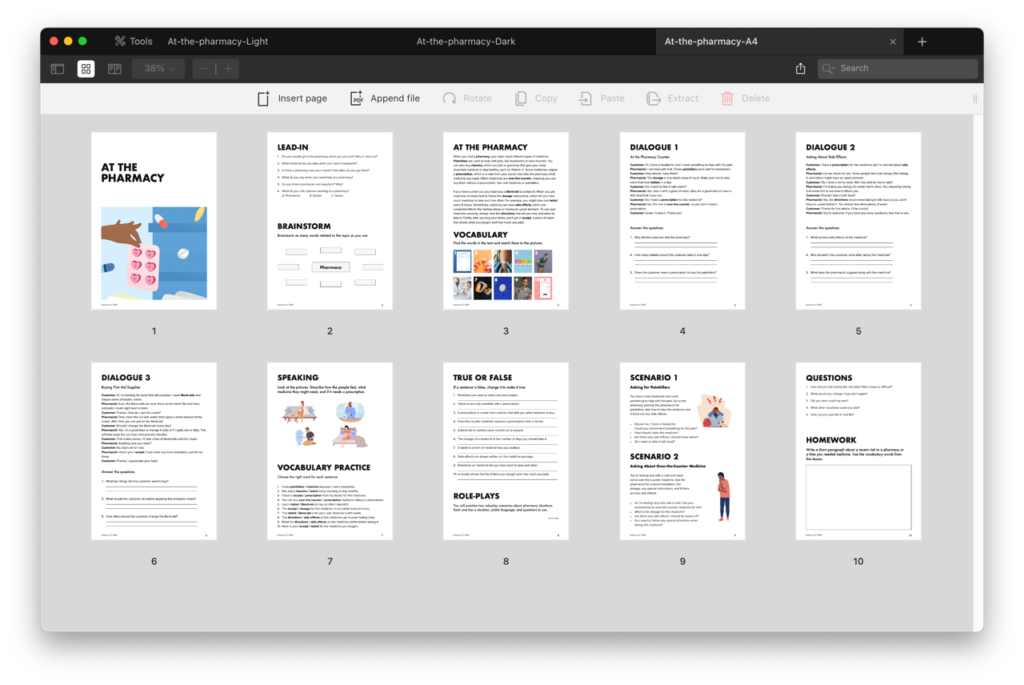
Open with the lead-in questions about pharmacies and going to the doctor. At B1 level, keep the pace relaxed and help with vocabulary as it comes up. The last question about what you call the person working at a pharmacy is a nice quick check. Then do the brainstorm activity where students say every word they can think of related to pharmacies. Write their answers on the board. This shows you what they already know and where the gaps are.
Read through the short text about pharmacy vocabulary together. It introduces all ten target words in context, which is more helpful than just giving definitions. After that, do the picture matching with the ten vocabulary items. Spend extra time on words that look similar or confuse students, like “dosage” versus “directions” or “prescription” versus “over-the-counter.” These pairs trip up B1 learners regularly, so a few extra examples go a long way.
The three dialogues are the main part of the lesson. Each one covers a different pharmacy situation: buying painkillers, asking about side effects, and getting first aid supplies. Have students read in pairs, taking turns as customer and pharmacist. After each dialogue, they answer three comprehension questions. The speaking activity with pictures follows nicely here. Students describe how people in the pictures feel and suggest what medicine they might need.
Finish with the vocabulary practice exercises and the two role-plays. The gap-fill and true or false sections check whether students can use the words accurately on their own. For the role-plays, pair students up and give them a few minutes to prepare before performing. One student asks for painkillers, the other recommends cold medicine. The prompt phrases on each slide help students who feel stuck. End with the reflection questions about how the role-play went and what they’d change next time. The homework paragraph about a real pharmacy visit gives them a chance to use everything from the lesson in their own writing.
