
At the Coffee Shop

This A2 lesson takes students inside three real coffee shops from around the world. They learn ordering vocabulary like “barista,” “to-go cup,” and “syrup,” read about unique cafes in Kyoto, Ho Chi Minh City, and Paris, and practice matching questions with answers you’d actually hear at a coffee counter. It’s a cozy topic that gets even quiet students talking.
Lesson overview
- Learn ten coffee shop vocabulary words and practice using them in real questions
- Match common ordering questions with the right customer responses
- Read about three unique coffee shops and answer comprehension questions about each one
- Find and correct grammar mistakes in sentences about cafes and coffee culture
| Level | Vocabulary | Lesson Time |
| A2 / Pre-Intermediate | 19 words | 60 min |

Vocabulary
- to-go cup
- pastry
- barista
- straw
- lid
- cup holder
- check
- syrup
- menu
- cream
- unique
- traditional
- peaceful
- local
- roast
- spot
- logo
- cute
- stylish
Contents
- Lead-in
- Discussion
- Vocabulary
- Questions
- Vocabulary practice
- Reading
- Comprehension
- Mistakes
- Writing
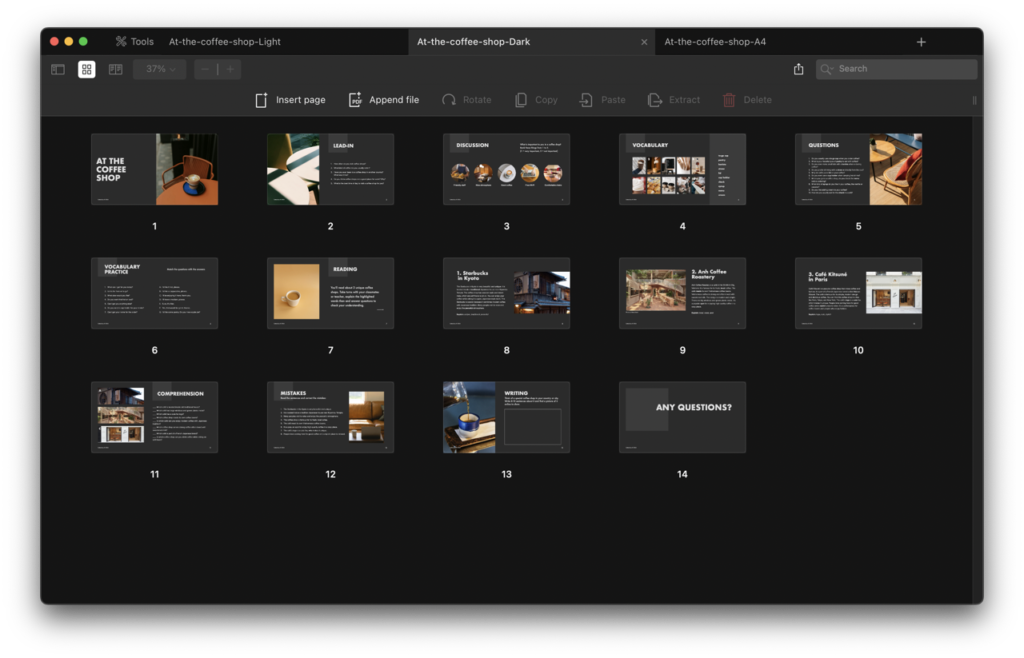
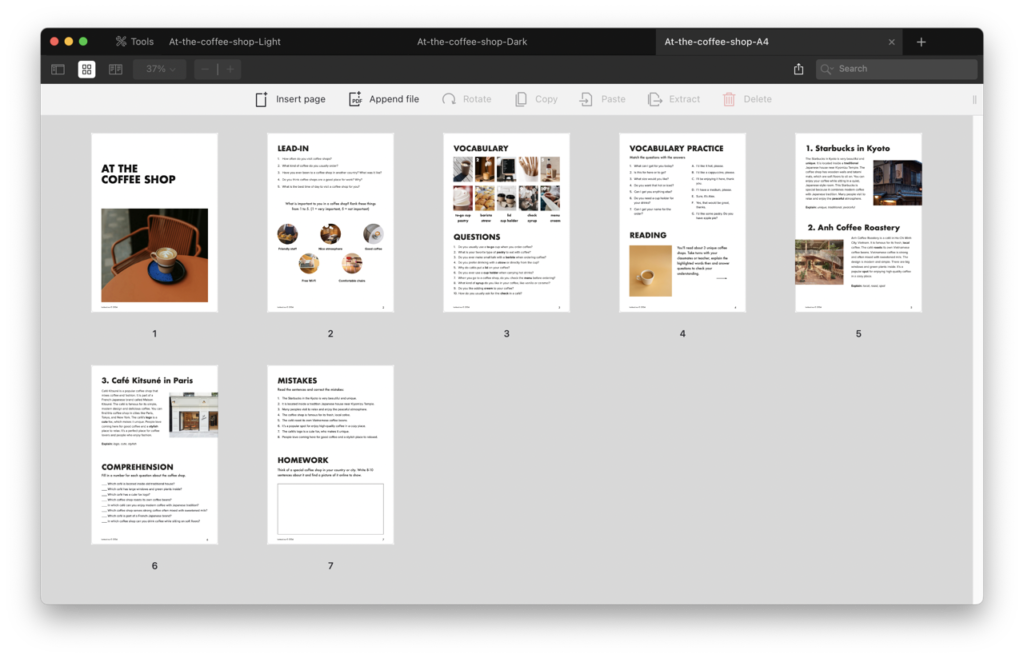
Open with the lead-in questions about coffee shop habits. Even students who don’t drink coffee usually visit cafes, so everyone has something to contribute. The ranking activity on slide three works well as a quick pair discussion. Students rank things like free Wi-Fi, friendly staff, and good coffee from most to least important, then compare with a partner. Disagreements here are great because they push students to explain their thinking with simple language.
Introduce the ten vocabulary words next. Match each word to its picture first, then move through the ten questions on slide five. Each question uses one of the target words naturally, like “Do you ever use a cup holder when carrying hot drinks?” and “What kind of syrup do you like in your coffee?” Students answer in pairs, which gives them practice hearing and saying the new words in context. After that, the ordering dialogue matching exercise on slide six connects questions a barista might ask with appropriate customer responses. Go through the answers together and have students practice reading the exchanges out loud in pairs.
The three reading texts are the main section. Each one describes a real coffee shop: Starbucks in Kyoto, Anh Coffee Roastery in Vietnam, and Cafe Kitsune in Paris. The texts are short and use simple language, but each has three highlighted words for students to explain. Take one text at a time. Read it together, discuss the highlighted words, and let students ask questions before moving to the next one. After all three, do the comprehension matching where students label each statement with A, B, or C depending on which cafe it describes.
The error correction exercise comes last. Eight sentences each contain one grammar mistake, like “tradition” instead of “traditional” or “peoples” instead of “people.” These are common A2 errors, so the activity doubles as a grammar review. Students work individually first, then check in pairs. For the writing task, students describe a special coffee shop from their own city or country in eight to ten sentences and find a photo to show. This makes a great presentation starter for the next class.
