
Are You a Victim of Brainrot?

This C1 lesson tackles brainrot and how constant internet use affects the way we think and talk. Students read a 1200-word article, learn vocabulary like “soliloquy” and “infiltrate,” and debate whether internet slang is harming real communication. It’s a topic that hits close to home for most advanced learners.
Lesson overview
- Discuss how short video platforms and algorithms shape attention and language
- Read and analyze a long-form article about brainrot and digital overconsumption
- Learn ten advanced vocabulary words and practice them through sentence matching
- Debate whether internet culture is eroding meaningful communication skills
| Level | Vocabulary | Reading Time | Lesson Time |
| C1 / Advanced | 10 words | 1200 words / 6 min | 60 min |
Vocabulary
- embody
- soliloquy
- obscure
- infiltrate
- warped
- IRL
- obsessive
- punitive
- self-soothing
- villainize
Contents
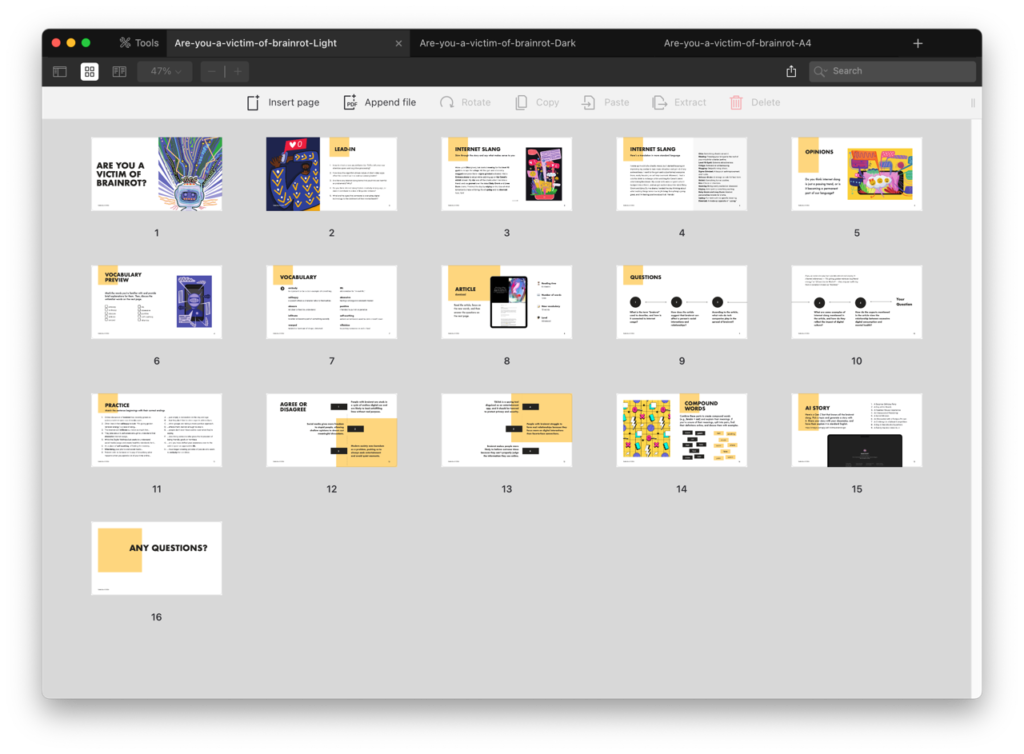
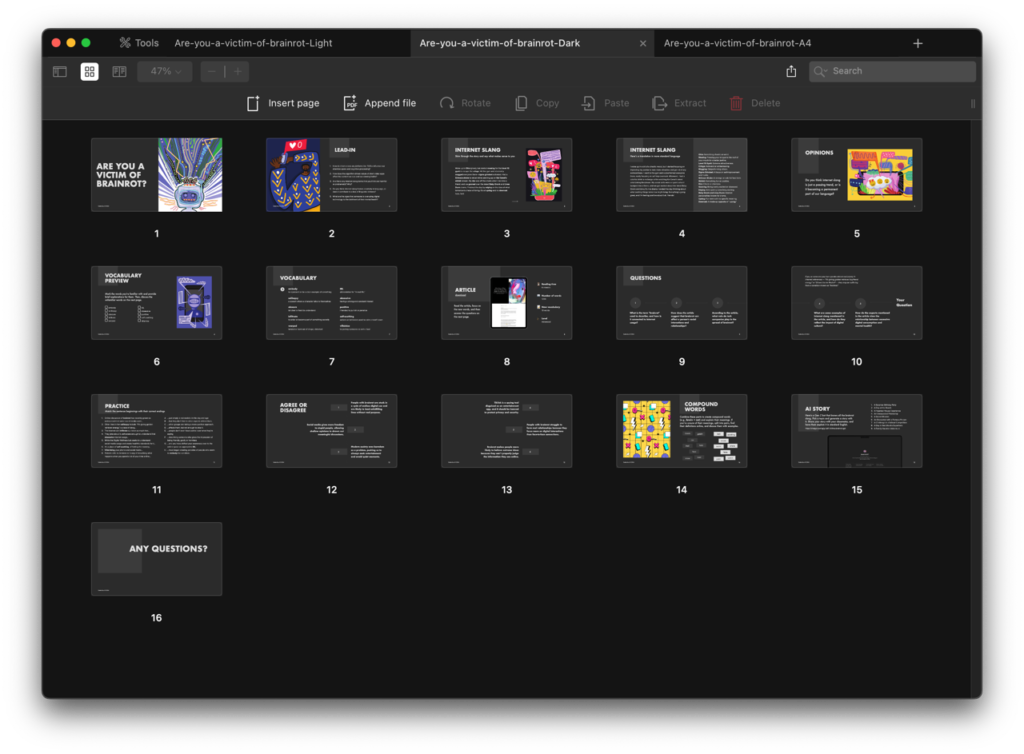
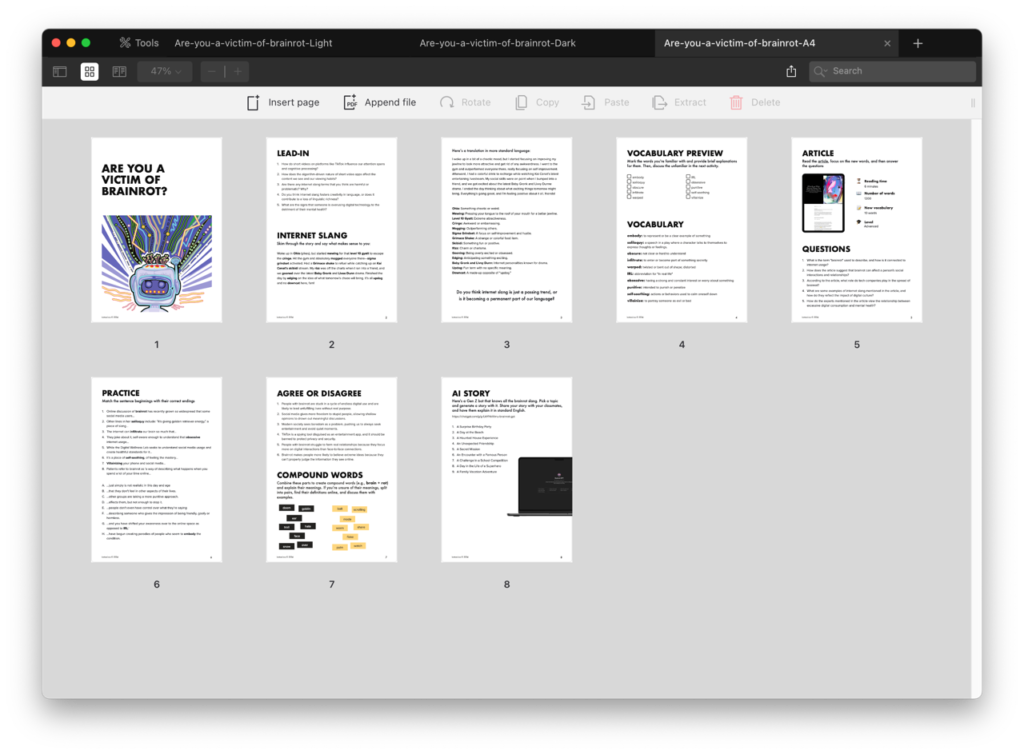
- Lead-in
- Internet slang
- Opinions
- Vocabulary preview
- Vocabulary
- Article
- Questions
- Practice
- Agree or disagree
- Compound words
- AI story
Open with the lead-in questions about TikTok, algorithms, and internet slang. C1 students usually have strong opinions here, so let the discussion run. After a few minutes, show the brainrot paragraph full of Gen Z slang. Ask students to read it and say what they understand. Most will catch a few terms but struggle with others. Then reveal the “translated” version and go through the slang glossary together. This contrast between internet language and standard English sets up the main theme nicely.
Before the article, cover the ten vocabulary words. Have students mark which ones they already know and explain those briefly. Then go over the new ones together. Words like “soliloquy,” “infiltrate,” and “punitive” are useful well beyond this lesson, so spend time on pronunciation and quick example sentences. Once students feel comfortable with the vocabulary, move into the article. Give them about ten minutes to read it. At 1200 words, it’s a solid chunk of text, but C1 students should manage with the vocabulary prep behind them.
After reading, work through the comprehension questions in pairs or small groups. Questions three and five push students to think critically about tech companies and mental health, which usually generates good back-and-forth. Then do the sentence matching exercise where students connect beginnings and endings from the article. This checks detailed understanding and reinforces how the vocabulary works in context.
Save the agree or disagree section for the final stretch. Statements like “TikTok is a spying tool disguised as an entertainment app” and “Brainrot makes people believe extreme ideas” spark real debate at this level. The compound words activity and the AI story generator make good optional extras if you have time, or work as homework. Students pick a topic, generate a brainrot story with the chatbot, and then explain it in normal English next class.
