
Are We Ready for AI Glasses?
This B2 lesson explores AI-powered smart glasses through a video demo by Mark Zuckerberg. Students learn technology vocabulary like “neural band,” “high-resolution,” and “off-center” while discussing the benefits and concerns of wearable AI. The activities include video comprehension, opinion discussions, and a creative presentation task about future features.
Lesson overview
- Learn 10 technology terms related to AI glasses and wearable devices
- Watch and analyze a 3-minute video about Meta’s new smart glasses
- Discuss privacy concerns, convenience, and social impact of AI technology
- Present ideas for future smart glasses features to the class
| Level | Vocabulary | Video Length | Lesson Time |
| B2 / Upper-Intermediate | 10 words | 2:43 min | 60 min |
Vocabulary
- high-resolution
- off-center
- distract
- neural band
- breakthrough
- durable
- dictate
- subtitles
- translation
- perceptible
Contents
- Lead-in 1
- Lead-in 2
- Vocabulary match
- Video
- Questions
- Comments
- Your comment
- Practice 1
- Practice 2
- Opinions
- Interview
- Presentation
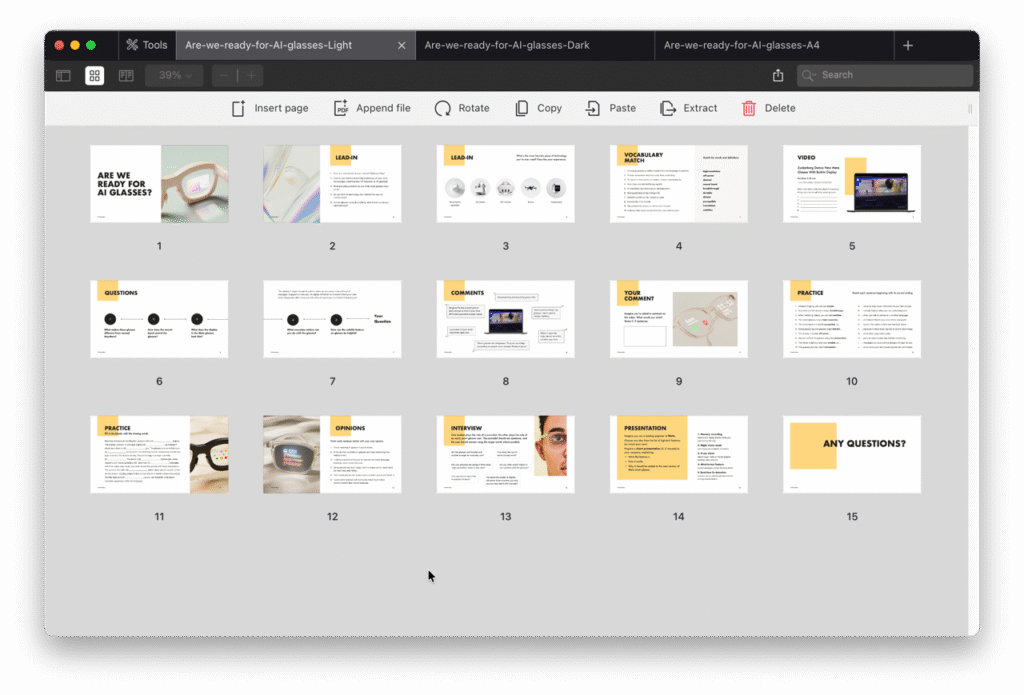
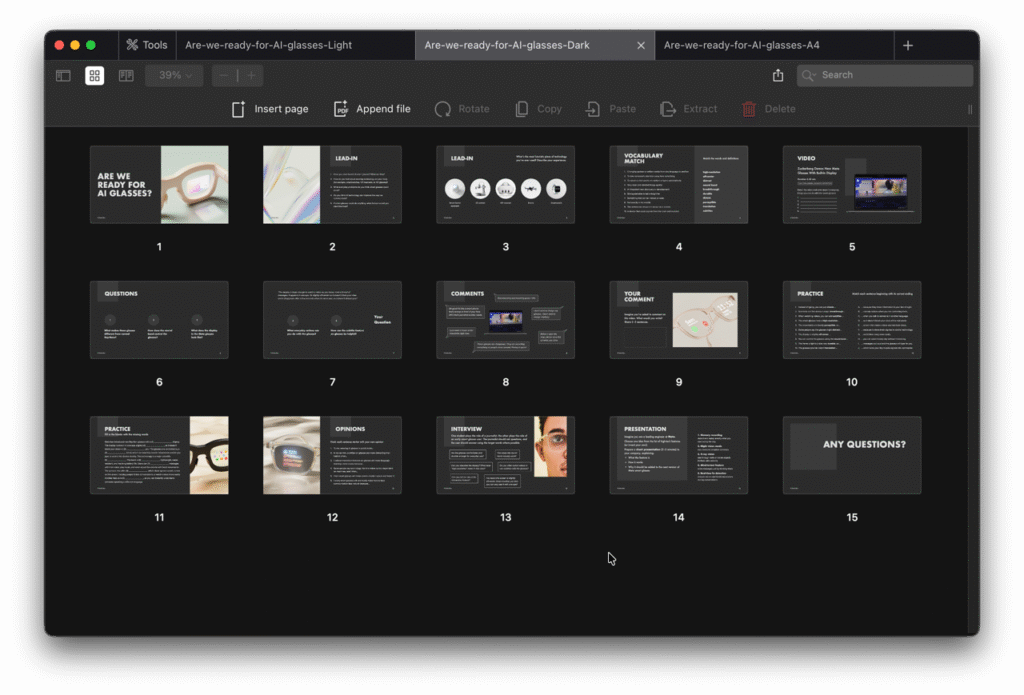
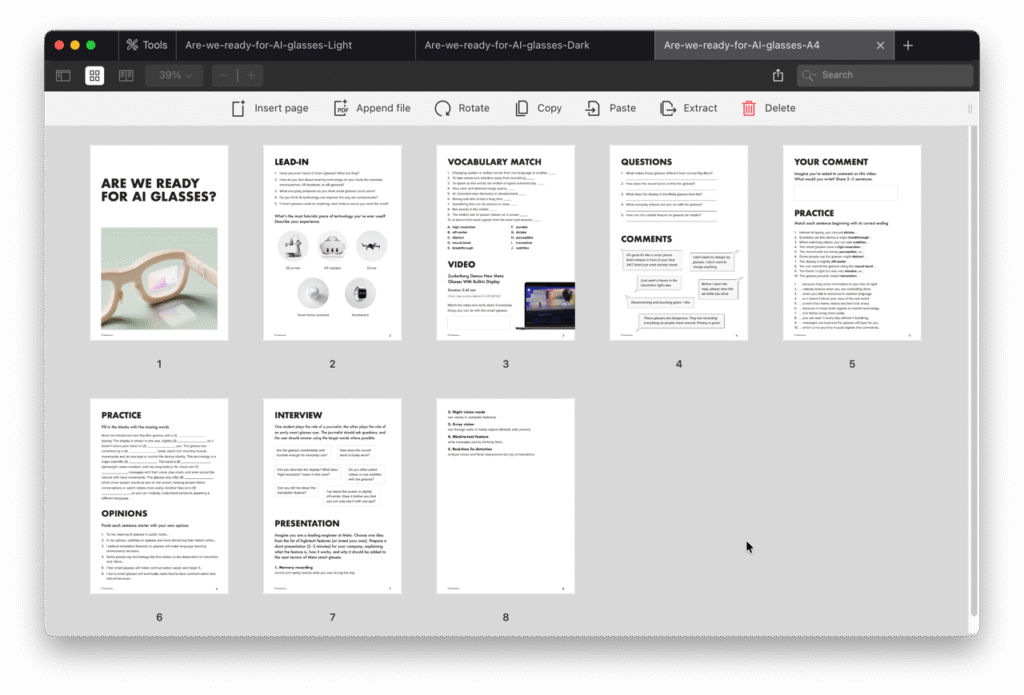
Begin with the lead-in questions about smart glasses and wearable technology. Ask students what everyday problems smart glasses could solve. The futuristic technology activity works well as a quick pair share. Students describe their experience with VR headsets, smartwatches, or drones. This gets them thinking about technology they wear or control.
Move to the vocabulary matching exercise. Students connect words like “neural band,” “high-resolution,” and “perceptible” to their definitions. Pre-teach these before the video so students can focus on comprehension rather than struggling with new terms. Drill pronunciation on “neural” and “perceptible” since these might be new.
Play the video twice. First viewing, students write down five everyday things you can do with the glasses. Second viewing, they answer specific questions about how the neural band works and what the display looks like. The video shows Zuckerberg demonstrating translation features, subtitles, and voice dictation. After watching, show the comment section. Students read real YouTube comments expressing concerns about privacy and constant connectivity. Ask them to write their own 2-3 sentence comment responding to the video.
The practice section has two parts. First, students match sentence beginnings and endings using target vocabulary. Then they fill in blanks in a summary paragraph about the glasses. Check answers together and discuss any confusing points.
The opinions activity uses sentence starters like “To me, wearing AI glasses in public looks…” and “I worry smart glasses will eventually…” Students finish these with their own views. This works great in small groups where they can compare different perspectives. The interview role play has one student as a journalist and another as an early adopter of smart glasses. The journalist asks questions about features and the user answers using lesson vocabulary. For the final presentation task, students choose a high-tech feature like night vision or mind-to-text and pitch it to Meta. They explain what it is, how it works, and why it should be added.
