Alternatives to New Year’s Resolutions

Hands writing goals on post-it notes with coffee - Upper-intermediate ESL lesson on New Year's resolution alternatives

Lesson overview

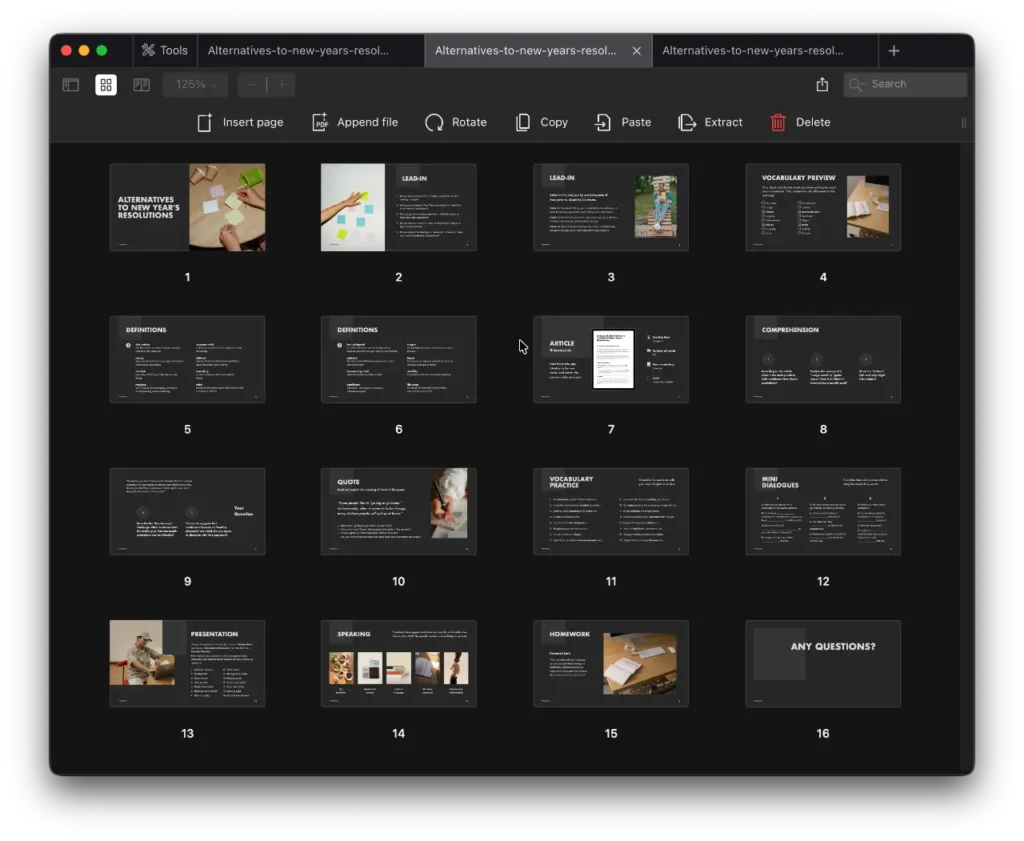
This upper-intermediate ESL lesson explores creative alternatives to traditional New Year’s resolutions through an engaging article and dynamic B2-level activities. Students learn 16 useful vocabulary words for discussing habit change, goal-setting, and personal boundaries while practicing reading comprehension, speaking, and critical thinking skills. The lesson includes reflection exercises, mini-dialogues, vocabulary practice, and a presentation task where students categorize resolutions as “nudge words,” one-month challenges, or healthy pleasures. Perfect for January classes or any time your B2 students want to discuss self-improvement strategies that actually work. Download includes the complete article, comprehension questions, dialogue activities, and homework assignment.

This lesson was first released in December 2023 and updated in January 2026 to better reflect our style and vision, while keeping the original article unchanged.

Student's Version (Light/Dark)

Teacher's Version (Answer Keys)

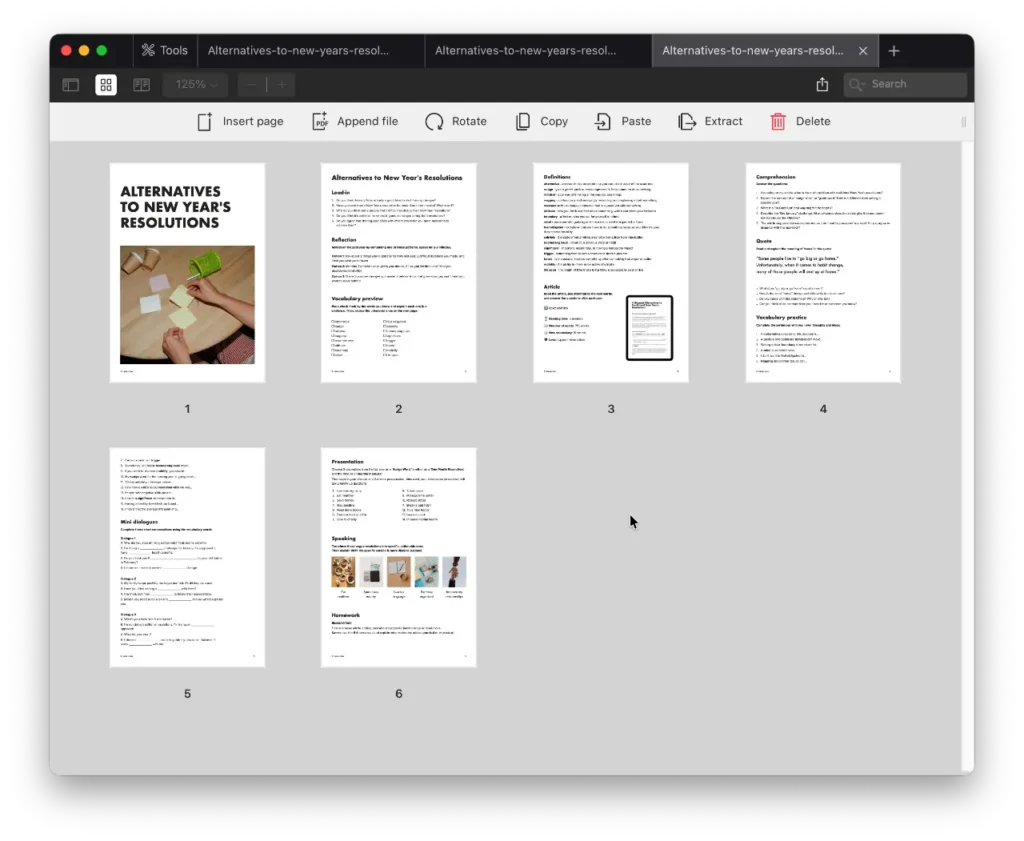
Printable Classroom Version (A4)

LevelVocabularyReading TimeLesson Time
B2 / Upper-Intermediate16 words5 min / 715 words60 min

Vocabulary

  • Alternative
  • Nudge
  • Mindset
  • Nagging
  • Resonate with
  • Attitude
  • Boundary
  • Rebel
  • Feel obligated
  • Sobriety
  • Boomerang back
  • Significant
  • Trigger
  • Boost
  • Mobility
  • Life span

Contents

  • Lead-in
  • Reflection
  • Vocabulary preview
  • Definitions
  • Article
  • Comprehension
  • Quote
  • Vocabulary practice
  • Mini dialogues
  • Presentation
  • Speaking
  • Homework

Teaching guide

Lead-in, Reflection

This B2 lesson starts with five carefully chosen lead-in questions that get upper-intermediate students thinking critically about New Year’s resolutions before diving into the reading. Instead of asking the predictable “What’s your resolution?” these questions explore deeper concepts like timing (is January 1st really ideal for change?), success rates (have you kept a resolution longer than three months?), and social accountability (does sharing goals help or hurt?). These ESL discussion questions work perfectly as pair work or small group conversations, taking about 10 minutes to activate prior knowledge and build interest in the topic of habit change. Right after the warm-up, students move into the Reflection activity, which gives them three different 3-2-1 patterns to choose from. Each pattern asks students to reflect on their past year using specific frameworks like “3 things you’re grateful for, 2 difficult decisions, 1 risk you wish you’d taken” or “3 projects started, 2 finished, 1 abandoned.” This structured reflection task is brilliant for B2 learners because it scaffolds their speaking while allowing authentic personal expression about goals, habits, and life changes. The 2-3 minute speaking time pushes students beyond simple answers into more detailed narrative, which is exactly what upper-intermediate students need for fluency development.

Vocabulary preview, Definitions

Before students tackle the 715-word article about alternative resolution strategies, they need to preview 16 key vocabulary items that appear throughout the text. The vocabulary preview page presents all the words as a simple checklist where students mark which ones they already know and which are unfamiliar. This self-assessment technique is super helpful for B2 ESL classes because it acknowledges that upper-intermediate learners already have substantial vocabulary knowledge, and it helps you as the teacher quickly identify which words need more attention during pre-teaching. The definitions page that follows provides clear, student-friendly explanations for each term, from “alternative” and “nudge” to more challenging concepts like “sobriety,” “boomerang back,” and “resonate with.” These aren’t lifted from a dictionary but written in accessible language that B2 students can actually understand and remember. Words like “feel obligated,” “trigger,” and “boundary” are particularly valuable for discussing New Year’s resolutions and personal change because they help students express nuanced ideas about social pressure, habit formation, and self-care. Spend about 5-7 minutes on this vocabulary work, using concept questions and example sentences to ensure students grasp not just the definitions but how these words function in natural English conversations about goals and lifestyle changes.

Article, Comprehension, Quote

The heart of this upper-intermediate lesson is the article “4 Unusual Alternatives to Traditional New Year’s Resolutions,” which presents four creative approaches to goal-setting: choosing a “nudge word” to guide decisions, creating a “To-Don’t List” of things to stop doing, trying one-month challenges like “Dry January,” and focusing on adding healthy pleasures rather than restrictions. At 715 words, it’s the perfect length for B2 reading practice because it challenges students without overwhelming them, and the content is genuinely interesting because it questions the traditional New Year’s resolution approach that often leads to failure and guilt. Give students 5-7 minutes for silent reading, then move into the five comprehension questions that require more than simple recall. Question 1 asks about the main problem with traditional resolutions (only 20% succeed), question 2 requires explaining the “nudge word” concept and comparing it to specific goals, question 3 explores the “To-Don’t List” idea with examples, question 4 examines the “Dry January” evidence for one-month resolutions, and question 5 is an opinion question about whether “healthy pleasures” are valid resolutions. These questions work beautifully for upper-intermediate ESL students because they progress from factual understanding to critical thinking and personal opinion. The Quote section adds another layer by asking students to analyze the saying “go big or go home” in the context of habit change, which sparks excellent discussions about perfectionism, realistic goal-setting, and why people abandon resolutions when they miss a single day.

Vocabulary practice, Mini dialogues

After reading and comprehension, students need multiple opportunities to use the new vocabulary in different contexts, which is exactly what this section provides. The first vocabulary practice activity has students complete 16 sentence stems using the target words in personally meaningful ways, like “An alternative solution to this problem is…” or “My nudge word for the coming year is going to be…” This personalization technique helps with long-term retention because students connect the vocabulary to their own lives, experiences, and actual New Year’s goals. The Mini-Dialogues activity takes a different approach by presenting three incomplete conversations about resolutions, boundaries, and sobriety challenges where students must fill in the blanks with appropriate vocabulary words. Dialogue 1 discusses a sobriety challenge and whether habits will “boomerang back,” Dialogue 2 explores family pressure and setting boundaries, and Dialogue 3 introduces the alternative approach of using a “nudge word” that “resonates” with the person. These dialogues work wonderfully for B2 ESL classes because they show how these vocabulary items appear in natural spoken English, and they can easily be extended into role-play activities where students perform the dialogues with natural intonation and then create their own conversations using the target vocabulary. The combination of personalized sentence completion and contextualized dialogue practice ensures students encounter each word multiple times in varied contexts, which is essential for moving vocabulary from recognition to production.

Presentation, Speaking

The Presentation section challenges students to categorize three resolutions from a list of 14 options according to the article’s framework: one as a “Nudge Word” (choosing a guiding concept), one as a “One-Month Resolution” (trying something for 30 days), and one as a “Healthy Pleasure” (adding enjoyable activities). Students then prepare and deliver a 2-minute presentation explaining their choices, followed by two follow-up questions from classmates or the teacher. This extended speaking task is perfect for upper-intermediate learners because it combines reading comprehension (understanding the four alternatives), critical thinking (deciding which resolutions fit which categories), and presentation skills (organizing and delivering a coherent 2-minute talk). The resolution list includes common goals like “exercise regularly,” “save money,” “read more books,” and “improve mental health,” giving students plenty of familiar options to work with. The Speaking section adds another dimension with a vague-to-specific transformation activity where students take fuzzy resolutions like “eat healthier” or “learn a language” and turn them into concrete, actionable plans. They then explain WHY the specific version is more likely to succeed, which reinforces the article’s main message that overly ambitious or vague resolutions often fail. Visual prompts accompany each vague resolution, making this activity engaging and accessible for different learning styles while building students’ ability to talk about goal-setting strategies, SMART goals, and realistic habit change approaches in English.

Homework

The homework assignment gives students a research task that extends the lesson beyond the classroom while building their skills with authentic English materials about New Year’s resolutions and habit formation. Students need to find one news article or blog post about successful habit change or resolutions (from sources like Psychology Today, New York Times, health blogs, or productivity websites), then summarize it in 5-6 sentences and evaluate whether the advice is practical or impractical. This assignment is ideal for B2 ESL learners because it requires them to navigate real English content about goal-setting and personal development, practice summarizing skills by condensing an article into a brief overview, and develop critical thinking by assessing the quality and practicality of the advice they encounter. The task also naturally recycles the vocabulary from the lesson since most articles about resolutions will discuss concepts like motivation, triggers, boundaries, mindset, and sustainable change. When students share their findings in the next class, it creates a rich discussion about different approaches to New Year’s resolutions and what actually works versus what sounds good but fails in practice. You can adapt this homework by having students present their findings orally, write a more detailed analysis, or compare multiple articles, depending on your curriculum needs and how much time you want to spend on this upper-intermediate lesson about alternatives to traditional New Year’s resolutions.

Oleg

Since 2012, I’ve been teaching English online, connecting with students across Asia and Europe. Over the years, I’ve shifted my focus to corporate English, helping professionals refine their communication skills. My lessons are infused with my interests in tech, global issues, and sports, offering a mix of challenges and engaging discussions.