
All About Flowers

This B1 lesson is all about flowers, from naming common types to learning how to pick fresh ones. Students build flower vocabulary, practice reading for detail, and share their opinions through discussion. It works well for learners who enjoy everyday topics with a bit of nature mixed in.
Lesson overview
- Learn the names of ten common flowers and their descriptions
- Practice reading tips about choosing and buying fresh flowers
- Build vocabulary for flower parts like stems, petals, and buds
- Discuss opinions on flowers, gifts, and keeping bouquets fresh
| Level | Vocabulary | Video Length | Lesson Time |
| B1 / Intermediate | 22 words | 0:56 min | 60 min |
Vocabulary
- rose
- sunflower
- tulip
- daisy
- lily
- orchid
- peony
- poppy
- daffodil
- lavender
- leaf
- stem
- bud
- petals
- bouquet
- to be supposed to
- to last
- present
- blossom
- thrive
- to blink
- to be gone
Contents
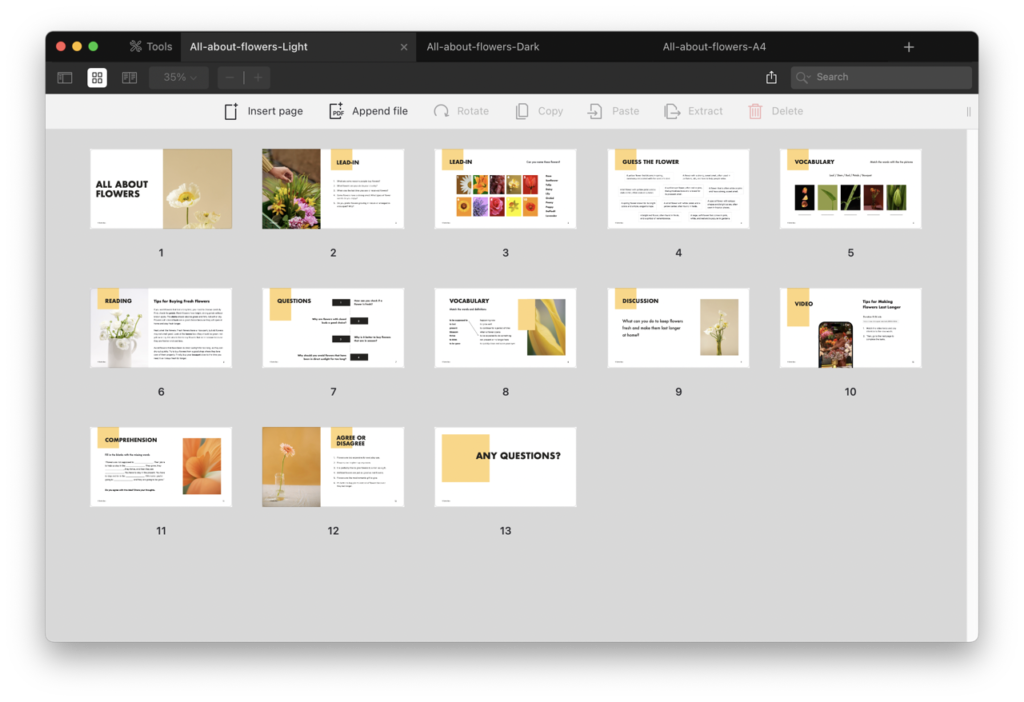
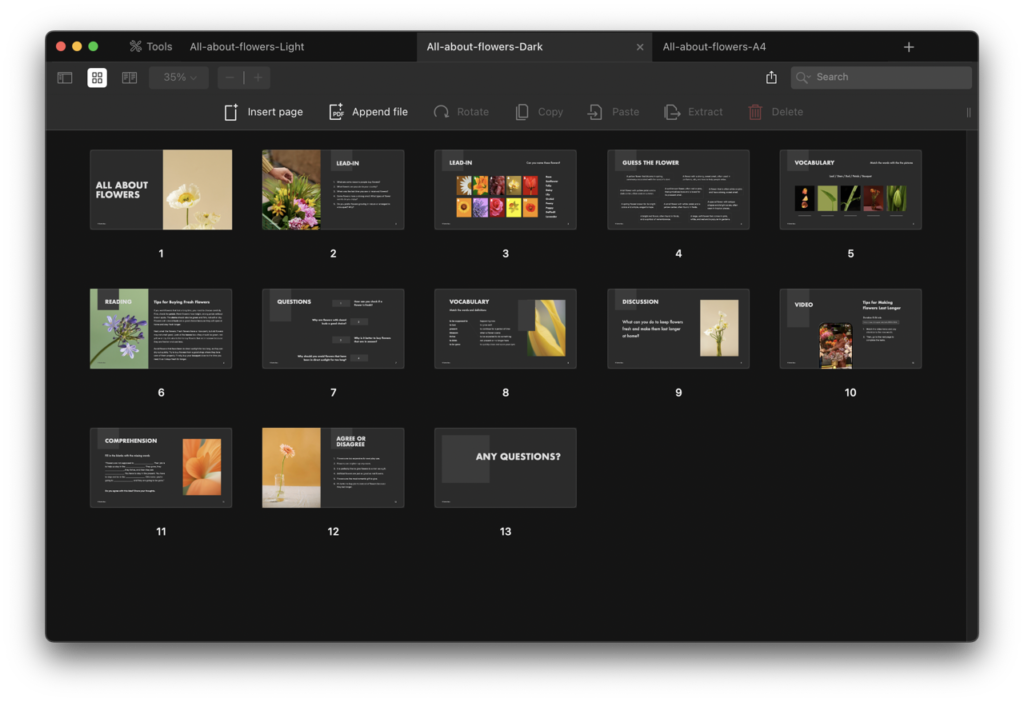
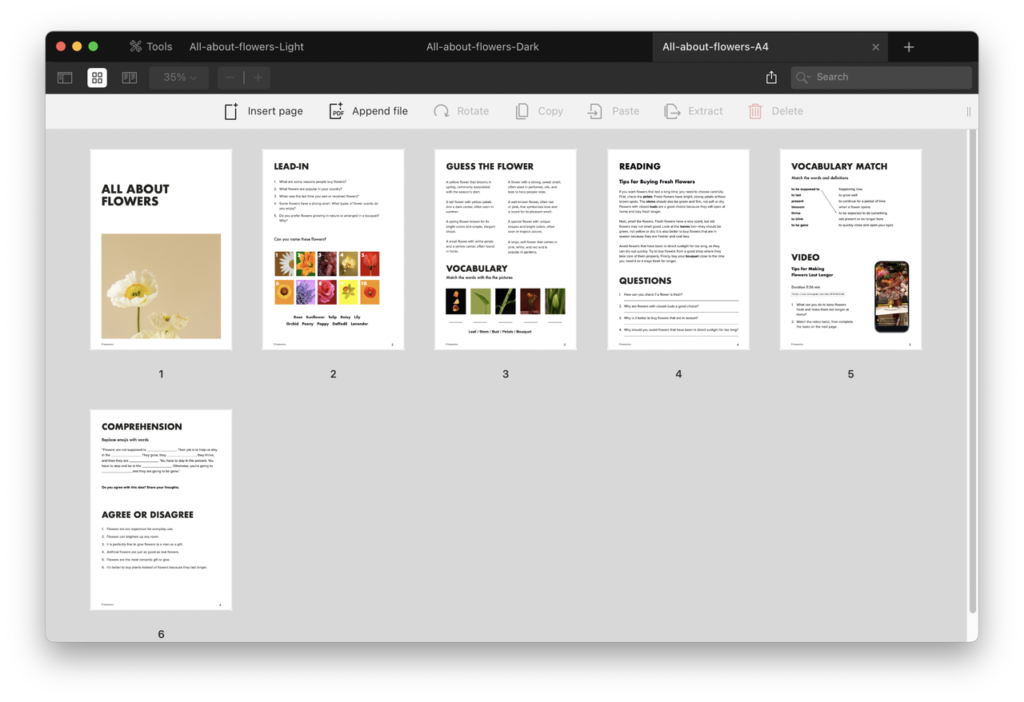
- Lead-in
- Guess the flower
- Vocabulary
- Reading
- Questions
- Vocabulary
- Discussion
- Video
- Comprehension
- Agree or disagree
Kick things off with the lead-in questions. These are simple enough for B1 students to answer right away, and they get everyone talking about flowers from their own experience. Give them a couple of minutes in pairs before opening it up to the group. The flower naming activity on the next slide works well as a quick visual quiz. You can show the images one at a time or let students work together to match all ten.
Move into the “Guess the Flower” activity next. Read the descriptions aloud or let students read them quietly, then match each one to the correct flower. This builds reading skills and reinforces the flower names from the previous slide. After that, do the vocabulary matching for flower parts. Most B1 students will know “leaf” and “petals” but might need help with “bud” and “stem.” Keep it quick here.
The reading passage about buying fresh flowers is the main language focus. Give students time to read it once on their own, then go through the comprehension questions together. The text is straightforward, but words like “firm,” “scent,” and “in season” are worth highlighting. The second vocabulary set (blossom, thrive, to last, to blink) connects to the video activity, so make sure students understand these before watching.
Wrap up with the agree or disagree statements. These flower opinion questions spark good debates, especially “Is it fine to give flowers to a man?” and “Are artificial flowers just as good?” Let students pick a side and explain why. It is a natural way to end the lesson and gives everyone a chance to speak.
