
Music Genres

This A2 lesson helps students talk about different music genres in English. They learn the names of instruments, read short descriptions of genres like pop, rock, jazz, and K-pop, and practice listening for different styles of music. It’s a fun, low-pressure lesson that works well with beginners who enjoy sharing their music tastes.
Lesson overview
- Learn the names of 10 musical instruments and eight common music genres
- Read short descriptions of genres like pop, rock, jazz, K-pop, and EDM
- Listen to audio clips and identify different music genres by ear
- Practice speaking about favorite bands, concerts, and music preferences
| Level | Vocabulary | Audio | Lesson Time |
| A2 / Pre-Intermediate | 19 words | 1:54 min | 60 min |
Vocabulary
- African drum
- guitar
- flute
- maraca
- accordion
- saxophone
- violin
- piano
- trumpet
- drum
- Music genres
- K-pop
- Rock
- Pop
- Rap
- Jazz
- RnB
- EDM
- Classical
Contents
- Quote
- Lead-in
- Vocabulary
- This or that
- Reading
- Questions
- Listening
- Speaking
- Agree or disagree
- Unscramble the sentences
- Speaking
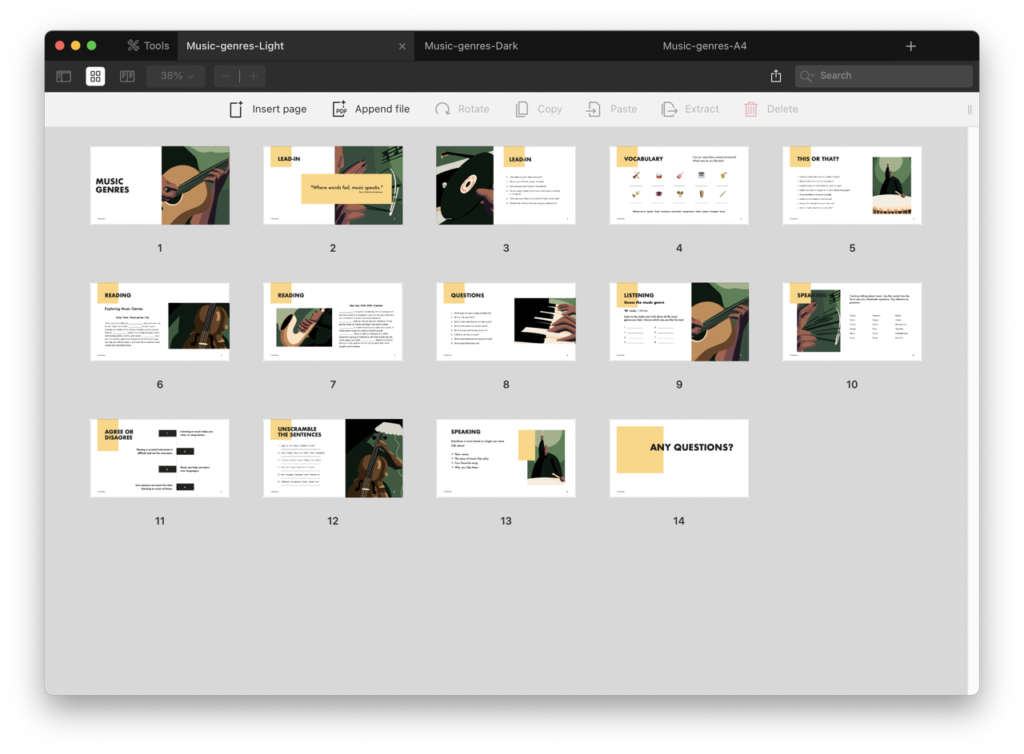
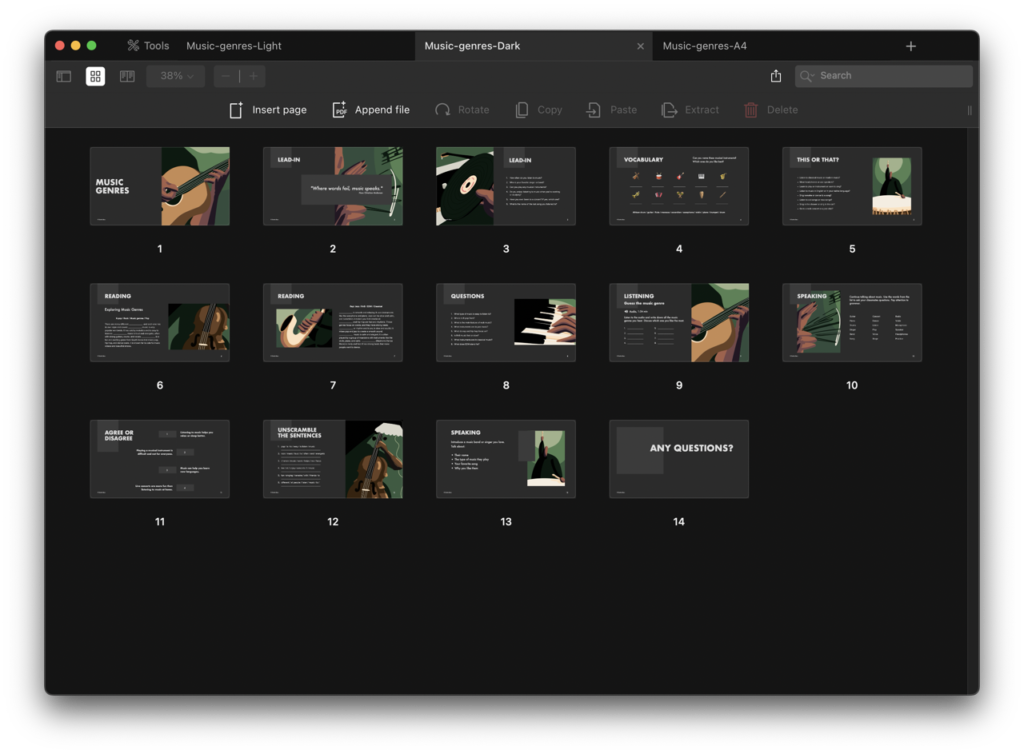
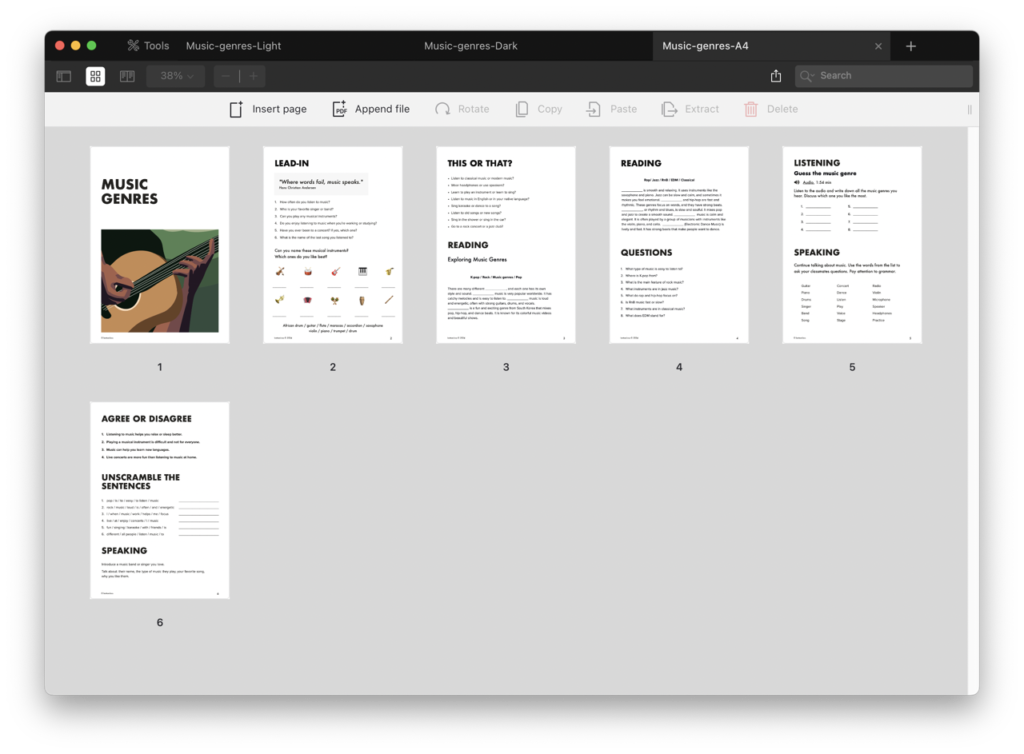
Start with the quote on slide 2 and the lead-in questions on slide 3. These are simple questions like “how often do you listen to music?” and “can you play any instruments?” that every A2 student can answer. Don’t rush this part. Music is personal, and students usually want to share more than you’d expect. Slide 4 shows 10 instrument pictures with a word bank at the bottom. Go through these together and check pronunciation, especially “violin,” “accordion,” and “maracas,” which tend to trip A2 learners up.
The “this or that” activity on slide 5 gives students two options to choose from, like “headphones or speakers?” and “sing in the shower or sing in the car?” This is quick and keeps energy high. After that, move into the reading on slides 6 and 7. The text has gaps where students fill in the correct genre name. Each genre gets two or three sentences describing its sound and style. Read through one genre at a time and check the answers before continuing. The comprehension questions on slide 8 are straightforward and can be done in pairs.
The listening activity on slide 9 plays short clips of different genres. Students write down what they hear and then discuss which one they liked best. This is usually a highlight because it breaks up the reading and writing with something more interactive. After the listening, slide 10 has a word bank for free speaking practice. Students use words like “guitar,” “concert,” and “headphones” to ask each other questions. Remind them to form proper questions, since A2 students often drop auxiliaries.
Finish with the agree or disagree statements on slide 11 and the sentence unscramble on slide 12. The unscramble exercise is good for reinforcing word order, which A2 students still need regular practice with. If there’s time, slide 13 asks students to introduce a band or singer they love. Give them a minute to prepare, then let each student share with the class or a partner.
